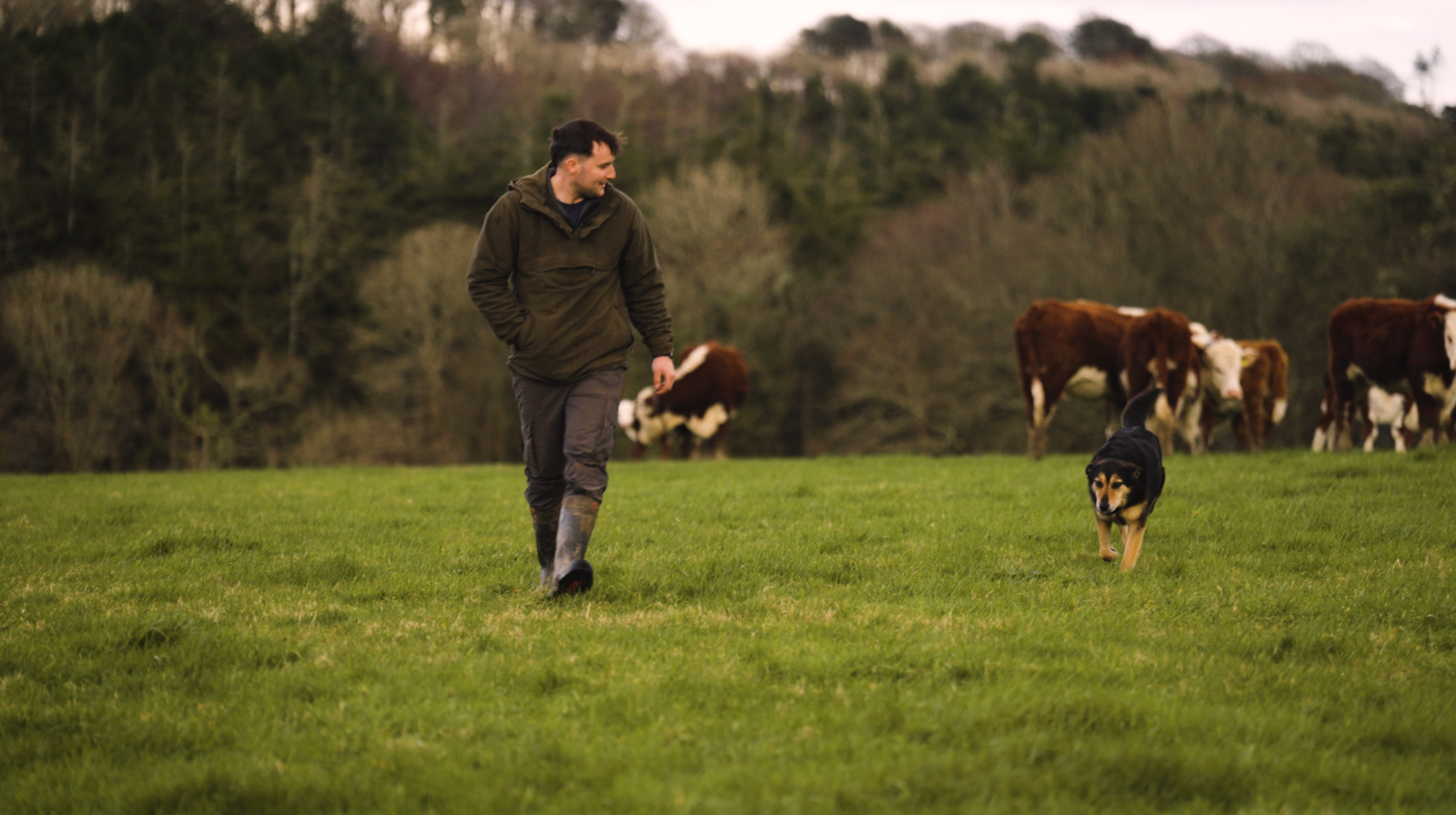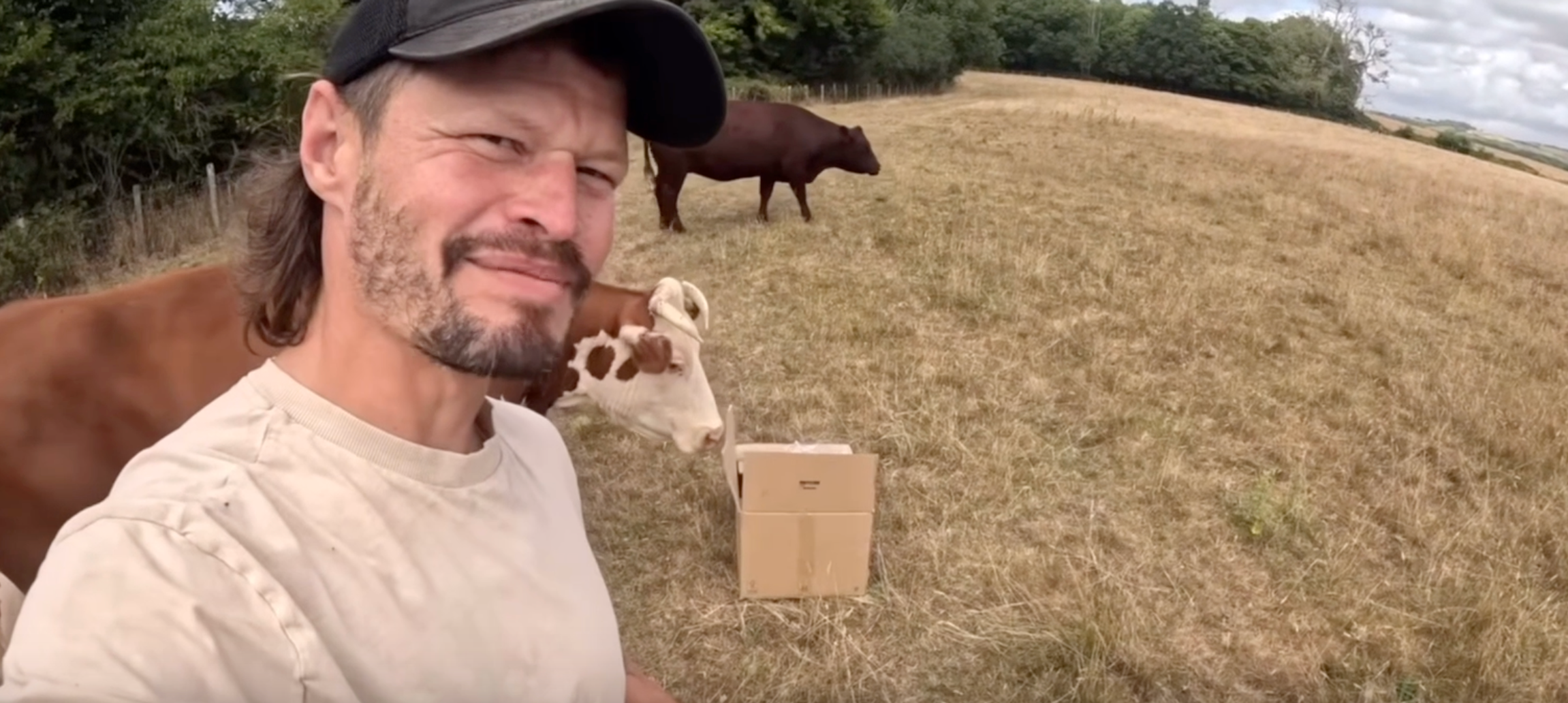
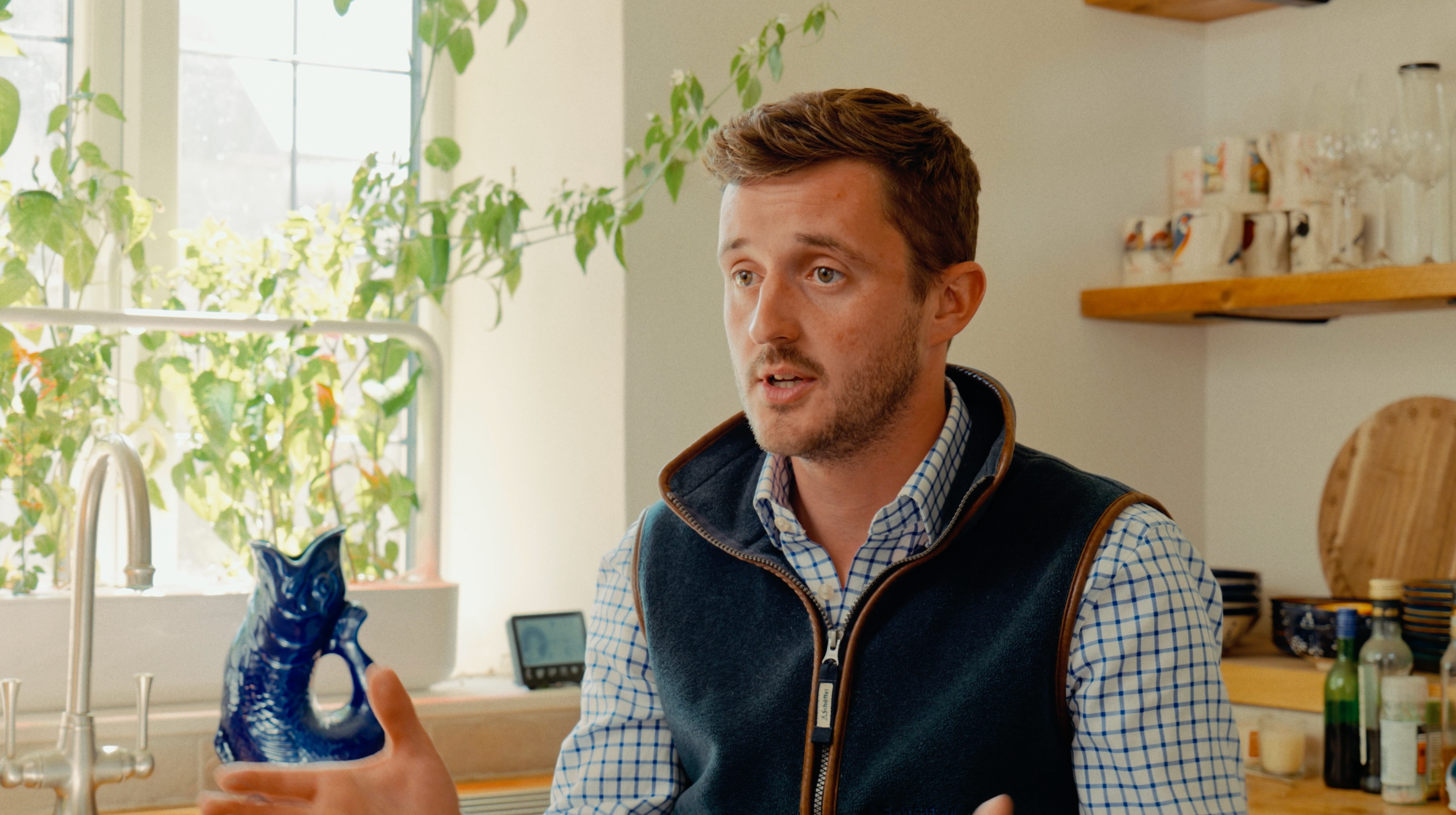
See how Ed Franklin is using Monil collars for regenerative farming at Sapperton Wilder.
Watch his farming story in the video below
Don't have time to watch the video?
Here’s a summary of the highlights:
When Ed joined Sapperton Wilder 18 months ago as farm manager, he brought with him a vision that most farmers would consider ambitious: turn 100 acres of Cotswold farmland into a thriving agroforestry system with three distinct revenue streams. The one thing that could have made it impossible? Fencing.
Three revenue streams, zero hard fences
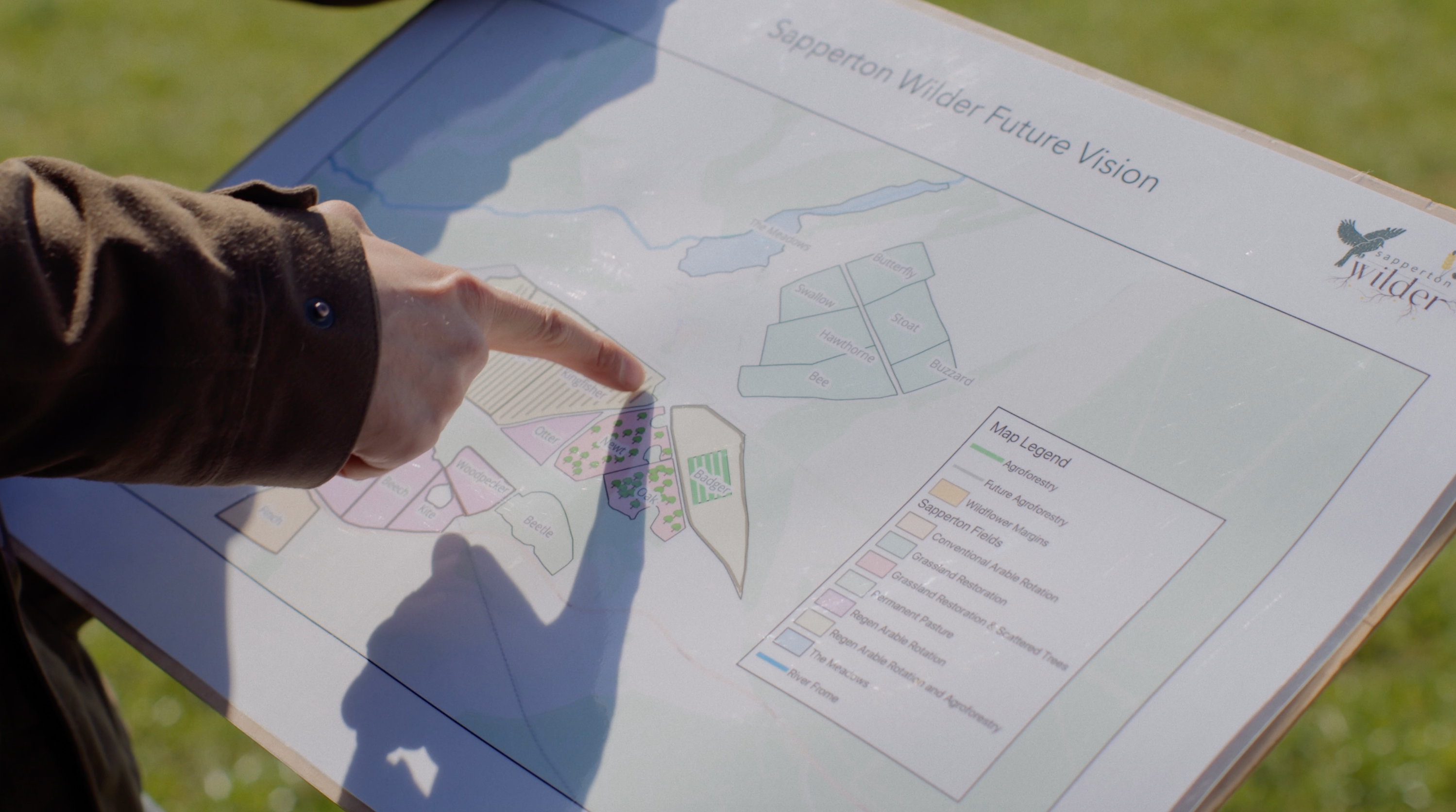
The plan at Sapperton Wilder is elegant in its design. Across three fields – roughly 100 acres in total – alternating rows of fruit and nut trees will be interspersed with strips of arable cropping and grass. The idea is that livestock can graze between the rows, the arable strips produce their own crop, and the trees eventually yield fruits and nuts. Three income streams from the same block of land.
But the system only works if cattle can move freely between rows without damaging the trees, and without the cost and rigidity of permanent or temporary physical fencing running through every strip.
"If we had any fences in the way it just wouldn't be possible," says Ed. "I calculated the cost of putting temporary fencing around all the agroforestry rows of trees and it far outweighed what the Monil virtual fence collars were going to cost – and also what it enables us to do."
Strip grazing for soil recovery
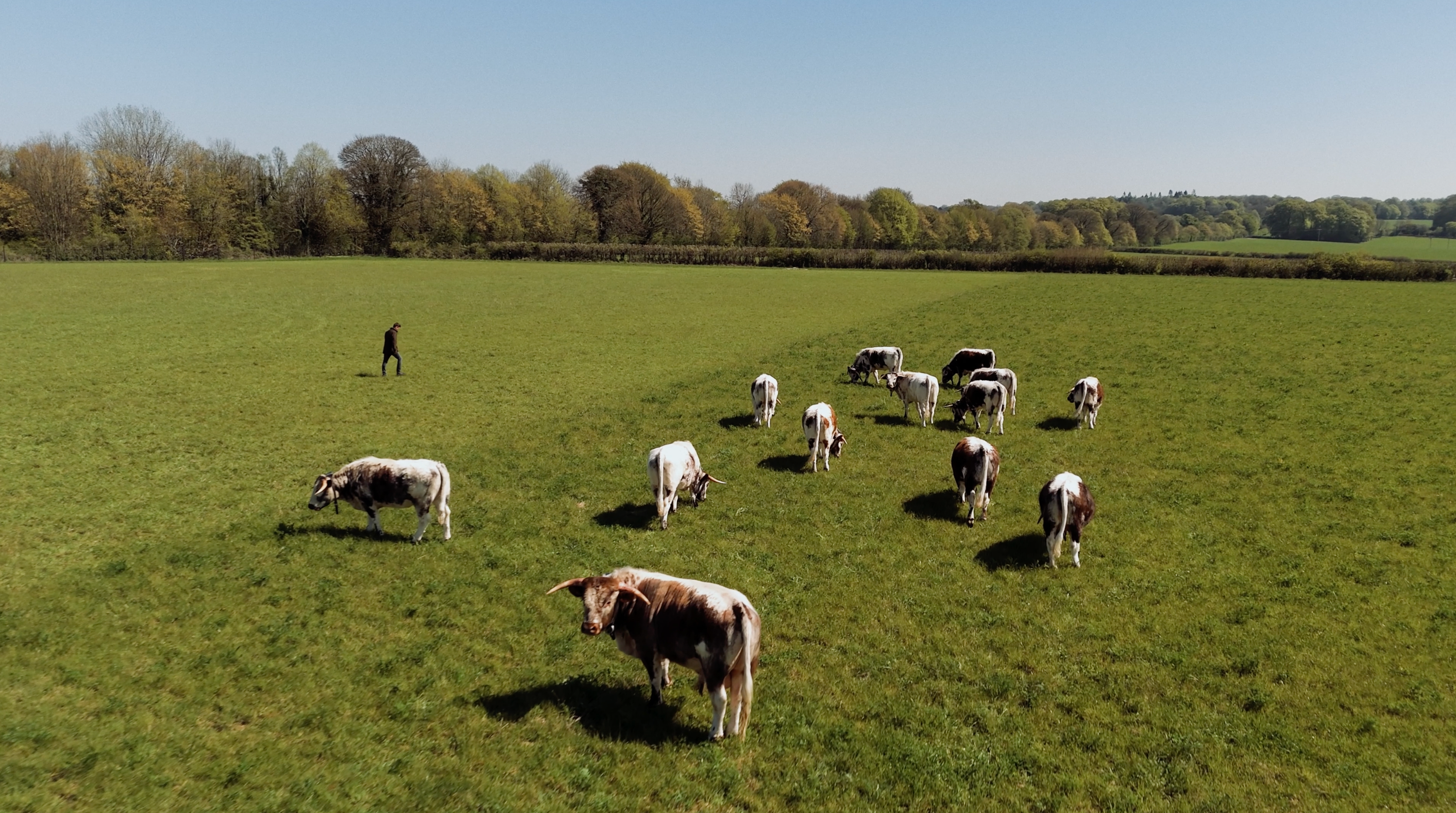
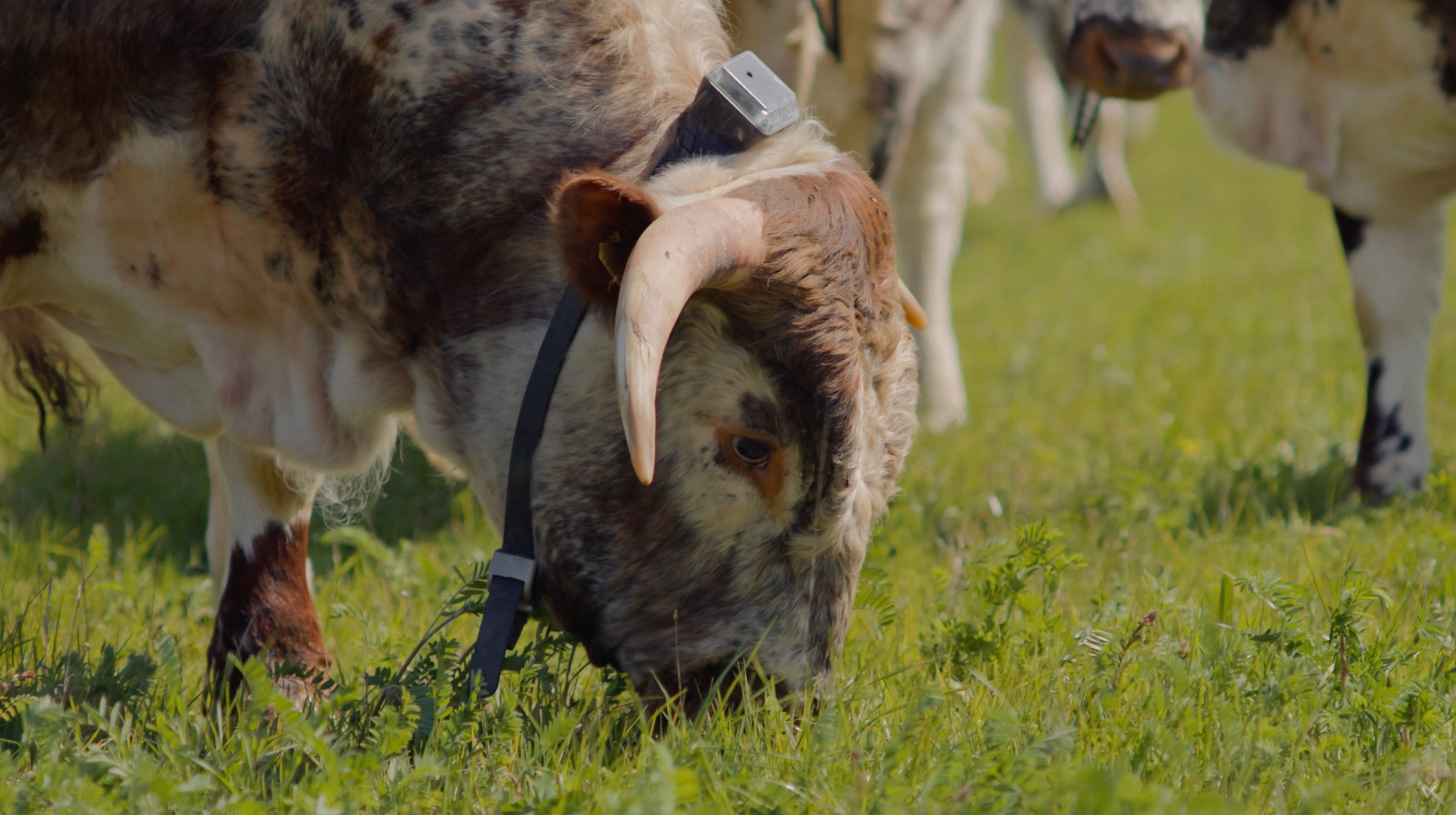
Before the agroforestry vision can fully take shape, the priority is the soil. Ed runs a herd of 13 British Longhorn cattle at Sapperton Wilder, and the whole reason they're there is regeneration. Using Monil's virtual fencing, he practices strip grazing: moving the herd through specific blocks of land and then pulling them off for 60 days to let the soil recover properly.
It's a management approach that requires precision and flexibility, both of which physical fencing makes harder and more expensive. Virtual fencing makes it routine.
The numbers made the decision easy
Ed is straightforward about how the decision was made. When he sat down and costed up the temporary fencing needed to protect every row of trees across the agroforestry area, the figures were clear. The Monil collars weren't just cheaper, they were more capable.
Beyond the cost saving, Ed points to three reasons he now recommends Monil to fellow farmers after less than eight months of use: time saved on fencing, improved safety for non-farming visitors, and data collection.
"The data – I think that's invaluable information that a lot of farmers overlook," he says. Monil's collars capture movement and behavioural data on every animal, giving Ed a layer of insight into his herd that traditional fencing simply can't provide.
Safety in a wildlife-rich landscape
Sapperton Wilder isn't just a farm, it's a place where farming and nature are expected to coexist. That creates a particular challenge when it comes to fencing. The farm sits in a high deer pressure area, and Ed has seen first-hand what happens when deer encounter electric fencing strung out for cattle management.
"The electric fencing isn't for them, it's for the cattle. With the Monil collars, we can put that virtual fence up and now it poses no risk to other wildlife walking through."
That matters deeply at Sapperton Wilder.
"Protecting the wildlife and still being a viable farm – that's the aim of the game for us here."
The collars also make the farm safer for people unfamiliar with livestock. They’re able to fence cattle away from a specific area via the app while someone carries out a task nearby. This gives non-farming staff and visitors confidence they wouldn't otherwise have.
Three days to learn, a lifetime of flexibility
One concern Ed had before adopting virtual fencing was animal welfare. He did his research, spoke to existing users, and found that the collars had less impact on the cattle than electric fencing would.
The transition was quick.
"It took no more than three days for the cows to learn the Monil virtual fence collars. They really do respect the fence."
Now, Ed checks the app over his morning cup of tea, confirms all collars are active, and moves the herd from the cab of his pickup when needed. For a farm manager juggling agroforestry development, soil regeneration, and wildlife stewardship across 100 acres, that kind of simplicity is worth a great deal.
Are you farming with agroforestry or regenerative grazing in mind? We'd love to hear about your setup.
Book a 30-minute meeting or get in touch for a non-binding quote.