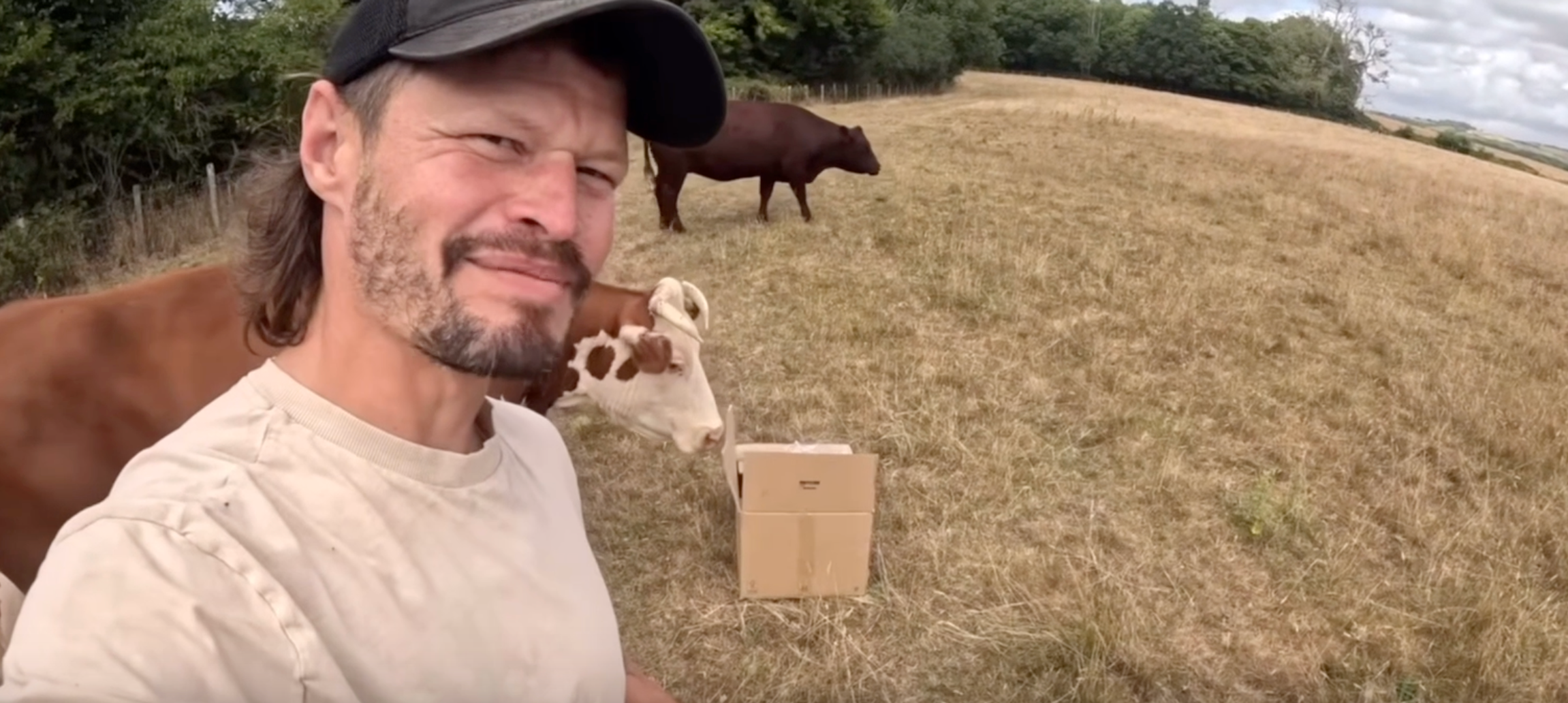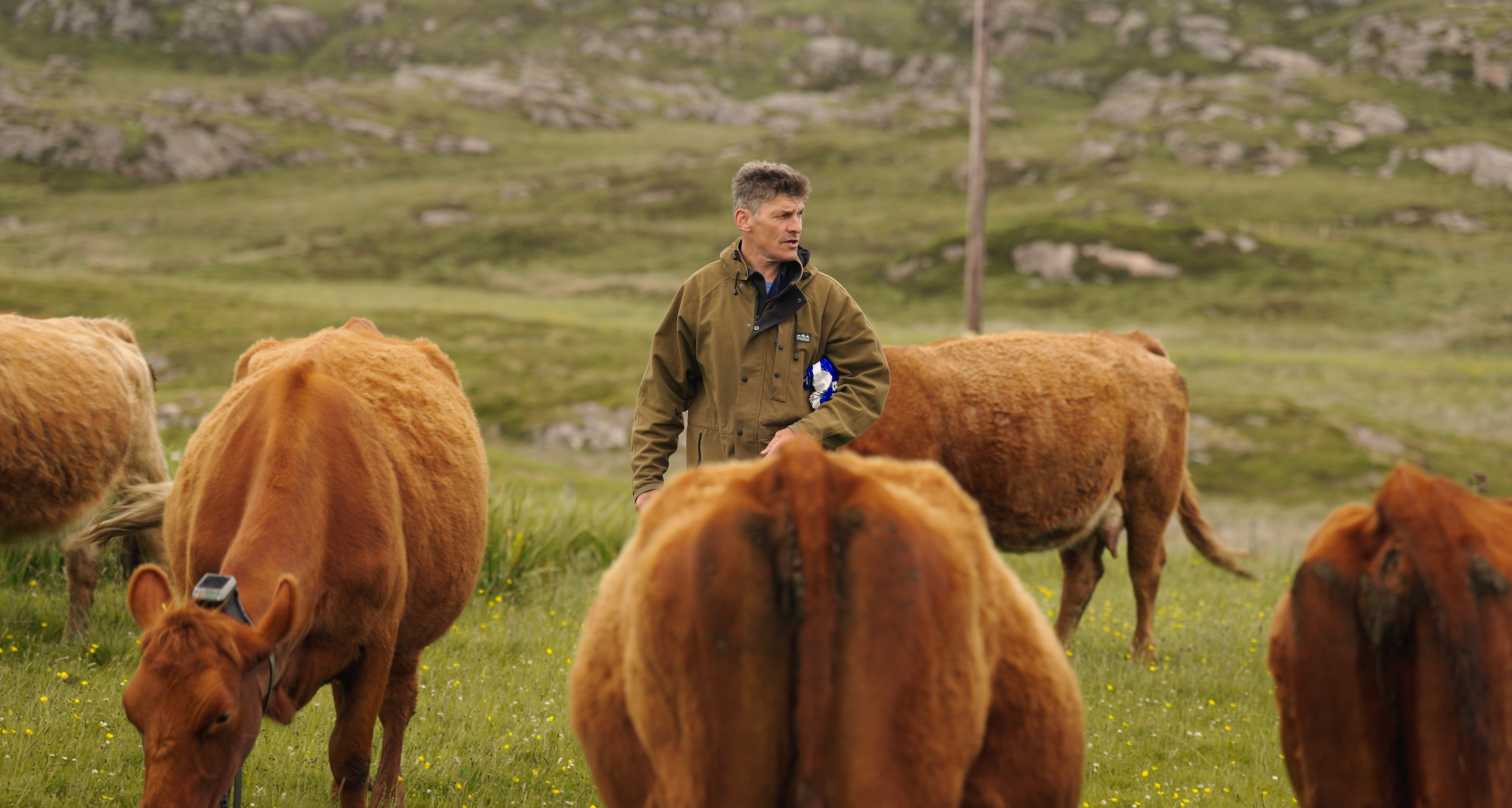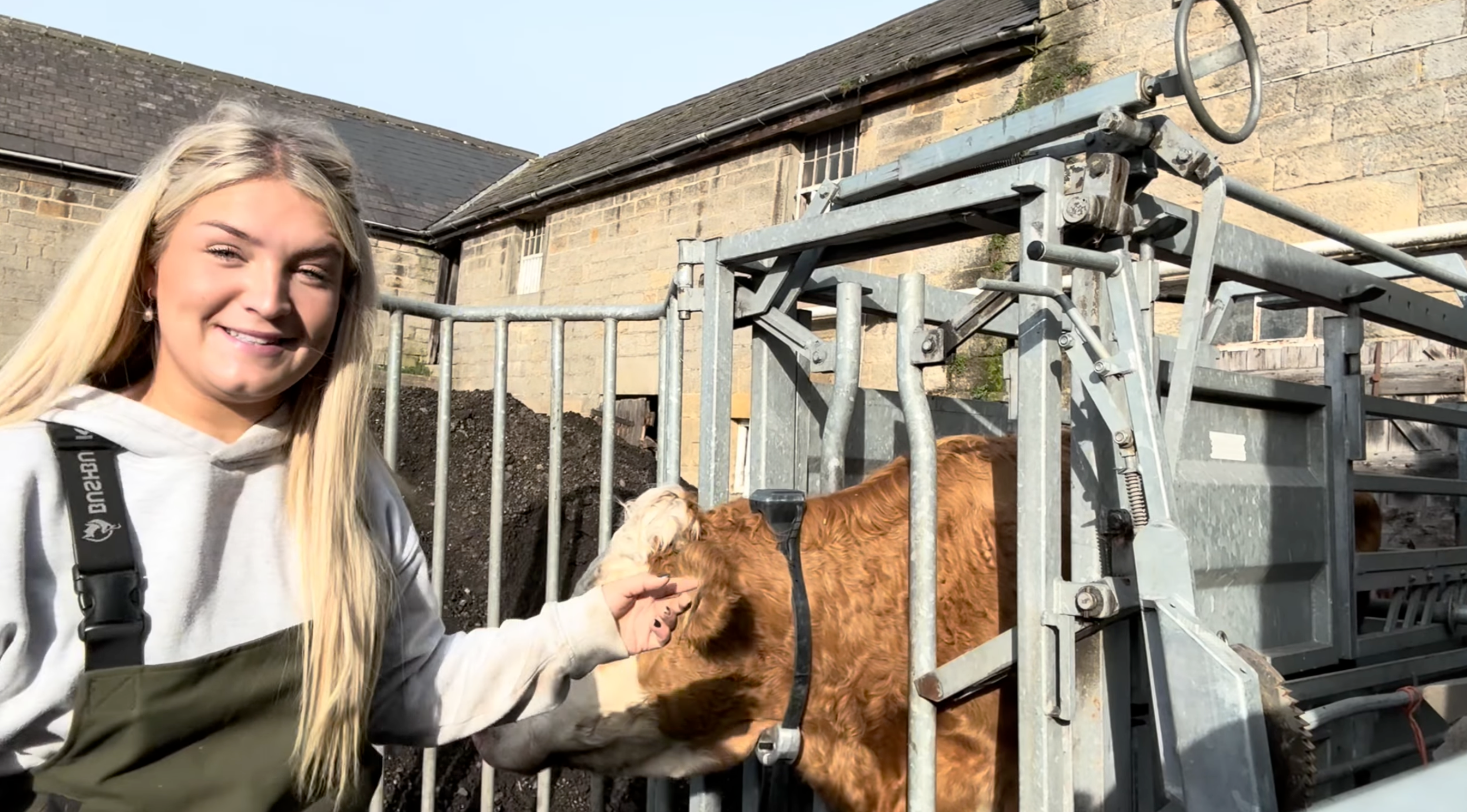
We’re incredibly excited to welcome Harriet Cowan from “Harriet on the Farm” to the Monil Community.
Harriet brings the exact energy we love working with. She’s curious, practical, and authentic, always willing to try new tools on the farm and share real experiences with her audience.
The future of farming is built together with farmers like Harriet. Farmers who are curious enough to experiment and generous enough to share what they learn along the way.
And we’re especially excited to see more women like Harriet leading conversations about modern farming.
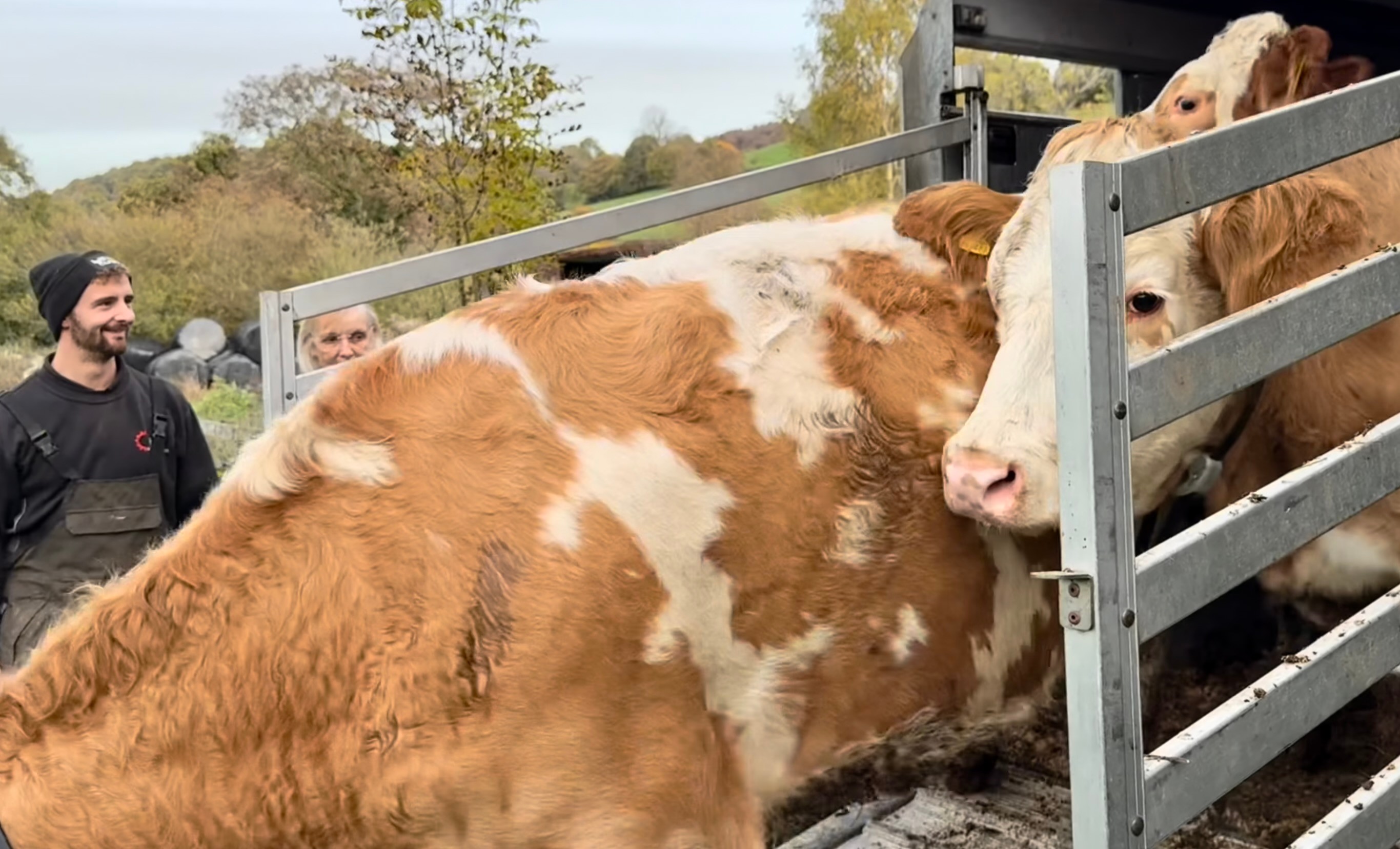
Harriet currently helps run her family farm in Derbyshire, where she farms with 45 Hereford calving cows. For this trial, 15 of the cows were fitted with Monil virtual fencing collars
“If you're a farmer, you'll probably be like… this is going to be interesting.”
That’s how Harriet kicks off her first day testing the Monil system. Trying new technology on a farm always comes with a bit of curiosity and anticipation, something many farmers will recognise immediately.
Before turning the cows out, Harriet walks through the process of fitting the collars and setting up the virtual boundary.
“The collar is all rubber, it's all flexible,” she explains while fitting one. She shows the lock at the bottom which also acts as a counter-weight to ensure the collar stays upright and top-mounted.
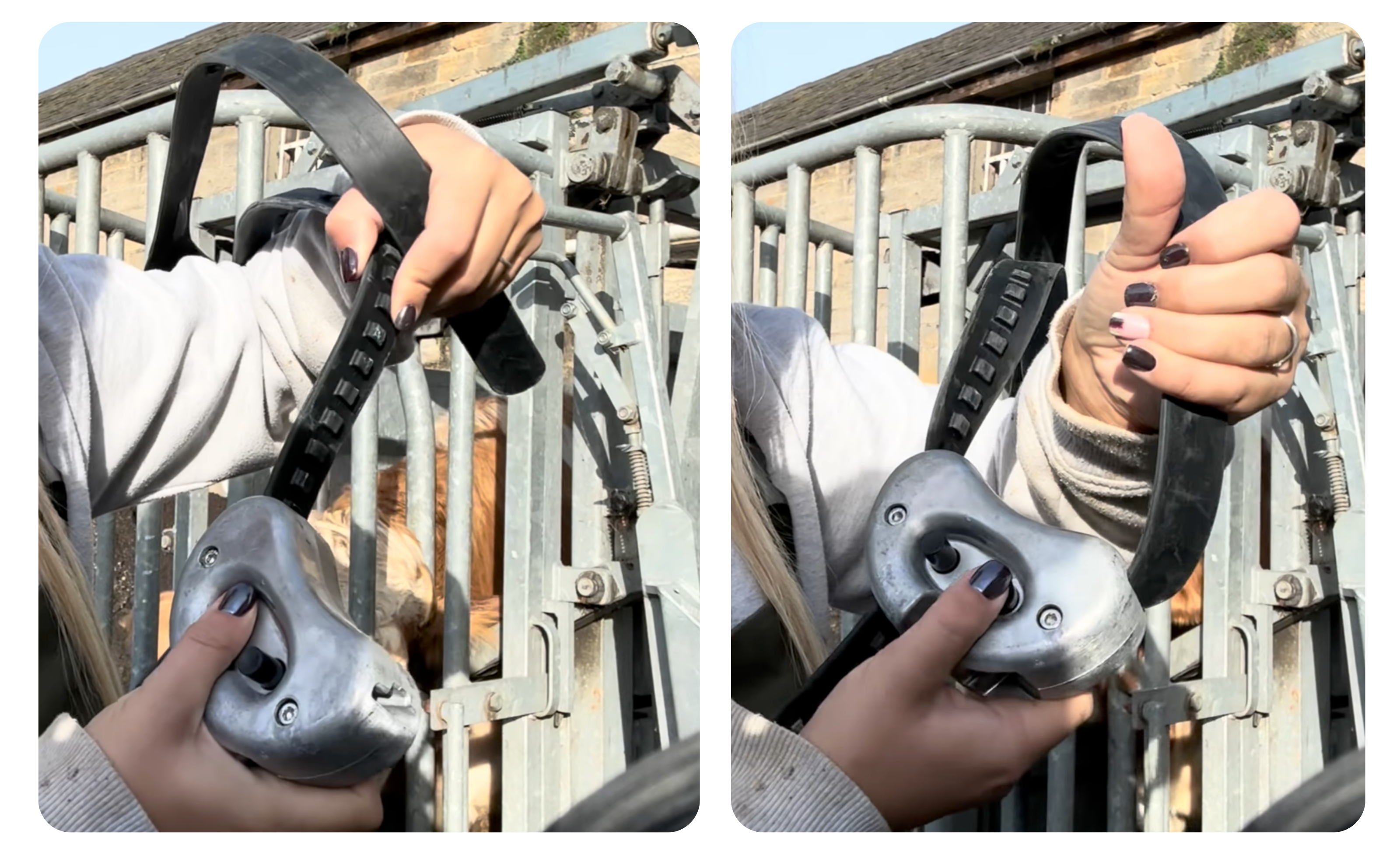
Explaining how the locking system works she points out:
“There’s two buttons so you can easily change how tight you want the collar.”
For proper fit, Harriet explains that you should be able to comfortably fit a full hand width underneath the collar, ensuring the cow has freedom of movement while the device stays secure.
Once fitted, the collar is scanned into the Monil app using its QR code, where it can be linked to the cow’s ear tag number and name.
Creating the virtual fence
Using the Monil app, Harriet sets up the virtual boundary directly on her phone, that will replace the traditional fence once the cows learn through sound where the boundary is.
Harriet opens a digital map of the field and draws the grazing boundary directly on her phone.
“This is the map of the field, and the darker colour is where I've marked out. I've set the boundary a bit further away from the hedge, just so the cows get to know it.”
Once the boundary is saved, the collars automatically sync with the digital fence.
Instead of physical posts and electric wires, the boundary now exists digitally and can be moved anytime through the app.
How the Monil virtual fence works
When a cow approaches the invisible fence line, the collar begins guiding the animal using cues. As the cow gets closer to the boundary, sound from the collars gradually increases in volume and intensity.
If the animal ignores the sound cue, the collar will deliver an electric pulse encouraging the cow to turn around and remain within the grazing area. Monil collars emit directional sound with decreasing intensity as they turn their heads - guiding the correct direction. After a short training period, the cows learn to respect the boundaries based only on audio signals. The collars do not re-shock if the cow escapes and comes back into the fence.
The cows learn fast
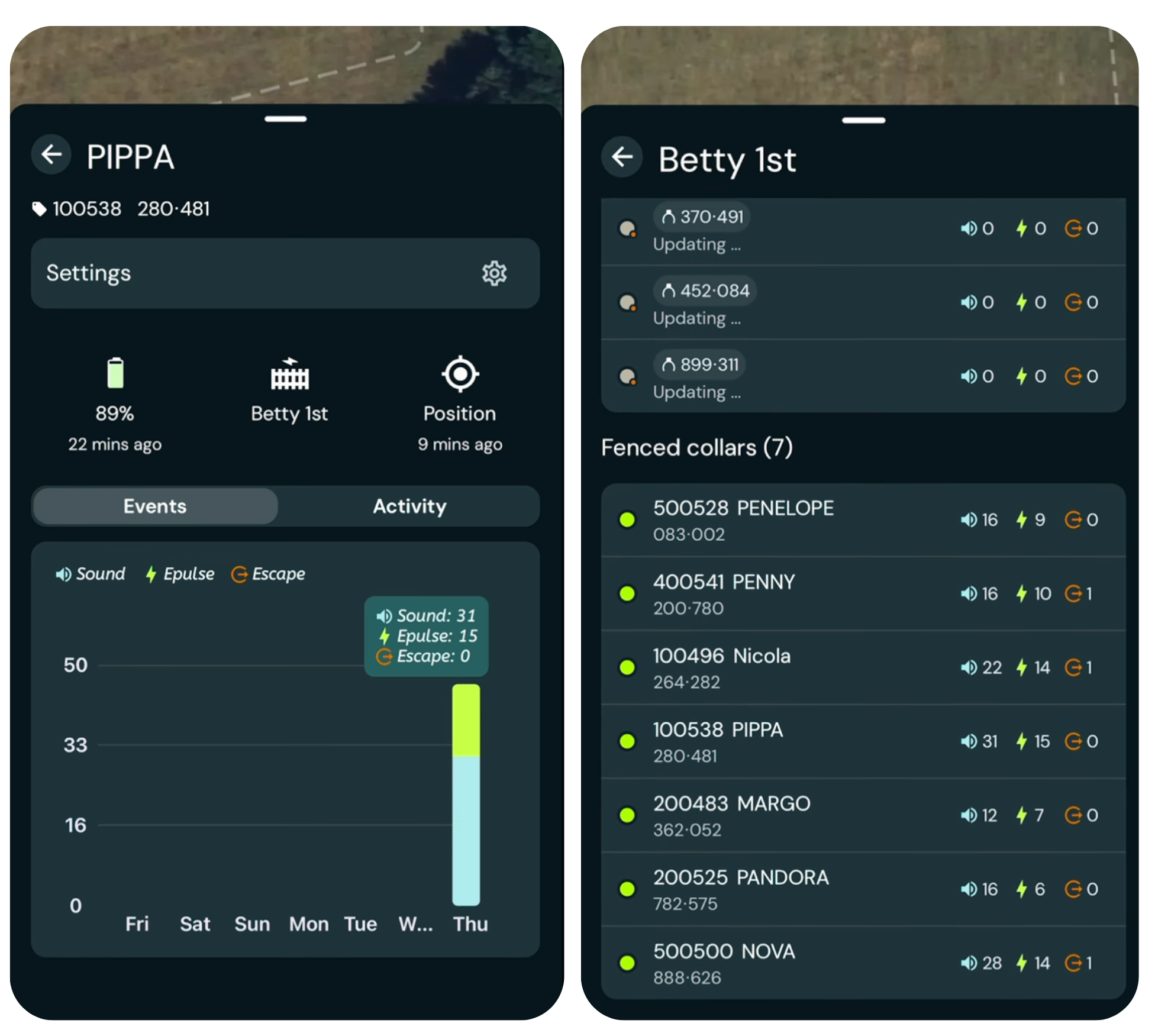
Just a few hours after the cows were turned out, Harriet checked the data inside the Monil app.
“If you click on your cow, you can see how many times they've heard the noise, or they've been shocked.”
What she saw surprised her.
“Shocks have stopped completely now, and it's been, I want to say, like four or five hours since they went out. So that is not bad going.”
Within a single afternoon, the cows had already begun responding to the audio cue alone.
Harriet could even see how the grazing behaviour changed as the cows learned where the virtual boundary was.
“This is how well the collars work. They know where they've grazed and where they haven't grazed.”
Cost comparison: Traditional fencing vs Monil virtual fencing
One of the biggest questions farmers ask is whether the system makes sense financially. At the end of Harriet’s video, she compares the Monil system to traditional fencing.
“We paid £14 a meter for some fencing last year,” she explains.
“To fence this whole field would cost you the same price as the collars but that's just one field that you've fenced.”
With virtual fencing, the flexibility is completely different than traditional fencing where you need materials, labour, installation and ongoing maintenance.
As Harriet points out “It’s definitely something to weigh up and think about.”
Instead of building permanent fences, farmers can move grazing boundaries instantly through the app, allowing the same collars to be used across multiple fields.
Solar charging and daily use
Harriet pointed out that the collars charge themselves through built-in solar panels. With the top-mounted design, the built-in solar panels face upwards allowing them to recharge automatically while the cows are grazing.
She concludes that it’s a one-time investment that saves time, labour, and money long term.
A successful setup
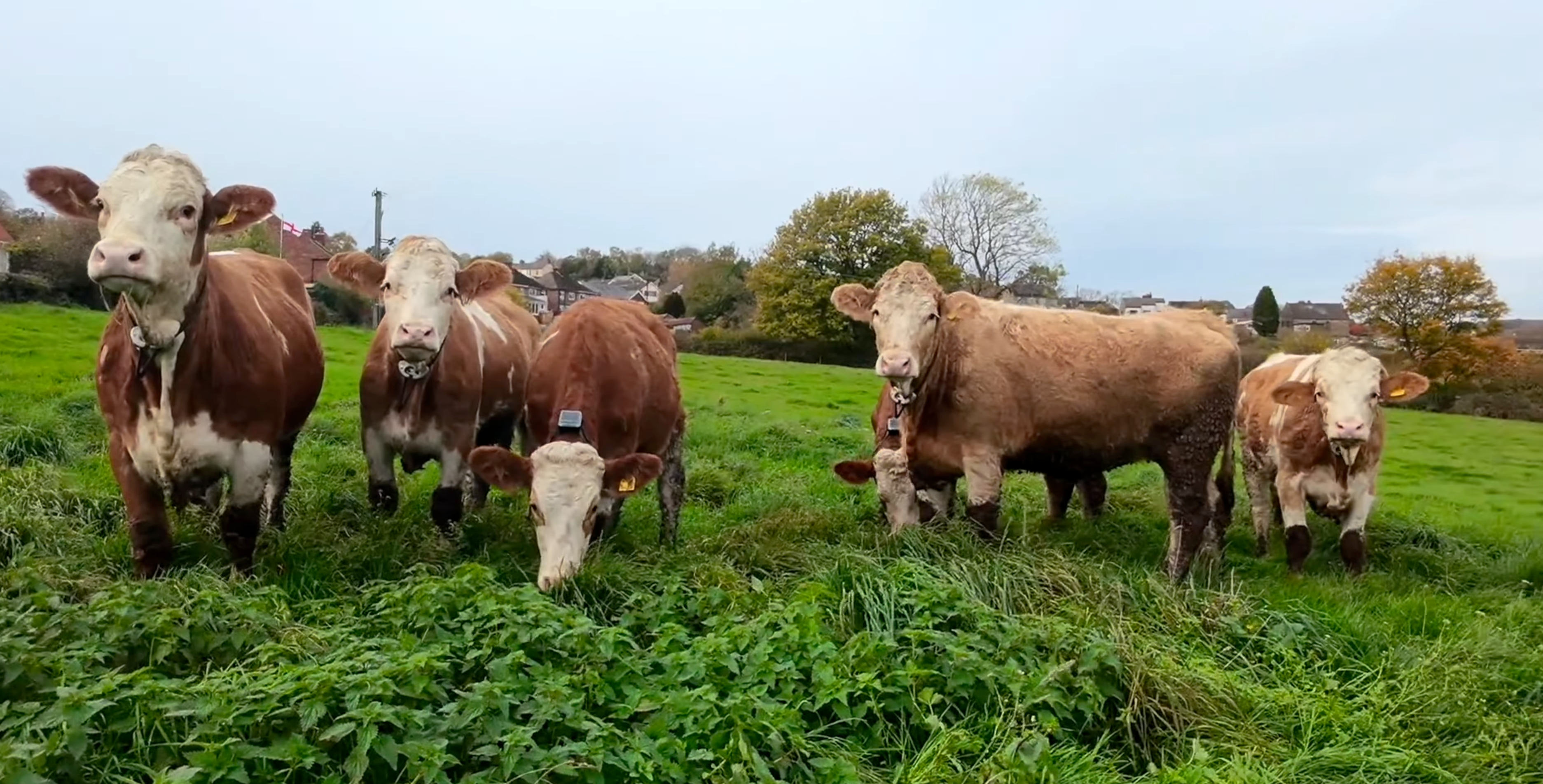
By the end of the first day, Harriet already saw the benefits of the Monil virtual fencing system.
“It’s been a successful day.”
After seeing how quickly the cows learned the boundary, how simple the Monil app functions, she simply summed up her experience: “10 out of 10.”
Working with Harriet is an absolute pleasure. Her curiosity, openness, and enthusiasm for farming is an energy we welcome in the Monil community.
We’re excited to follow along with her journey and continue supporting farmers like Harriet who are helping shape the future of agriculture. Make sure you keep up with Harriet on her YouTube and see what she’s up to.
Thinking about virtual fences?
Leave your details below. We’d love to send you some more info and a special offer tailored to your farm.