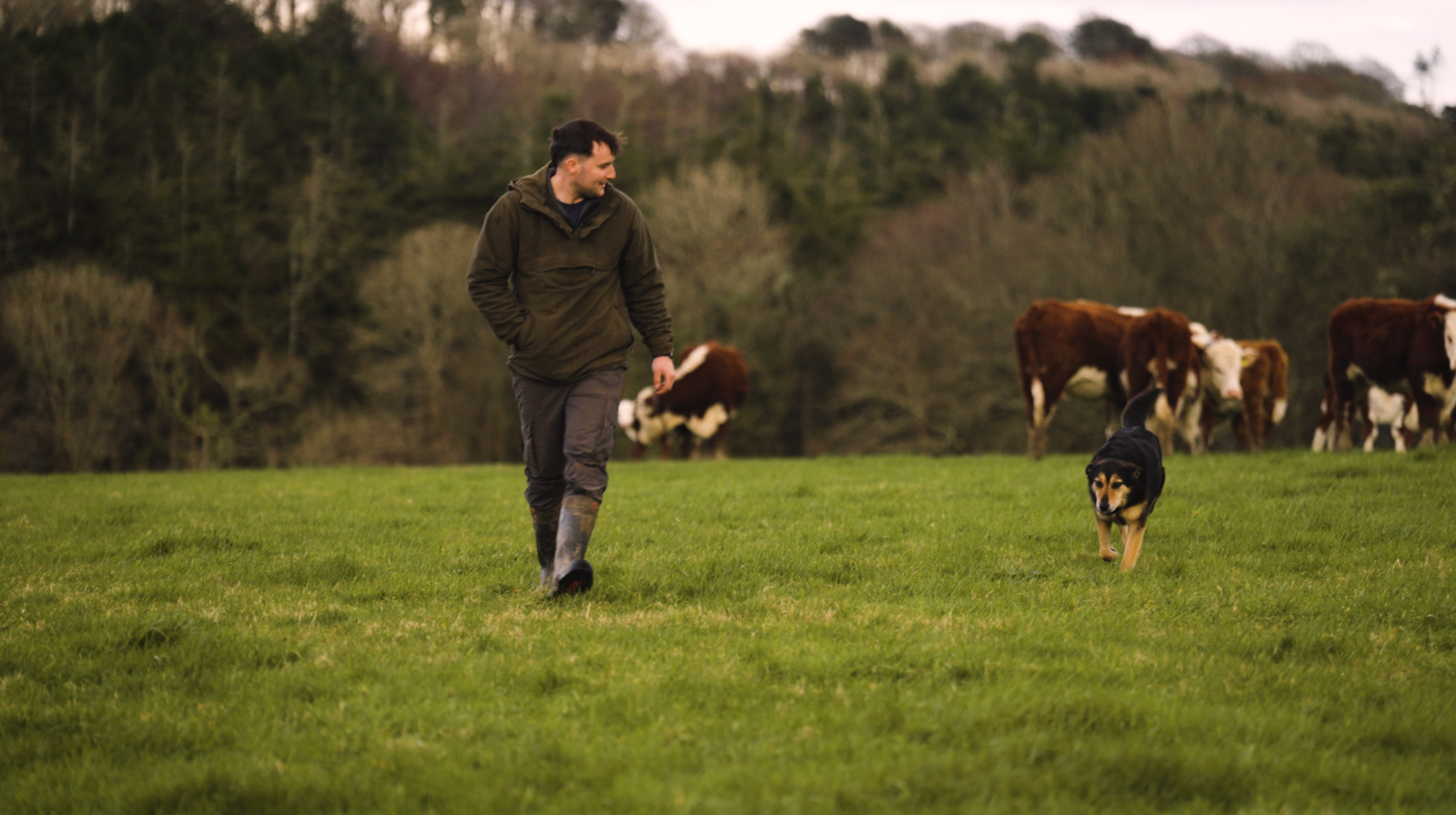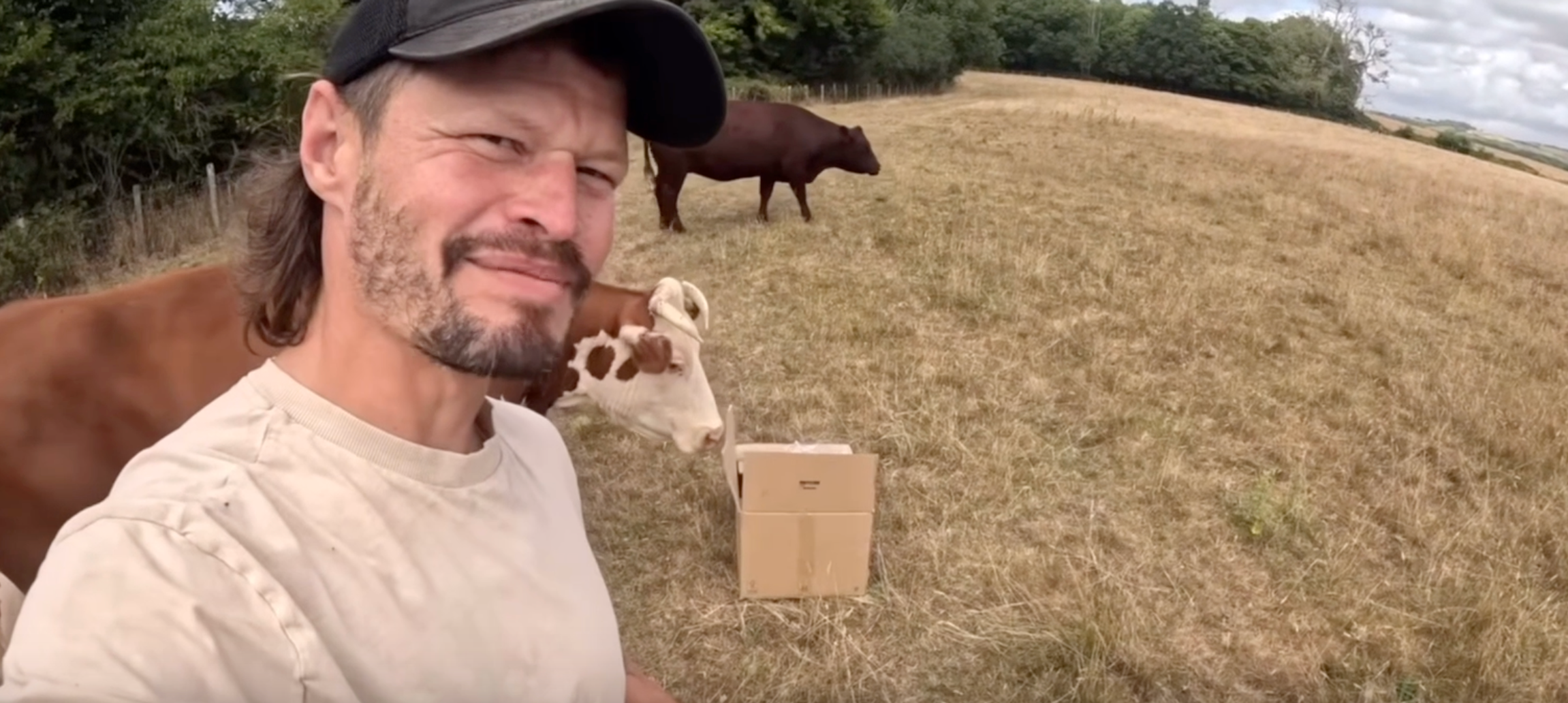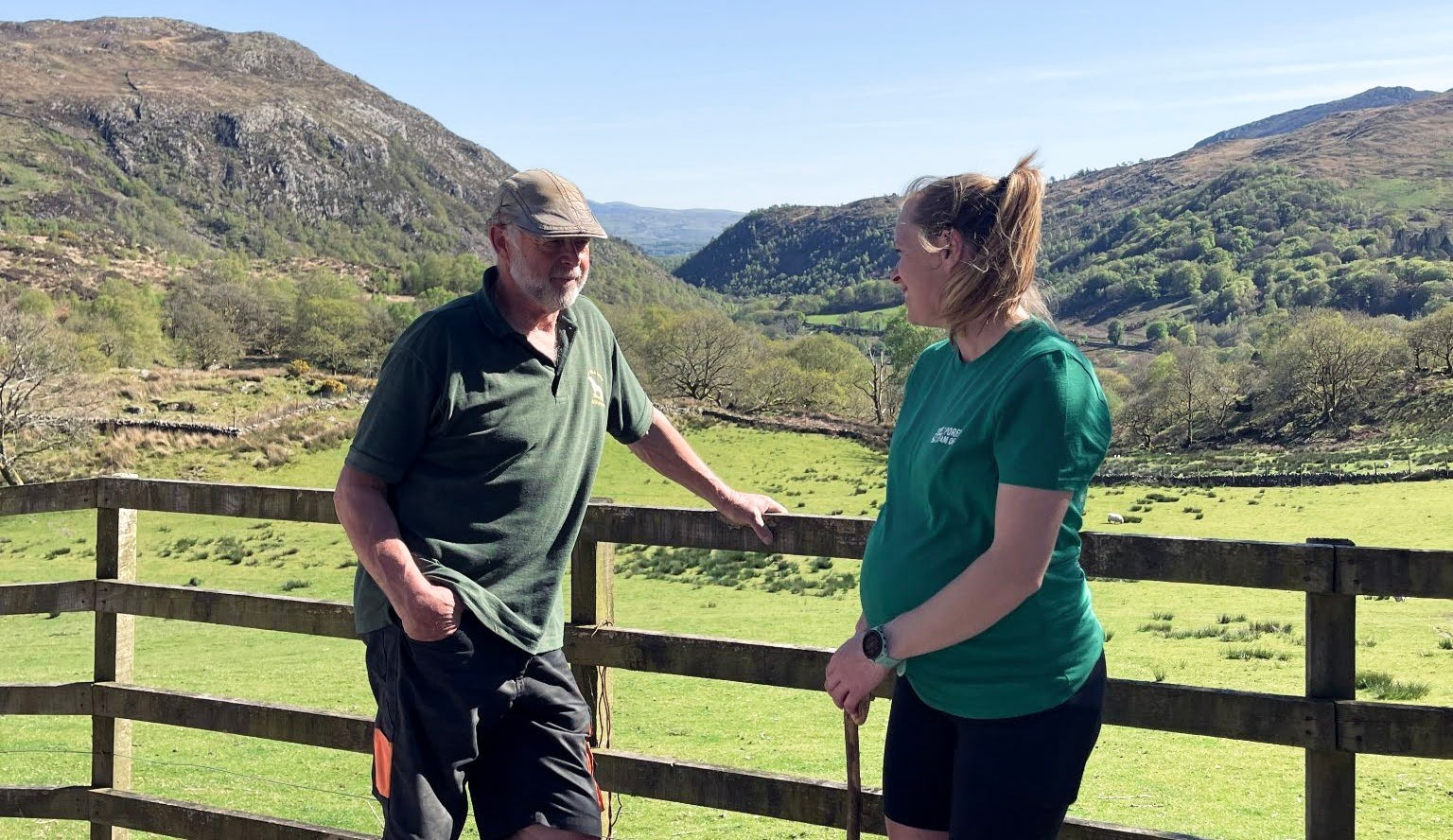
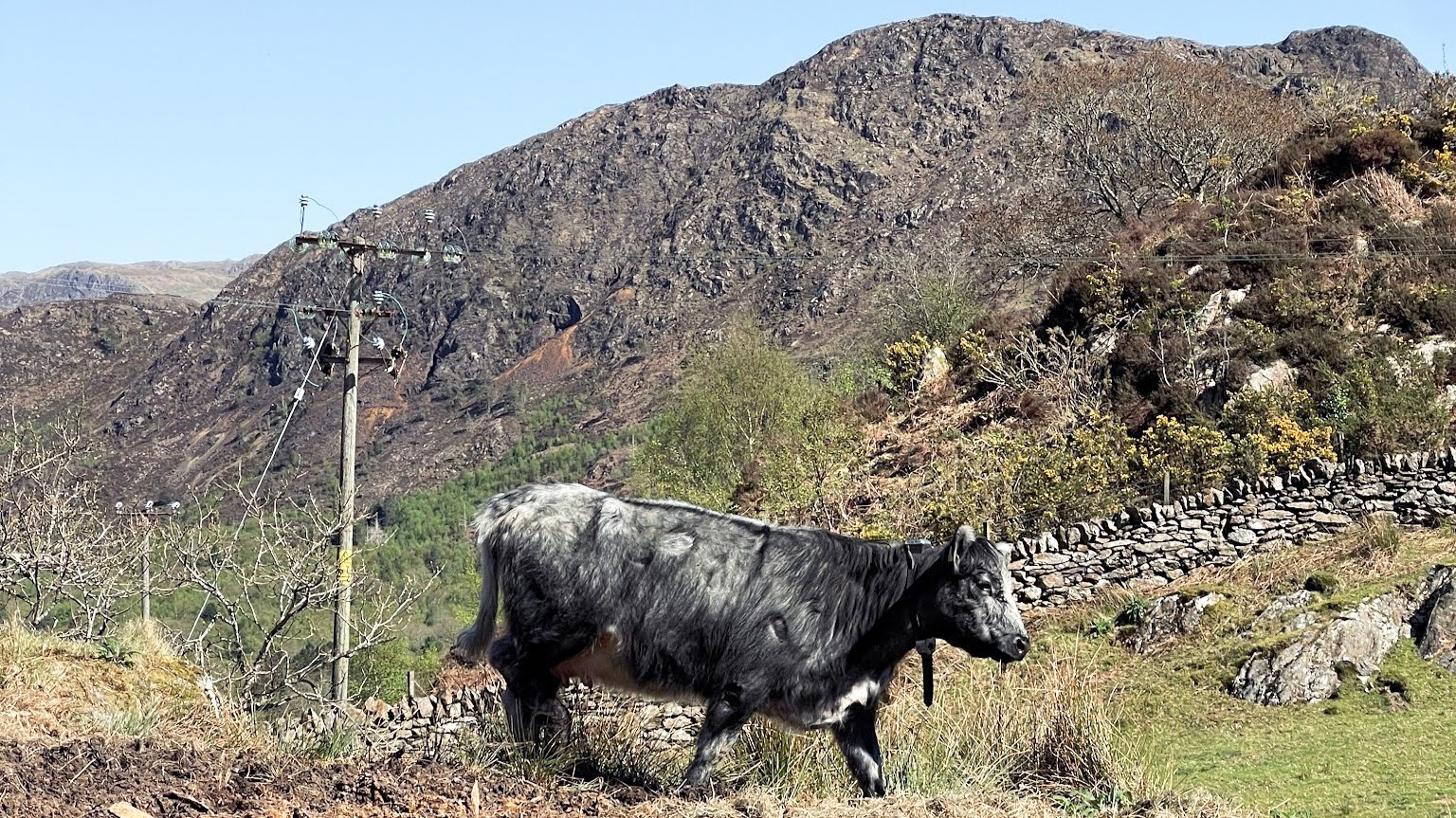
Bethan Till farms at Perthi, near Beddgelert, in the shadow of Eryri National Park. Alongside her parents — primarily her father — she runs a calf at foot operation with a small herd of Blue Grey crossbreds on 150 acres of Welsh hill ground. It's a landscape that rewards good stockmanship but makes the practicalities of cattle management genuinely difficult: steep mountain terrain, bracken, ticks, and dark winters.
Bethan received her five Monil collars through a collaborative local scheme, giving a network of farmers in the area access to virtual fencing technology together. She's only had them on since the beginning of April, but she's already finding the app as useful as the virtual fence itself.
Spotting a calving cow from the kitchen table
The moment that illustrated the app's value most clearly came when Bethan noticed something unusual in her activity data. One heifer's activity was up by 30% compared to her baseline and she had moved away from the rest of the herd. No obvious sign of trouble, but something was different.
Bethan put the two signals together and drew the right conclusion: the heifer was about to calve. She was able to locate her quickly and keep a close eye on proceedings. Something that, across 150 acres of rocky Welsh hillside, would previously have meant a long and uncertain search.
"We can see where she was on her own, and that's where the calf was."
Knowing your animals by name
Bethan has also been making use of the app's notes function to build up individual records on each animal. One cow with a distinctive white patch on her forehead has been given a nickname. Calving dates, calf sex, and other observations are all logged against the individual animal in the app.
It's a simple feature, but the effect over time is significant. Rather than managing a herd as a collective, Bethan is building a picture of each animal's history and behaviour, a record that will only become more useful as the seasons go on.
Finding them on the mountain
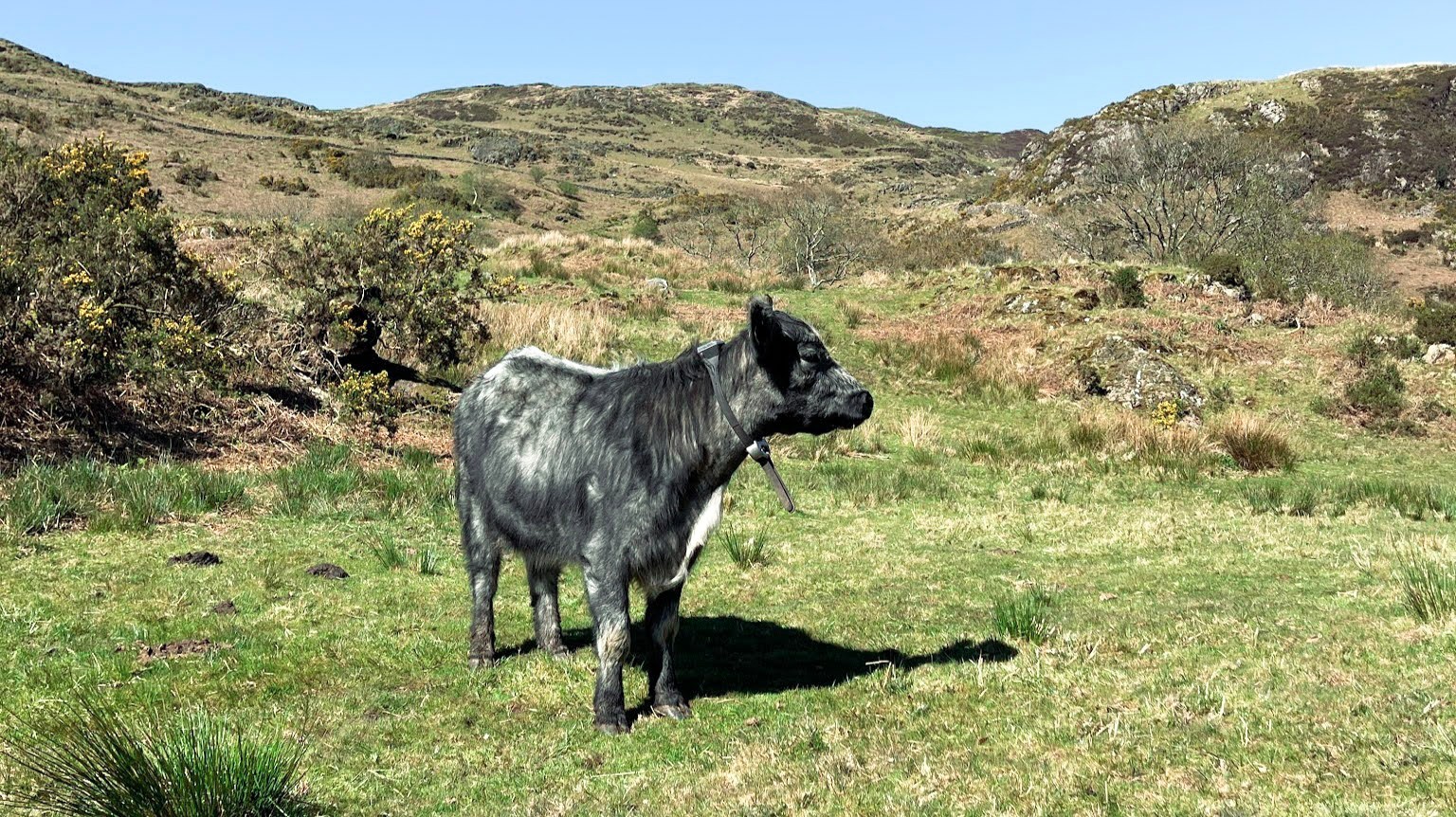
Before the collars arrived, the herd had 150 acres of free range and no GPS. Dark-coated Blue Grey crossbreds against Welsh rock are not easy to spot. As Bethan noted with a laugh, even when someone pointed them out, the cattle were almost invisible against the hillside.
"Before we had the collars, if you had a cow missing it'd take a day to find it."
This summer, the plan is to move the herd up onto the mountain. The collars will allow Bethan to keep them higher up, above the mountain wall, without them drifting down to the lower fields. Targeted grazing on bracken-heavy ground is also on the agenda: using the cattle to trample and graze the bracken back and managing vegetation in a way that benefits the wider hill environment.
A network of farmers, a shared technology
Bethan isn't the only one using Monil in the area. The collars came through a scheme that allowed a group of local farmers to access the technology together, and the effect is spreading. One neighbouring farm has five to ten collars already in use. Another neighbour has just received his collars and is about to start training his herd ahead of the summer grazing season — with cattle that will be going up the same mountain.
It's early days at Perthi. The herd is still learning the fence, still being fed silage while the grass catches up after a dry winter. But the signs are good. The cattle responded to the virtual fencing boundary fast, and Bethan is already finding the app earns its keep every morning.
Hear from Bethan directly
Want to hear the story in Bethan's own words? Watch her introduce herself and share why she'd recommend Monil collars to other farmers, in both English and Welsh.
Farming in a challenging landscape and want to find out more? We'd love to hear about your setup.
Book a 30-minute meeting or request a non-binding quote below.