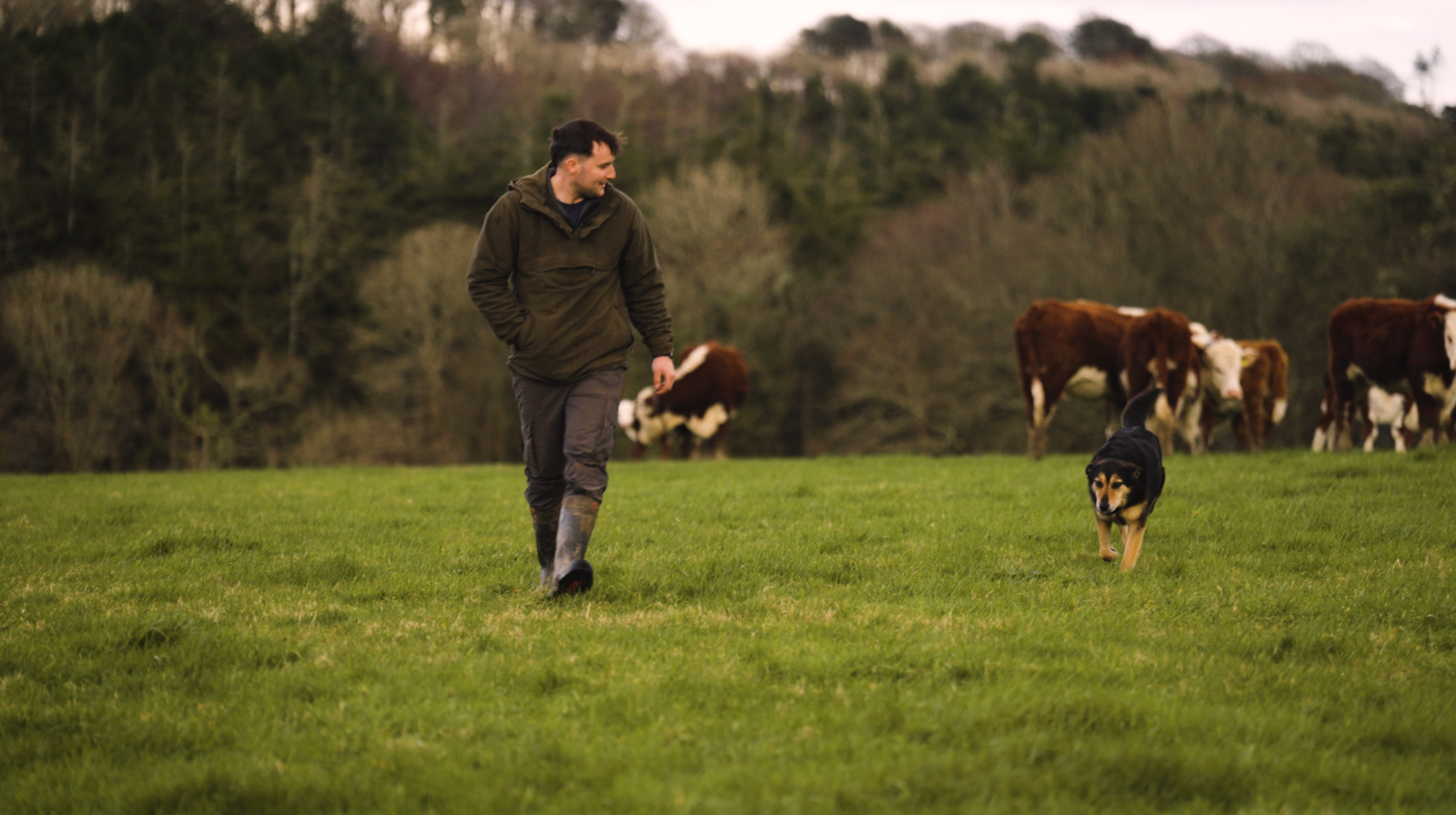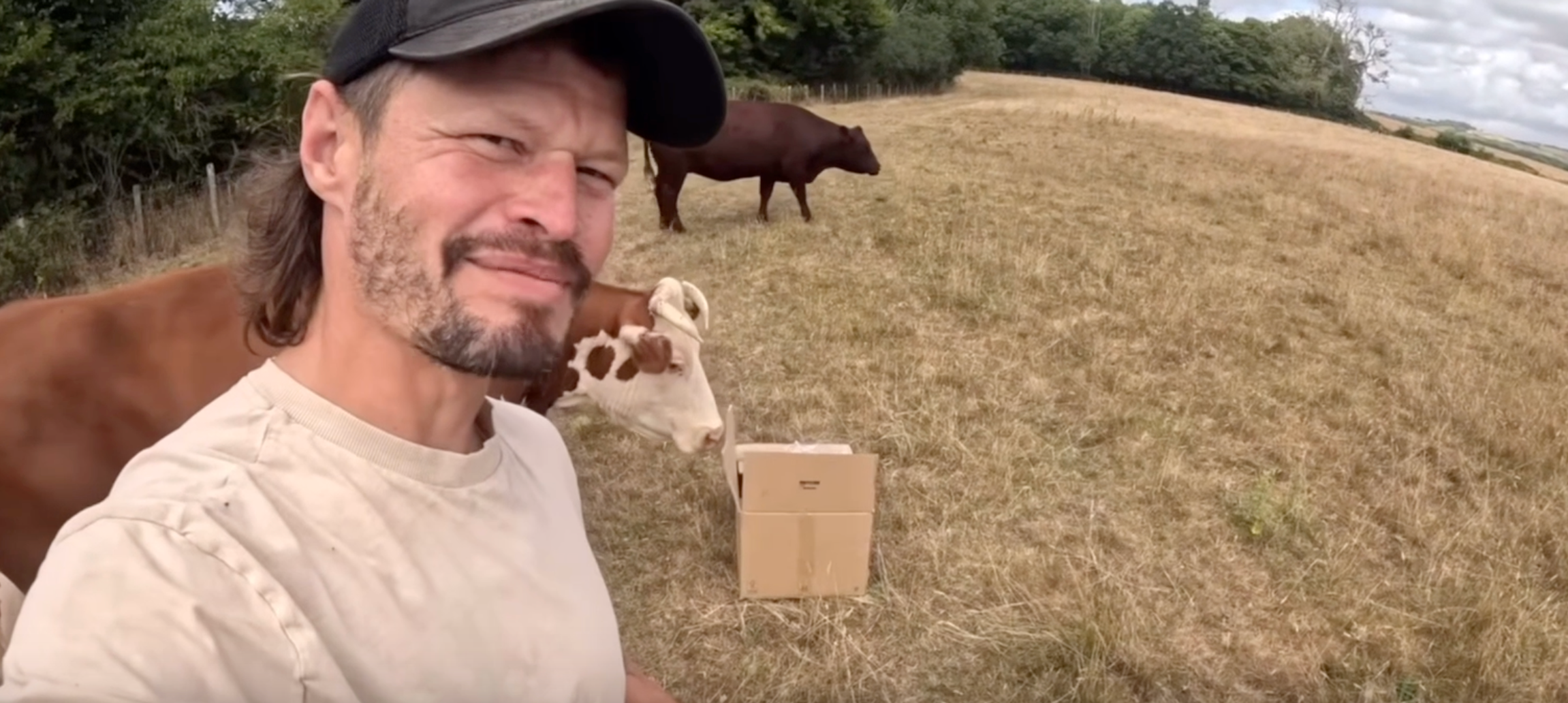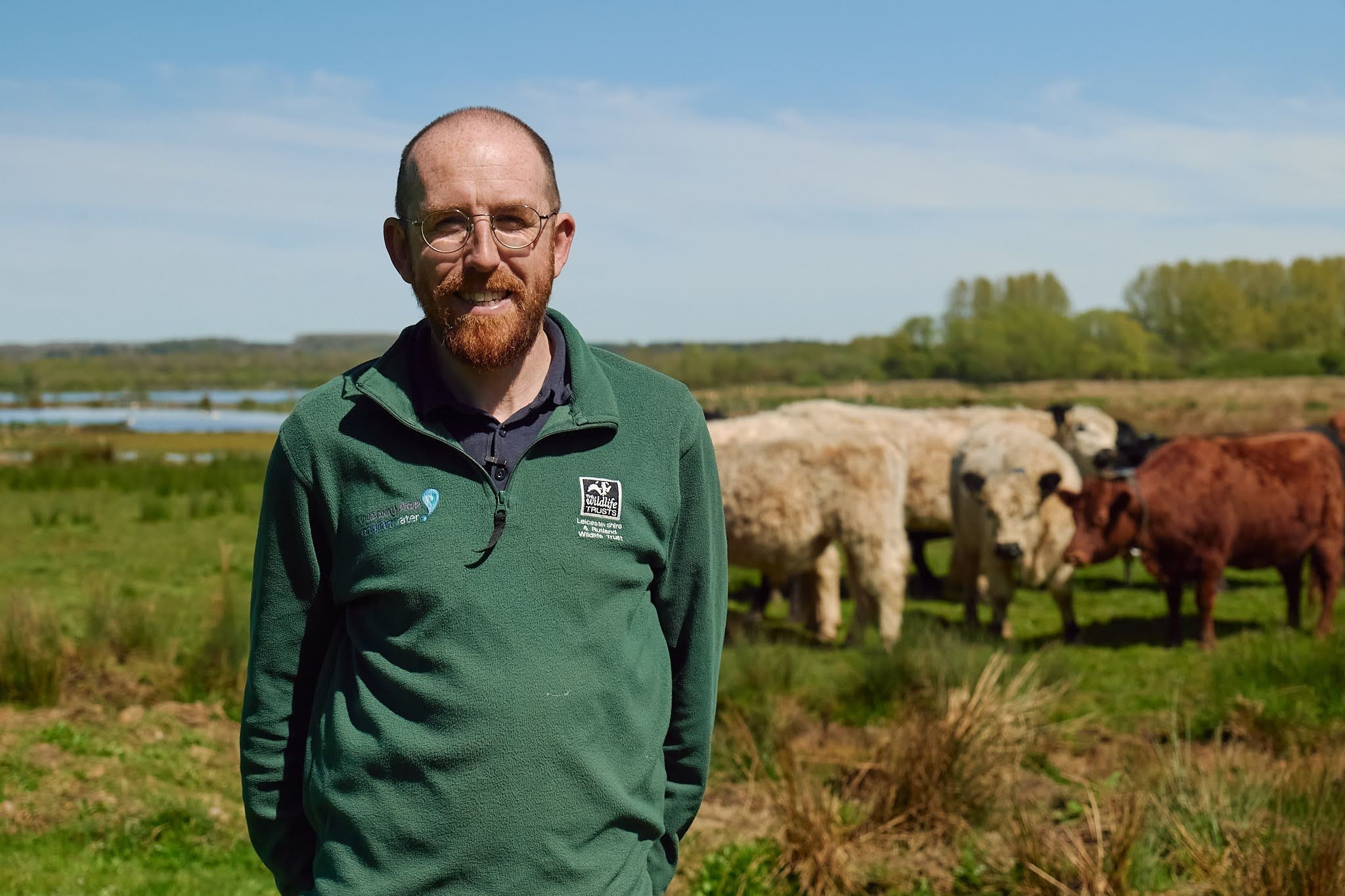

See how Paul Trevor is using Monil collars in wetlands in Leicestershire.
Watch his farming story in the video below.
Don't have time to watch the video?
Here’s a summary of the highlights:
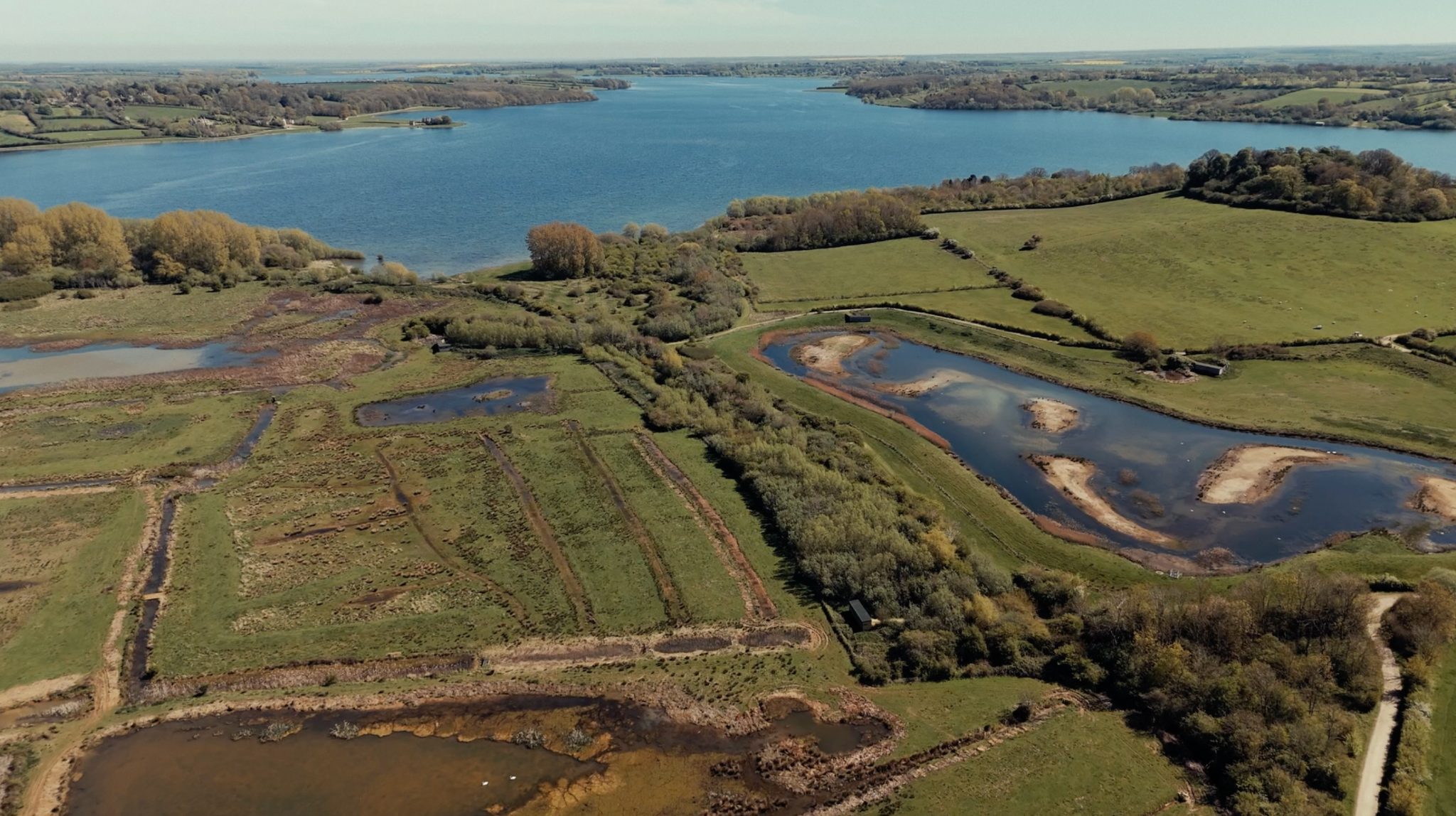
Rutland Water Nature Reserve is one of the UK's most important wetland habitats. It’s a thousand acres of reedbeds, wet grasslands, lagoons and wildflower meadows managed by the Leicestershire and Rutland Wildlife Trust on behalf of Anglian Water. It holds designations as a Site of Special Scientific Interest, a Special Protection Area, and a Ramsar wetland site of international importance. Getting the grazing right here isn't just about land management, it's about holding an entire ecosystem in balance.
Paul Trevor, the Senior Reserves Officer, has been trialling Monil virtual fencing as part of a project to expand and naturalise that grazing. After a year of use, he's convinced it could change conservation land management for good.
Cattle as conservation tools
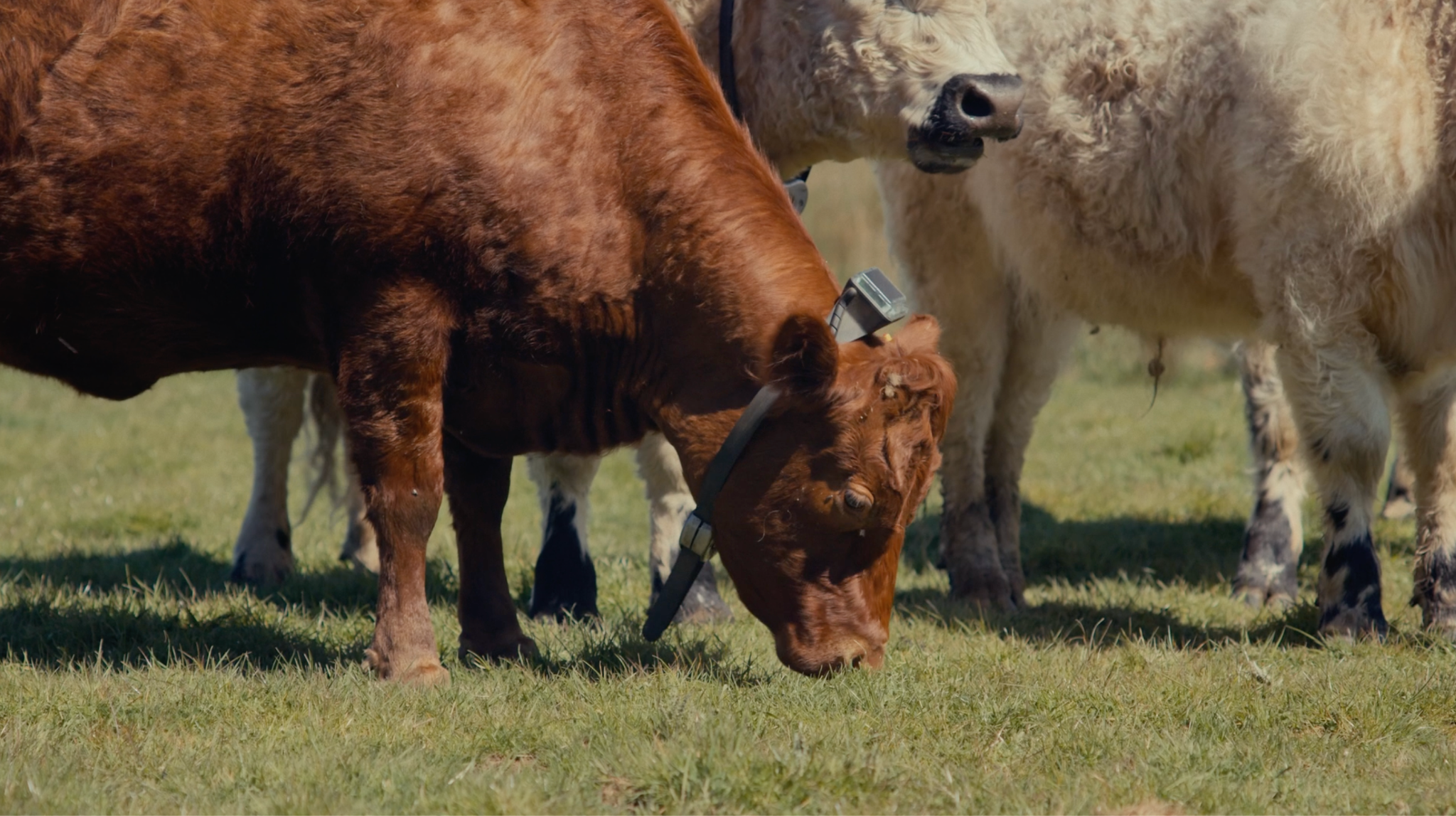
At Rutland Water, the cattle and sheep aren't just livestock: they're the hardest-working members of the team. Their role is to maintain the sward at a height that benefits the reserve's target species, keeping the habitat open and dominated by grasses, wetland plants and wildflowers. And because it's biological rather than mechanical management, the results ripple up the food chain.
"You've got a much higher number of invertebrates associated with it, which then has a much higher number of birds associated with it. Because that's the food chain, the food web."
A site that's notoriously hard to fence
Much of Rutland Water's most valuable habitat is also the hardest to fence. Large areas remain waterlogged for much of the year, and traditional fencing in these conditions struggles to last beyond ten to twelve years. The reservoir adds further complexity: water levels drop in summer, suddenly opening up stretches of shoreline that cattle could wander onto.
"Having the virtual fence means that we'll be able to stop the cows from going out onto the shoreline and onto somebody else's property."
With Monil collars, the boundaries move with the water. No posts sinking into boggy ground, no wire to rust and sag – just a fence redrawn in minutes on an app.
Towards a semi-rewilding approach
The longer-term vision is more ambitious than solving a fencing problem. Paul sees virtual fencing as a tool for moving away from rigid paddocks towards something that allows animals to behave more naturally, grazing the areas they choose, at the time of year or day that suits them.
"Having a system where we can take down fences and almost become a semi-rewilding project, the processes and the behaviour of the livestock will become more natural."
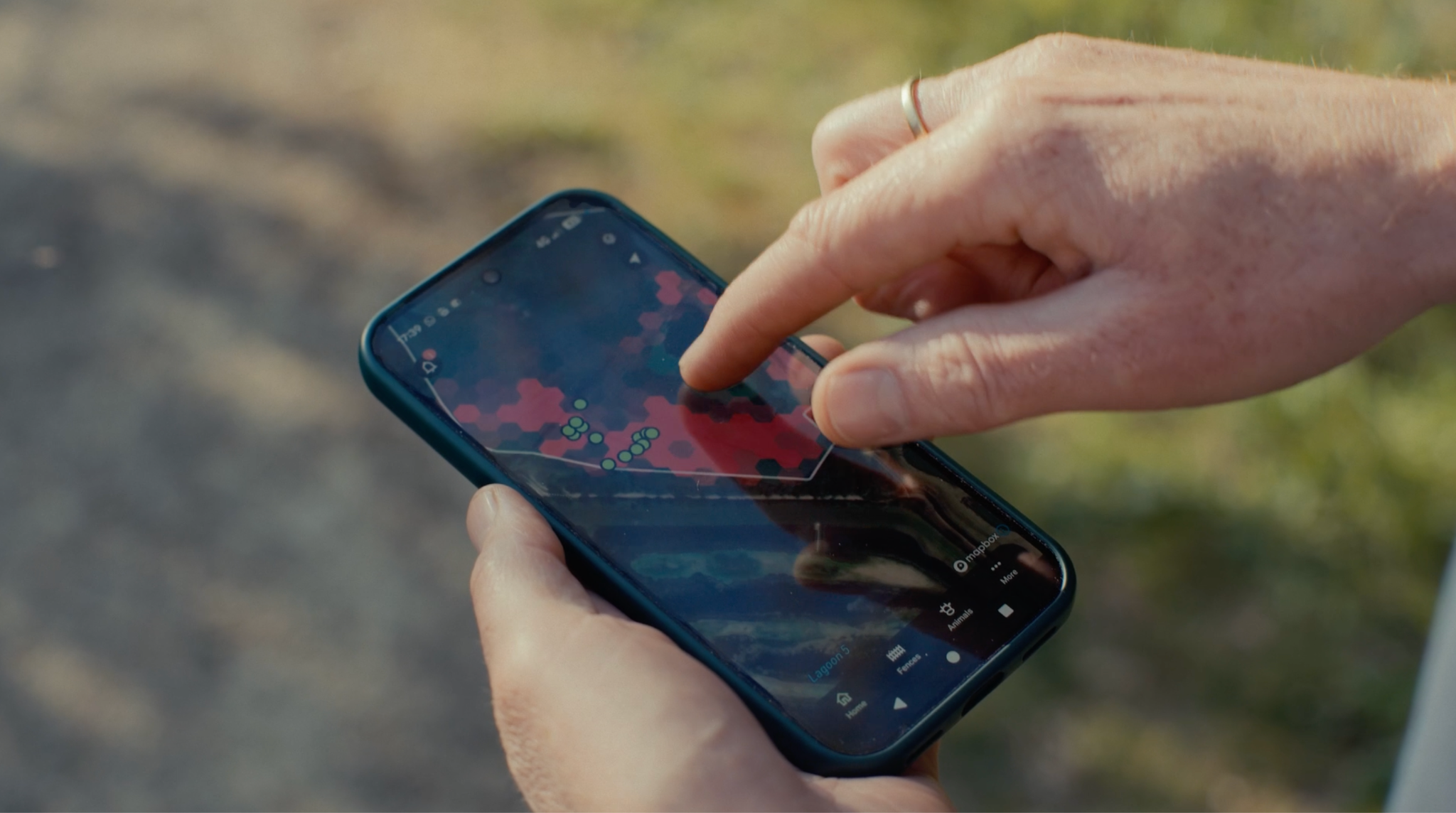
The Monil app supports this with a heat map of where the cattle have been, showing their movement patterns and pasture preferences over time. For a site running detailed invertebrate and bird surveys, that data opens up new research possibilities, connecting livestock behaviour directly to wildlife outcomes.
Paid for itself in year one
The financial case is simple. When Paul compared the annual cost of physical fencing on the reserve with the cost of setting up the Monil system, they came out equal.
"So after a year it's paid for itself – but will last multiple years."
The collars have also proven their worth in animal welfare. When one cow stopped moving, the app sent an alert immediately. The team located her quickly and treated her before the situation worsened, saving, as Paul put it, "a lot of discomfort for the animal."
A tool that could change conservation land management
"Do I see virtual fencing revolutionising conservation? I would say so, yeah – because there are so many sites where the ideal grazing system has not been able to be used because they're just impossible to fence."
For Rutland Water, Monil has removed that barrier. And Paul believes the same could be true for wildlife sites across the country.
Managing a conservation site where traditional fencing isn't working? We'd love to hear about your setup.
Get in touch by filling in the form below.