
When you rent most of your pasture, it’s hard to justify building permanent fence everywhere you’d like to have it.
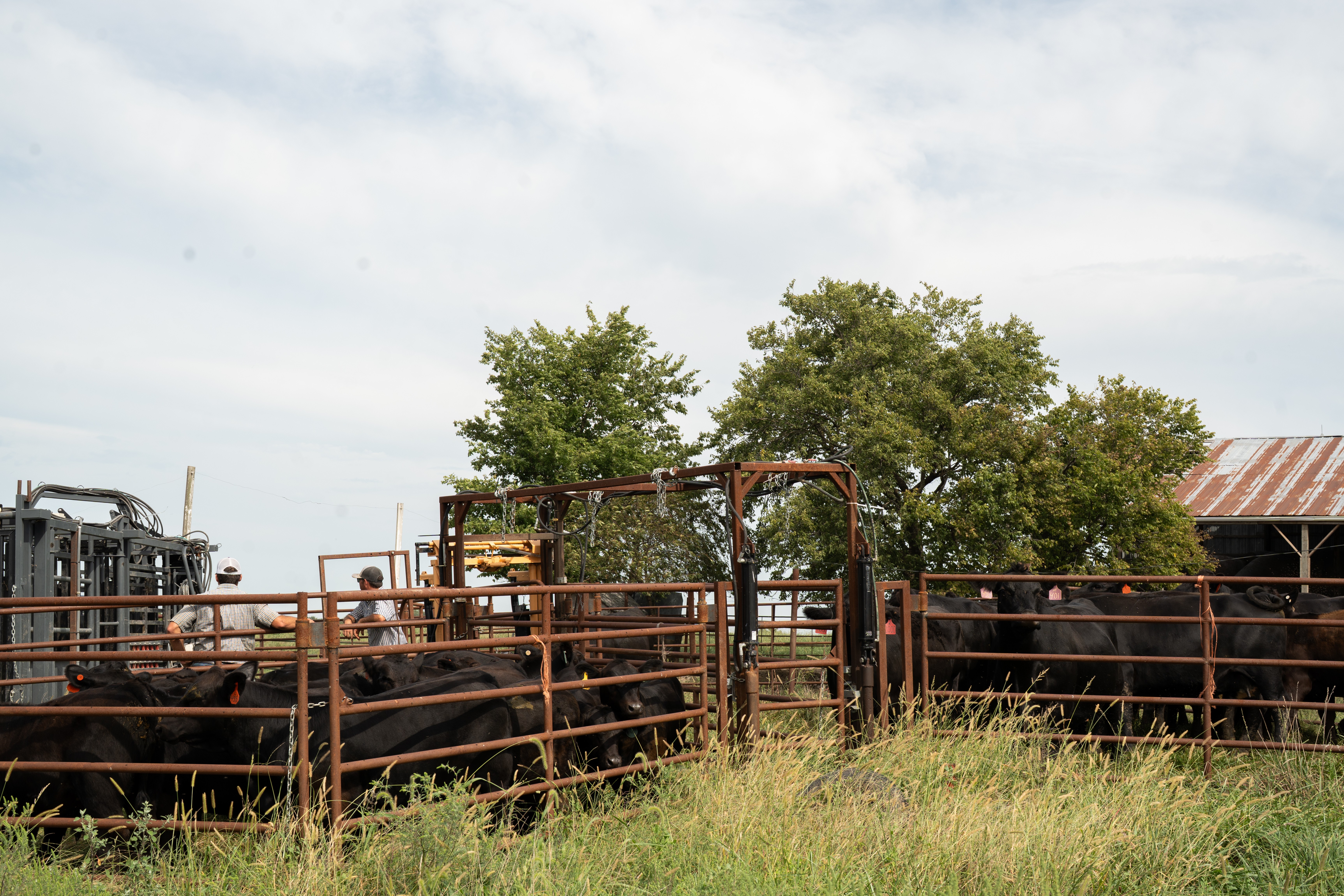
That’s the situation at Talmadge Farms LLC near Rosendale, Missouri, where Gavin Talmadge and his family run roughly 350 Angus- and Simmental-influenced cows alongside a row-crop operation and feedlot.
“We probably rent 60 to 70% of the pasture,” Gavin says.
Some of that ground has older perimeter fencing that’s in rough shape. Other pastures don’t have the cross-fencing Gavin would like for grazing. Add in rising input costs, limited labor and the time crunch that comes when fieldwork gets busy, and constantly building and moving fence becomes one more job on an already long list.
That’s what first made virtual fencing worth a look.
Gavin didn’t grow up on a traditional farm, though he worked for a farmer in high school and spent time around livestock. He got into farming full-time through his wife’s family, and today, he and his wife own half of the family’s cow herd, with his in-laws owning the other half.
He first learned more about virtual fencing through his local Extension agent.
What interested him wasn’t the technology itself. It was what it could let him do with the ground they already had. Some of Talmadge Farms’ pastures were already divided into paddocks. Others weren’t.
Virtual fencing gave Gavin a way to break those pastures up and rotate cattle without building more permanent fence or constantly moving temporary electric fence.
Depending on the pasture and conditions, he now moves cattle anywhere from every day to every five days.
On one piece of ground where cattle previously weren’t being rotated, Gavin began moving them daily.
“I think our pasture and the cattle are in a lot better shape,” he says.
For Gavin, the value isn’t just in grazing more intensively. It’s being able to make changes without adding another fencing project or another trip across the pasture.
Finding a virtual fencing system that fit his operation
By the time Gavin started using Monil, he already knew virtual fencing could work.
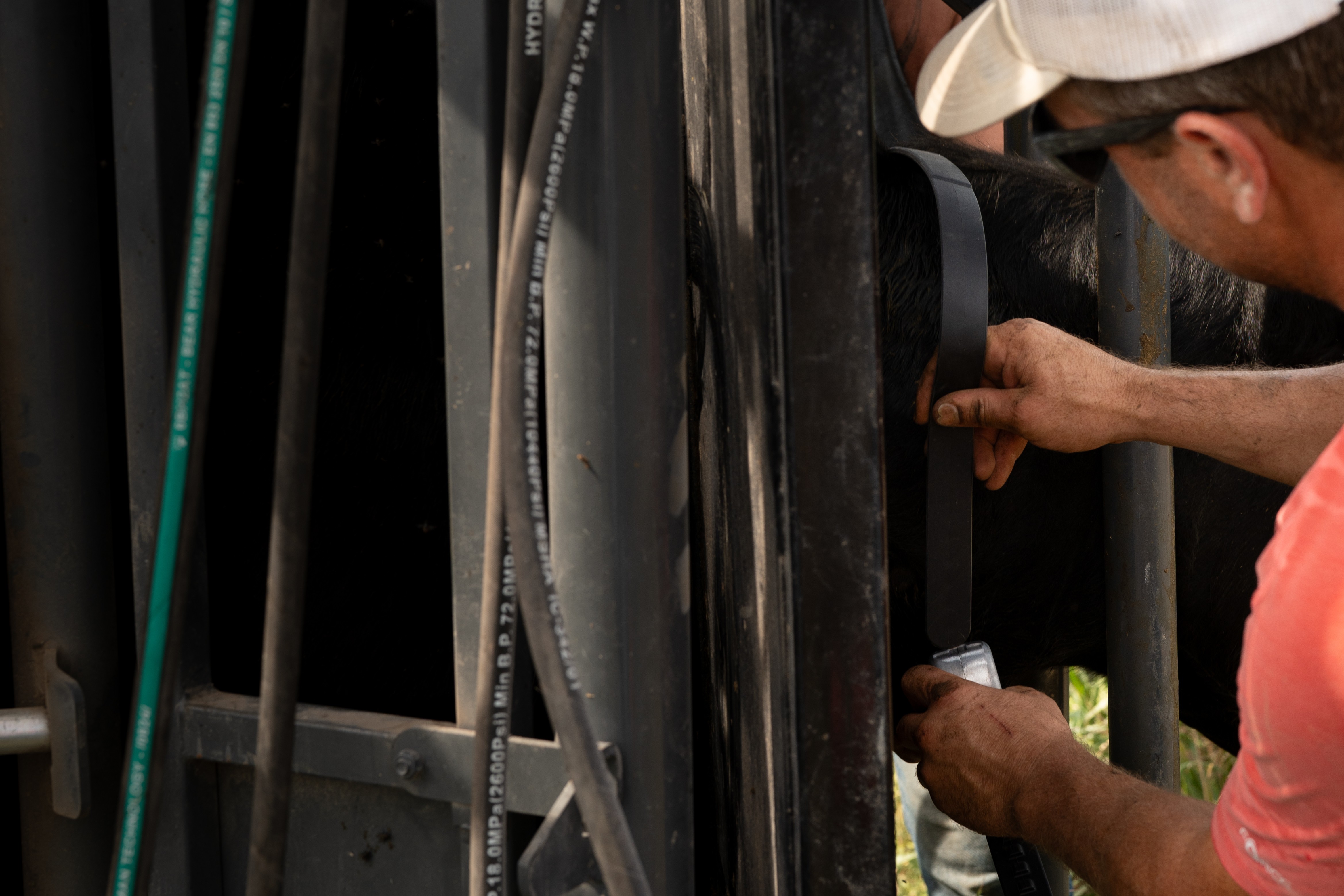
He had previously used another virtual fencing system, but that experience made one thing especially important when he started looking at other options: the collar itself had to hold up to everyday cattle work.
After dealing with collars breaking while cattle went through the chute, durability became a bigger consideration.
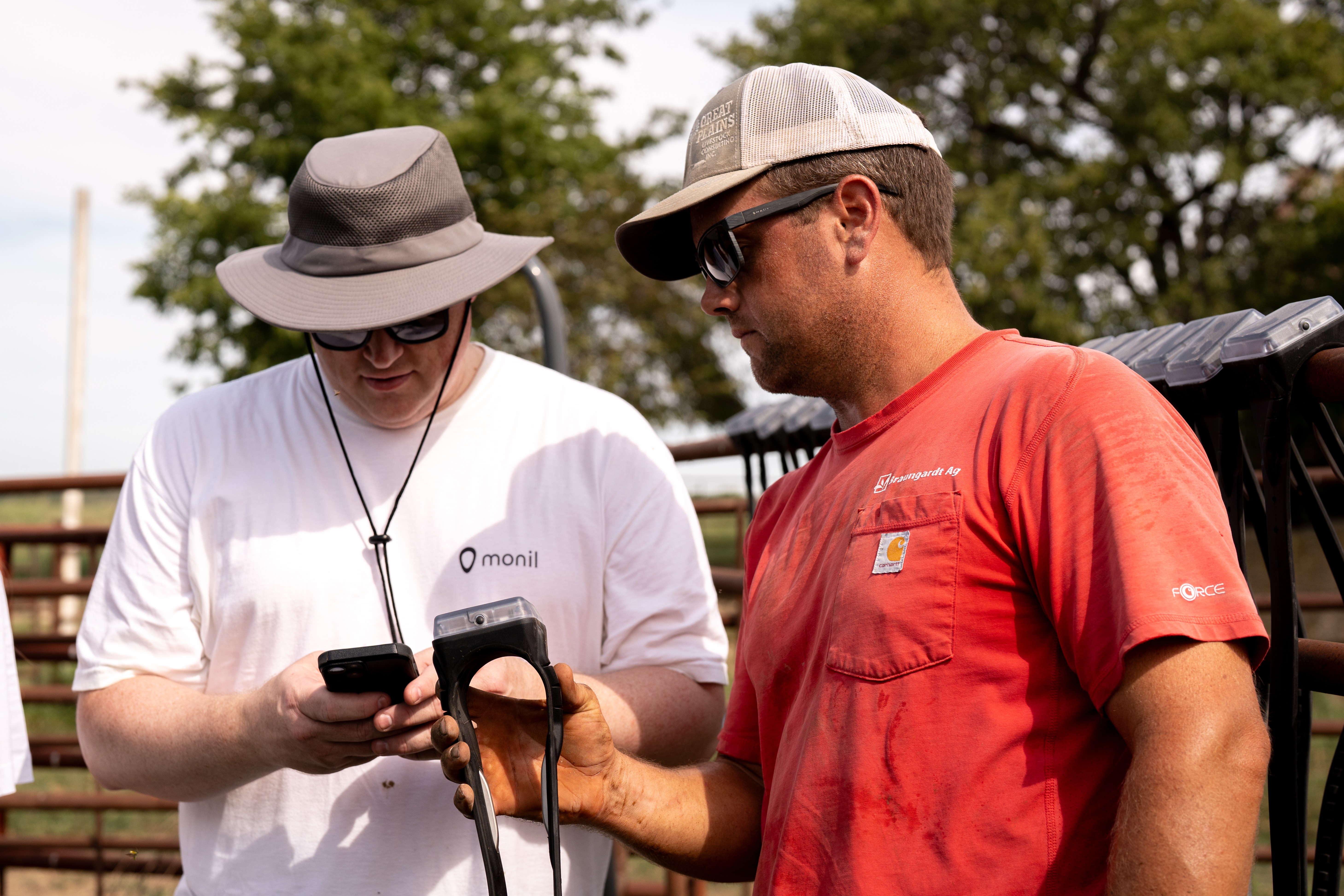
Monil’s compact collar design stood out to him, and he decided to make the switch.
But Gavin doesn’t look at virtual fencing as a replacement for good management or every physical fence on the farm.
To him, it’s another tool.
And the longer he’s used it, the more uses he’s found for it.
One evening, Gavin was trying to bring in a group of cows when one cow simply wouldn’t cooperate.
They tried to catch her. She kept getting away. Eventually, he had to leave her behind.
Rather than spending the night chasing one cow around in the dark, Gavin opened the app, looked at her location and drew a tight virtual boundary around the corral.
Then he waited and later that night, he checked again. She was back in the corral. Around 10 p.m., Gavin headed down and shut the gate.
It was a simple solution to a familiar cattle problem, and not something he necessarily imagined doing when he first started using virtual fencing.
“Once you start using virtual fencing, you start seeing all the different ways it can work on your operation,” Gavin says, “things you never would have thought of before.”
He is also quick to point out that getting started takes some adjustment.
When he recently put collars on another group of cattle, he was moving quickly and left a few too loose. Some came off. He doesn’t blame the collars. It was part of learning how to use a new tool.
“There’s more of a learning curve to the user rather than the cows,” Gavin says.
There are new habits to develop: learning how the system responds, getting comfortable drawing and moving boundaries, fitting collars correctly and figuring out how virtual fencing can fit the way you already run cattle.
That last part, Gavin says, is where much of the value comes from.
“The technology is only as good as the user and what you can unlock on your operation,” he says.
For him, that has meant rotating cattle across rented pasture, cutting down on physical cross-fencing and even getting one stubborn cow into a corral after dark. And he’s still finding new uses.
So when Gavin is asked what he would tell another cow-calf producer considering virtual fencing, he doesn’t talk about specs or features.
He goes back to what using it has changed on his own operation.
“It’d be hard to go back without it,” he says.
If you would like to learn more about whether virtual fencing could fit your operation, we'd love to hear from you. Request a quote, and our team will help you explore whether Monil is the right solution for your ranch.