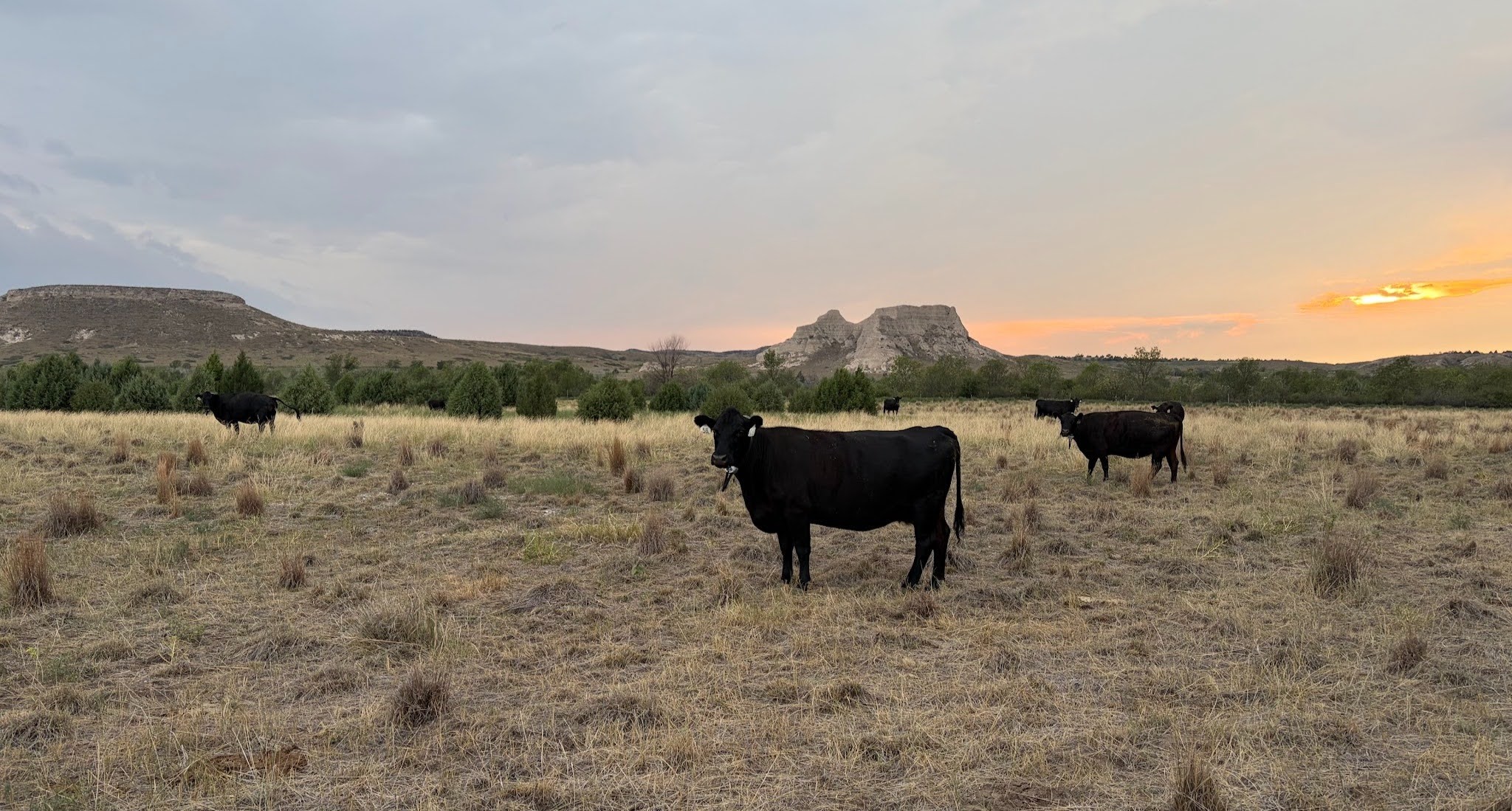

As severe drought leaves Western Nebraska ranchers searching for grass and facing rising feed costs, Justin & Shalane Bright found a new source of forage without adding a single acre to their operation. At Chaulk Creek Cattle, a 1,700-acre ranch in Banner County, the Brights are using virtual fencing to graze portions of their own land that cattle haven't been able to access in more than two decades.
“We’ve never seen anything like this,” said Shalane about the drought she and so many other ranchers are experiencing, “and this year pushed us to do something different.”
Finding Forage In An Unlikely Place
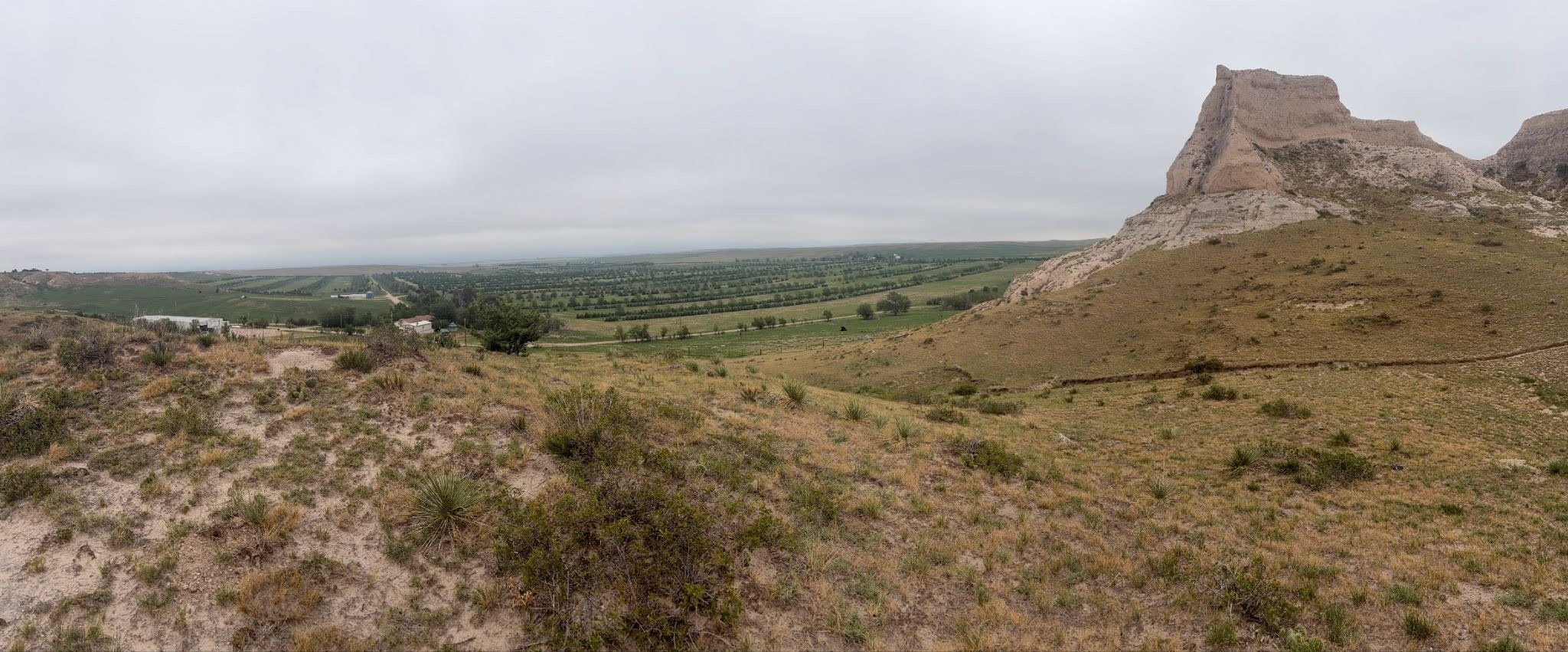
Only about 500 of the Bright’s 1,700 acres are traditional pasture. The other 1,200 acres are enrolled in the Conservation Reserve Program (CRP), with approximately 500,000 trees and pollinator habitat planted throughout the property.
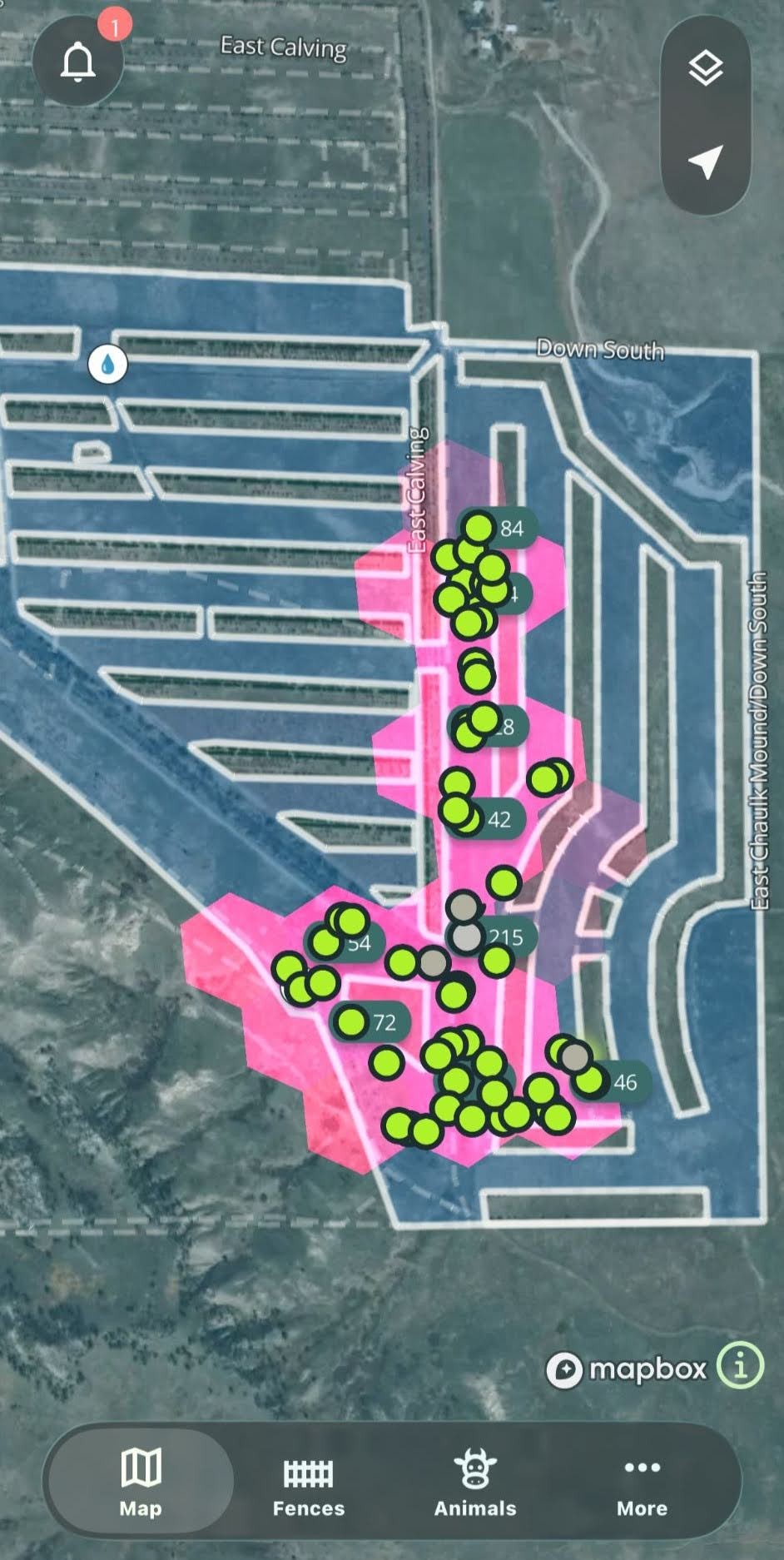
There’s grass throughout these acres, but grazing it isn't straightforward. The land includes tree rows, rocky terrain, hills, and canyons that would be difficult and expensive to divide with conventional fencing. Not only that, the Brights also need to protect portions of the CRP ground rather than simply turning cattle loose across it to graze.
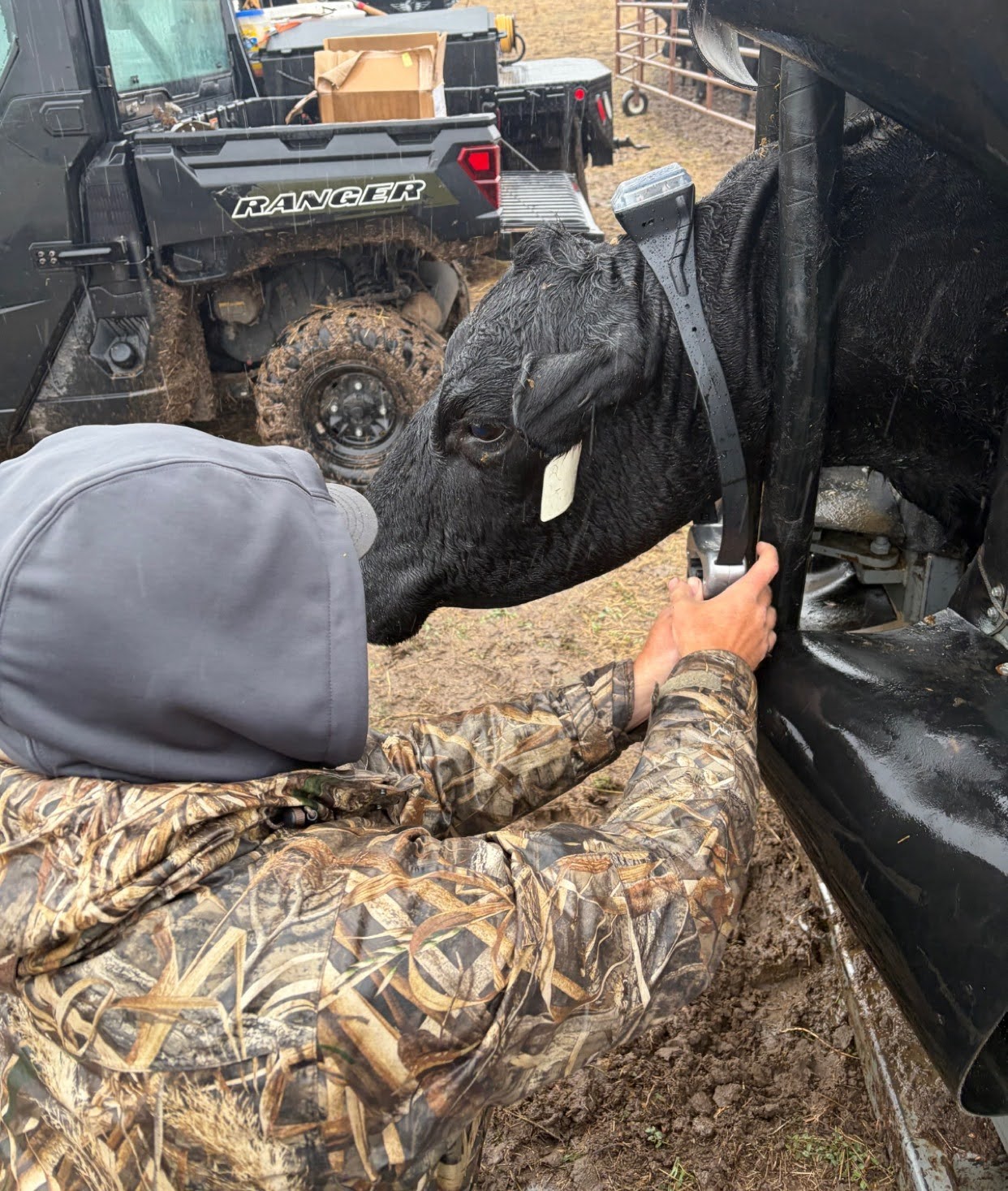
After talking with NRCS and FSA about the potential ways their land could be grazed, Justin & Shalane decided to experiment with Monil Cattle Collars. Setting up virtual boundaries allowed them to designate where the cattle can graze while also creating exclusion areas around tree rows and other places they want them to avoid. This has given the Brights access to forage that’s always been available, but never able to be practically managed. Portions of their pollinator ground are now being grazed for the first time in nearly 25 years.
Making Better Use of Difficult Ground
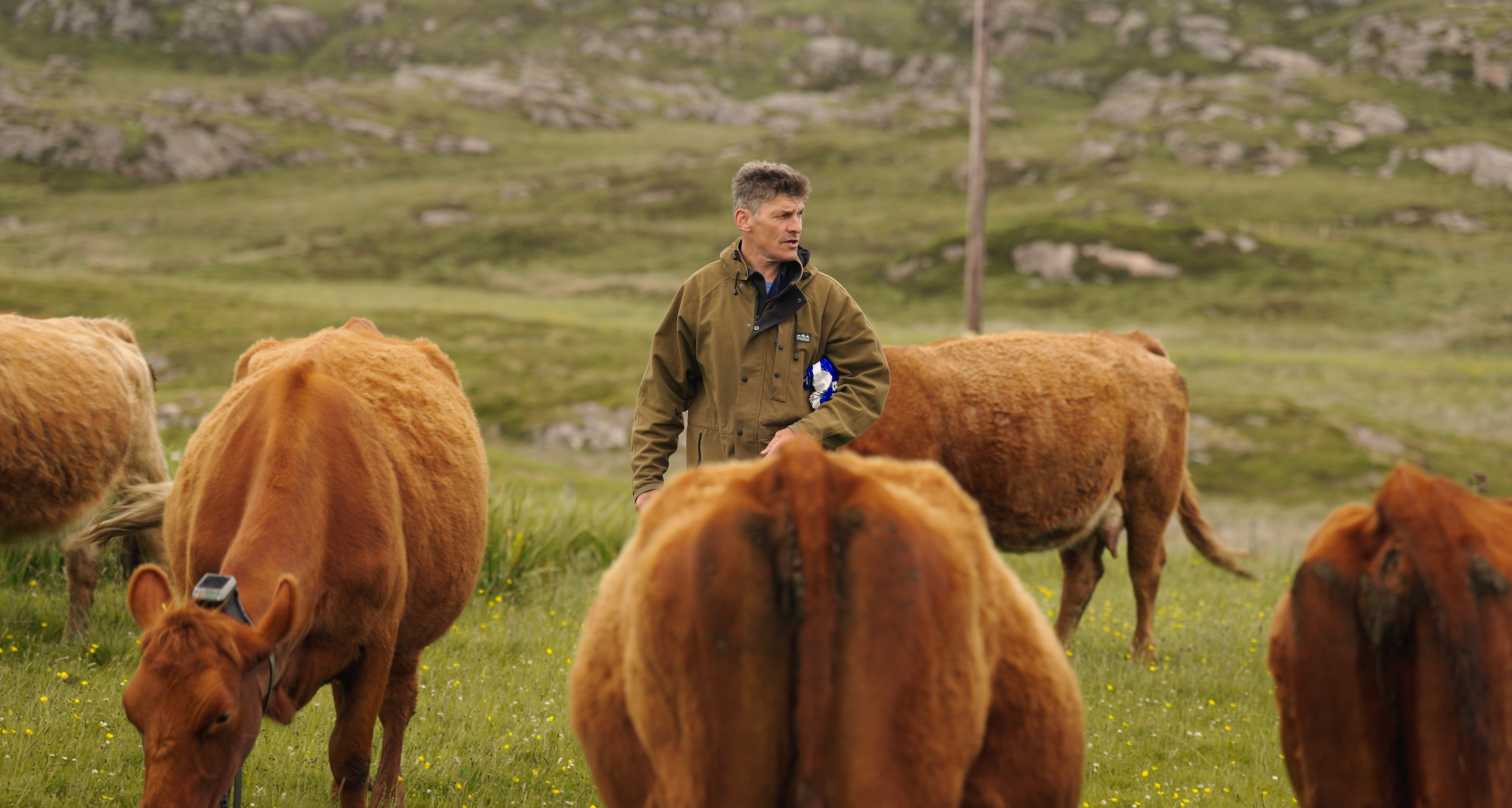
Since their cattle span three to nine years old, they were initially unsure how they would respond to virtual fencing since they already had established routines and personalities. They expected training them to require more hands-on work but were surprised by how quickly they adapted to Monil’s audio cues.
This opened up more possibilities for how the Brights could be using Monil’s Cattle Collar technology. Since their ranch includes hills, canyons, and rocky terrain, cattle naturally favor the easiest routes and the most accessible forage. Now, though, Justin & Shalane are using virtual boundaries and being more deliberate about where the herd spends its time. If there is great forage on the other side of a rocky stretch, for example, they set the grazing area to encourage cattle across that ground rather than allowing them to stay in the easier area.
Facing a drought year, this has been especially useful. With grass scarce and feed expensive, getting more grazing out of their existing acreage has helped the Brights keep calves on their mothers closer to their normal weaning schedule, and reduce how early they have to turn to purchase feed.
It has also changed the Bright’s day-to-day work to manage the herd. Justin & Shalane can create and adjust grazing areas from their phone and keep an eye on the herd from afar. For the Brights, that means more flexibility to manage the cattle while keeping up with the rest of the farm and their custom composting business, not to mention more time for their family.
Trying Something New in Banner County
The Brights are among the early adopters of virtual fencing in their area, and Shalane said other producers have been watching their experience closely. She jokingly described the ranch as a bit of a local “guinea pig,” and the interest has grown as the drought has continued.
However, neighbors aren't necessarily coming to them because they are looking for new technology; they are asking the Brights how they are managing their cattle and finding enough forage this year.
Trying something different also seems to run in the family. Shalane's father was among the earlier farmers in the area to adopt no-till practices, and after watching what his daughter and son-in-law have been doing with virtual fencing, he recently bought a few collars to try on his own cattle.
For Shalane, it comes back to the same idea: Ranching sometimes requires being willing to reconsider how things have always been done.
“You have to be innovative, and you have to want to learn constantly,” she said.
As conditions change - whether that’s a drought, a fluctuating market, rising feed costs, or something else - being open minded and able to find creative solutions to make an operation more efficient and resilient can make a meaningful difference. For Justin & Shalane, that has meant looking at resources they already had but couldn't previously take full advantage of, and finding a new way to put them to work.
If you would like to learn more about whether virtual fencing could fit your operation, we'd love to hear from you. Request a quote, and our team will help you explore whether Monil is the right solution for your ranch.