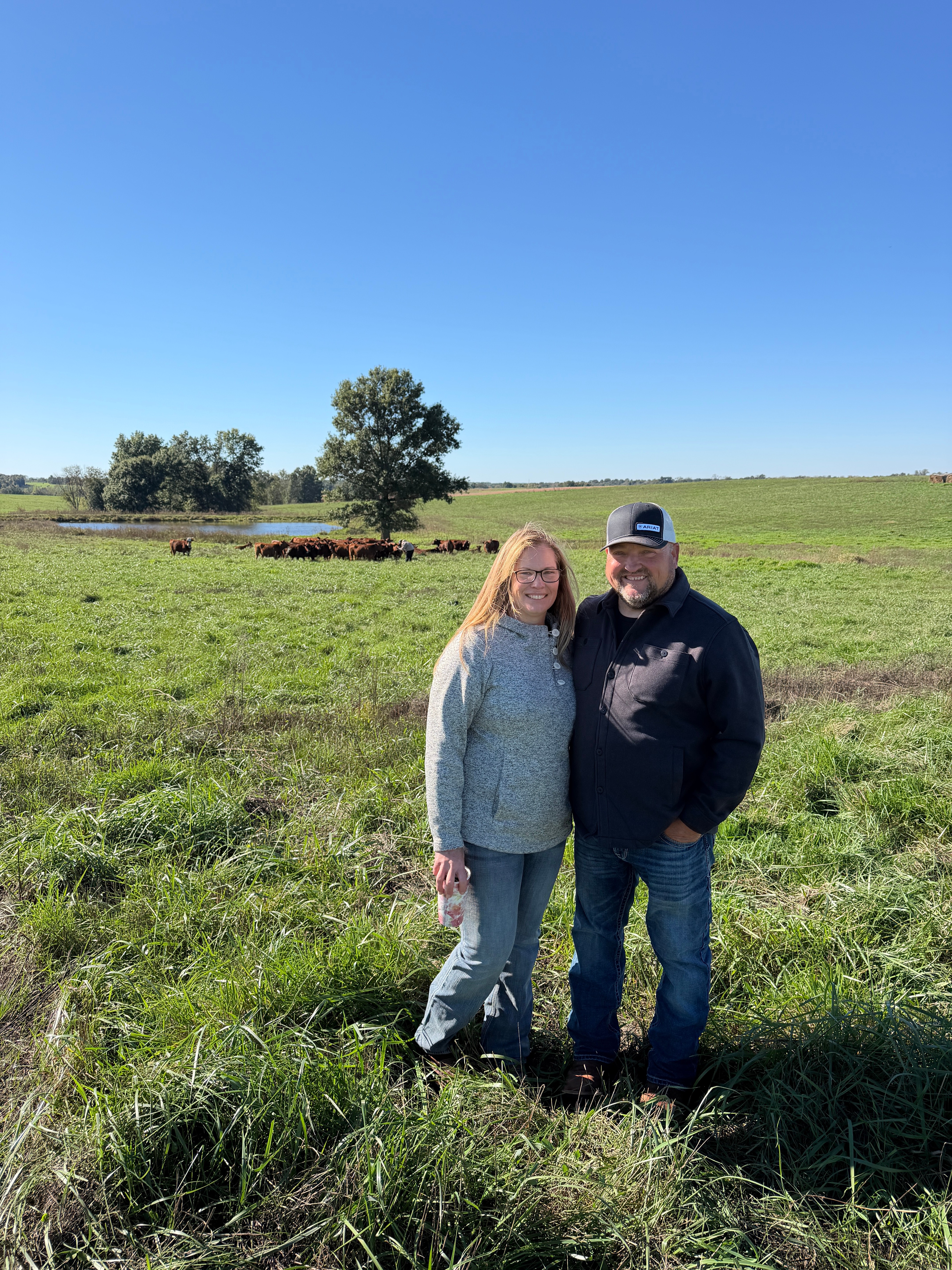
Our third farm visit in Missouri began with Bryan and Julie, a box of Amish donuts, and a trip out to see the heifers at Grazing Acres.
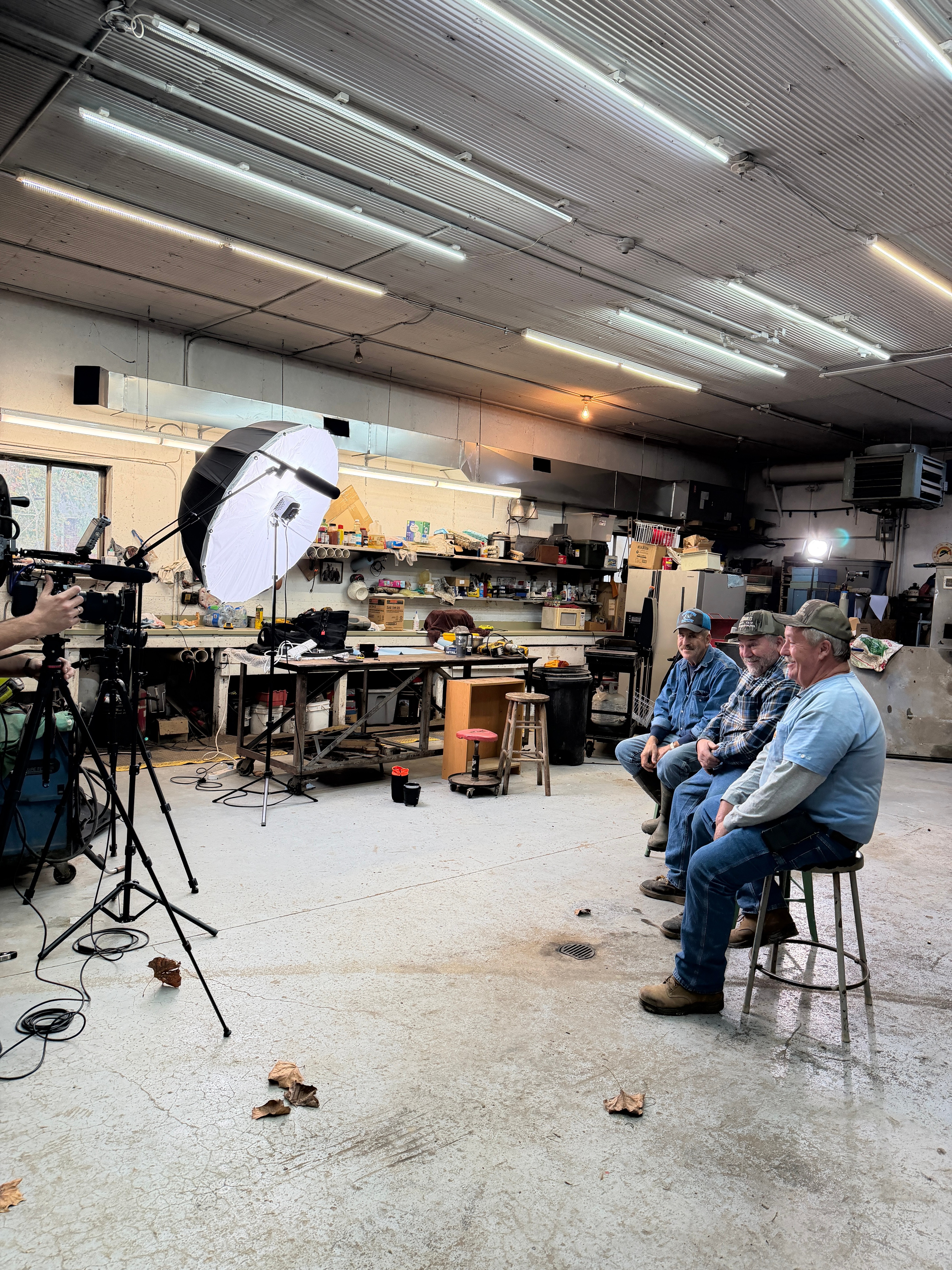
Members of our marketing team were there to learn about the family’s approach to grazing, hear their experience with Monil, and capture their story on camera. We soon found ourselves talking about everything from pasture layouts to passing a farm between generations with a homemade lunch along the way.
Visiting the Monil collared heifers
We started by visiting the forty-five collared heifers grazing on an eighty-acre pasture. Being out there with Bryan gave us a chance to see the cattle, ask questions, and understand how he plans their grazing moves.
The wider operation covers approximately 1,000 acres across multiple properties, and the family often moves cattle twice a day. That means plenty of coordination, particularly when each move involves driving to a pasture and shifting temporary fencing.
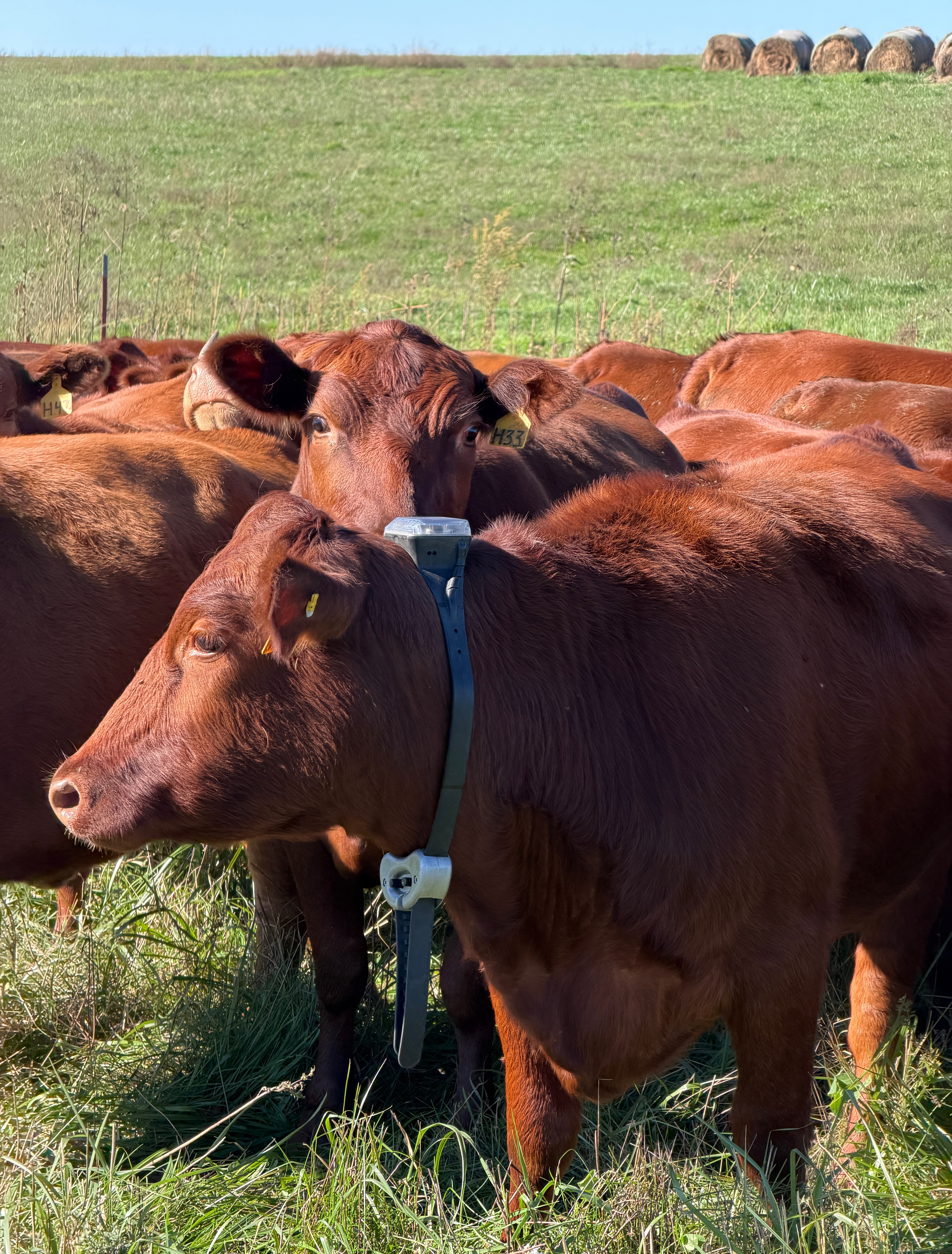
Bryan explained how that routine has changed since they introduced Monil in May. He can now adjust grazing boundaries from his phone, sometimes making the first adjustments of the morning from his house.
He estimates that Monil saves him around two hours a day, alongside savings in fuel and vehicle mileage. Standing in the pasture and hearing about the trips involved helped us understand what those hours look like in practice.
Rotational grazing since the 1980s
Julie’s father, Dennis McDonald, has practiced rotational grazing since the 1980s. He grew up on a grain farm in Iowa before moving to Missouri in the 1970s, and has spent decades learning how to get more from his grass.
We heard about the work that went into developing his grazing systems: installing fences, laying out cattle lanes, positioning water points, and adapting those arrangements as he learned what worked best.
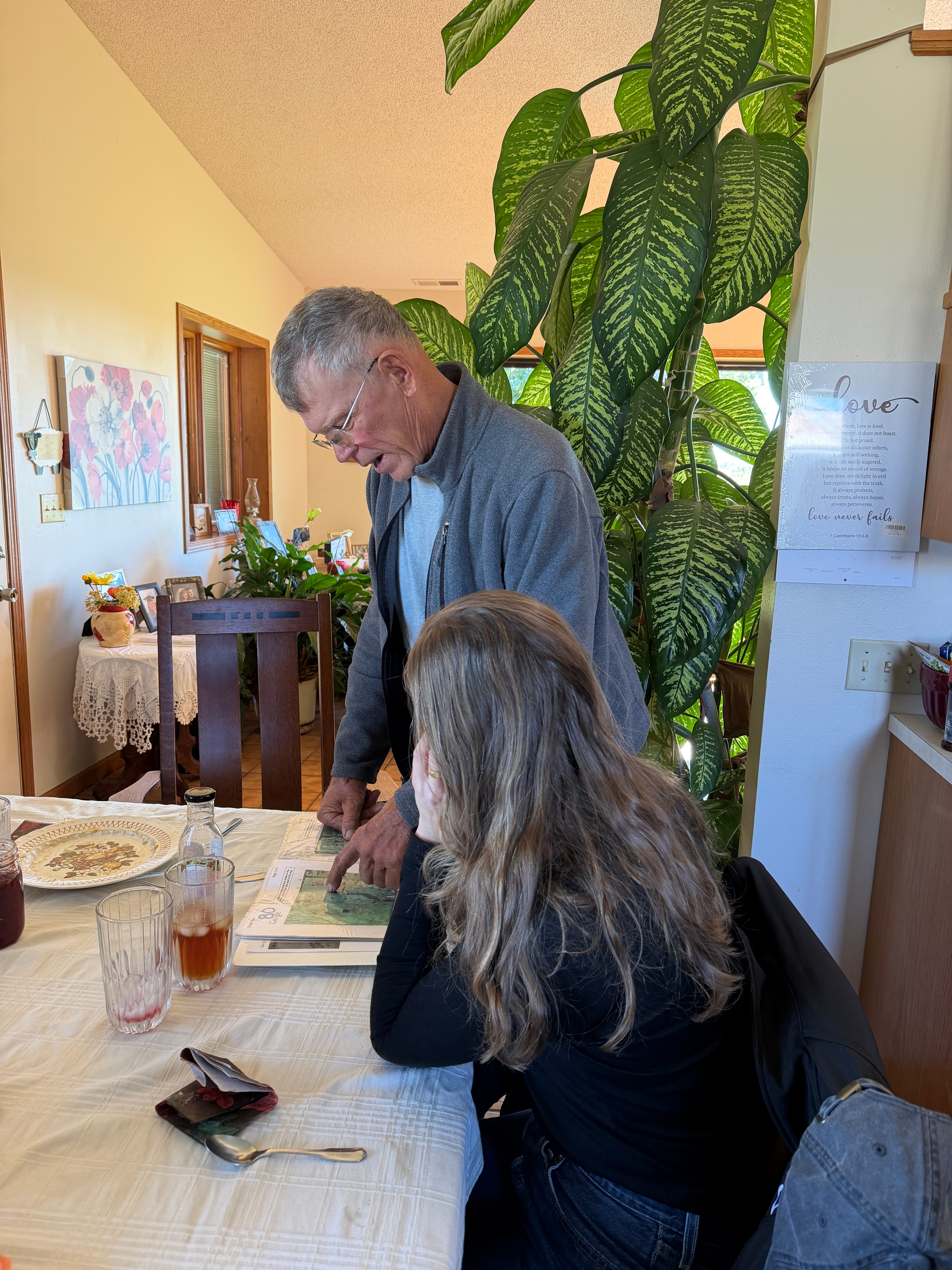
For our team, it was fascinating to hear that history. Dennis brought years of practical experience to the conversation, explaining the thinking behind decisions we could see reflected in the operation today.
That also made his interest in virtual fencing particularly interesting. After spending so much time building and adjusting physical infrastructure, he could see possibilities in being able to test a different grazing layout without putting up another fence.
We had plenty of questions about how Monil fits into an approach he has been refining for more than forty years. Hearing his answers helped us understand where the technology offers useful flexibility to someone who already knows exactly why he wants to rotate his cattle.
Keeping the farm in the family
Around two years ago, Dennis’s son-in-law Bryan began taking on more responsibility as part of the family’s succession planning.
Throughout the visit, we heard how that transition is bringing together Dennis’s experience and Bryan’s ideas for managing the operation in the years ahead. They share a commitment to rotational grazing, with Bryan finding ways to continue that approach while making the daily work more practical.
With frequent cattle moves and land spread across several properties, the time required to manage fences is a significant consideration. Being able to adjust virtual boundaries gives Bryan more flexibility to carry out the grazing plans they believe in.
He also talked about wanting to use Monil across more of the family’s cattle, potentially extending it to hundreds of additional animals. Cost remains an important consideration, and we appreciated hearing openly about both the benefits they’re seeing and the decisions involved in expanding.
For us, these conversations are an important reason to visit. They give us a fuller picture of what customers are working toward and how Monil fits into their plans.
Smothered beef for lunch at Dennis and Becky’s
After our pasture visit, we headed to Dennis and Becky’s home, where they treated us to smothered beef and mashed potatoes.
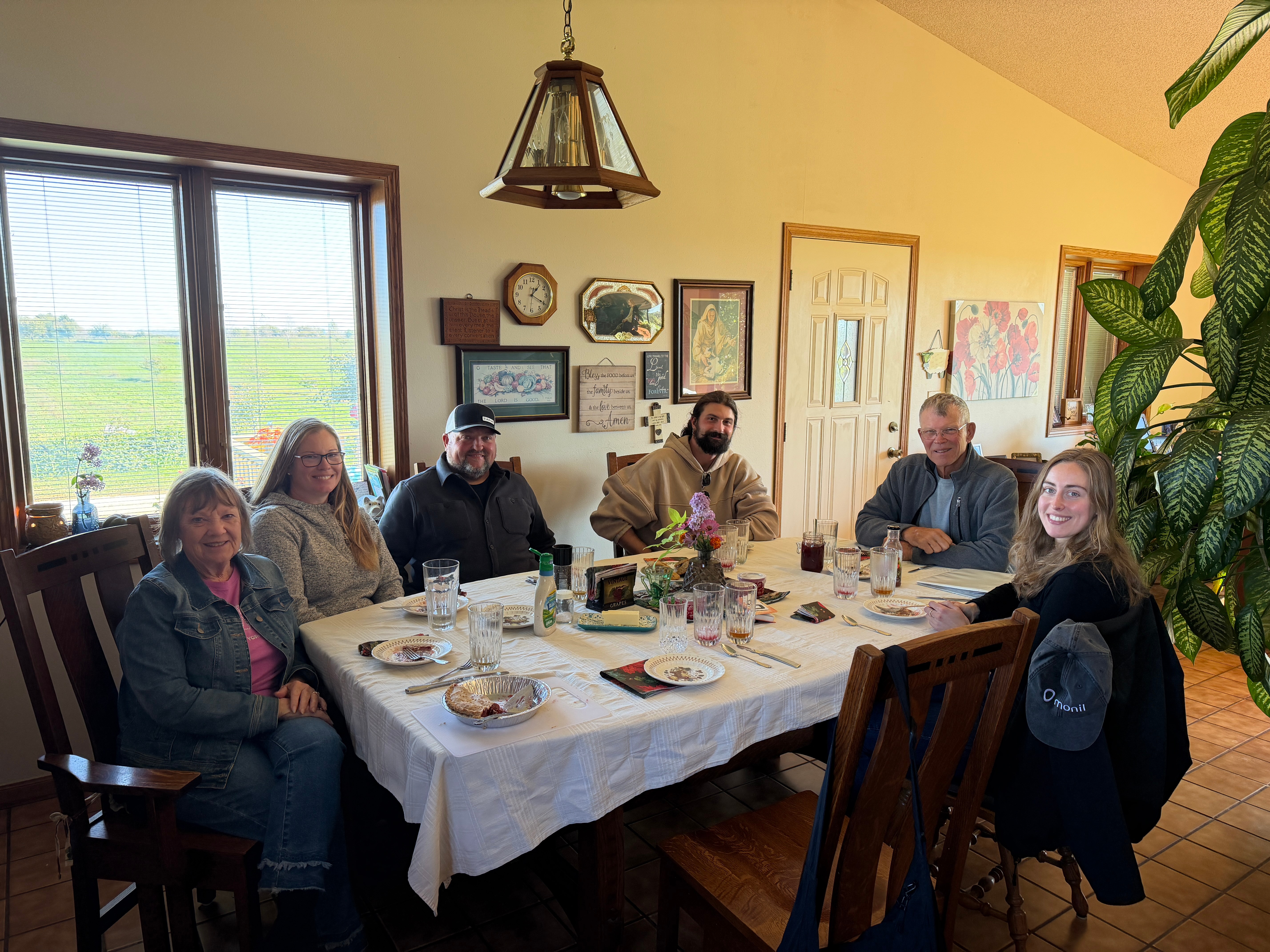
A homemade meal was very welcome in the middle of a busy filming trip, and their hospitality made it easy to settle in and keep talking.
Over lunch and during the interviews afterward, we heard more about the family’s farming history, Dennis’s experiments with grazing, and Bryan’s hopes for the operation.
We were there with cameras and questions, but they made time to share much more than a product review. Hearing their stories at home, after seeing the cattle and pastures, helped us connect the daily details with their longer-term plans for the farm.
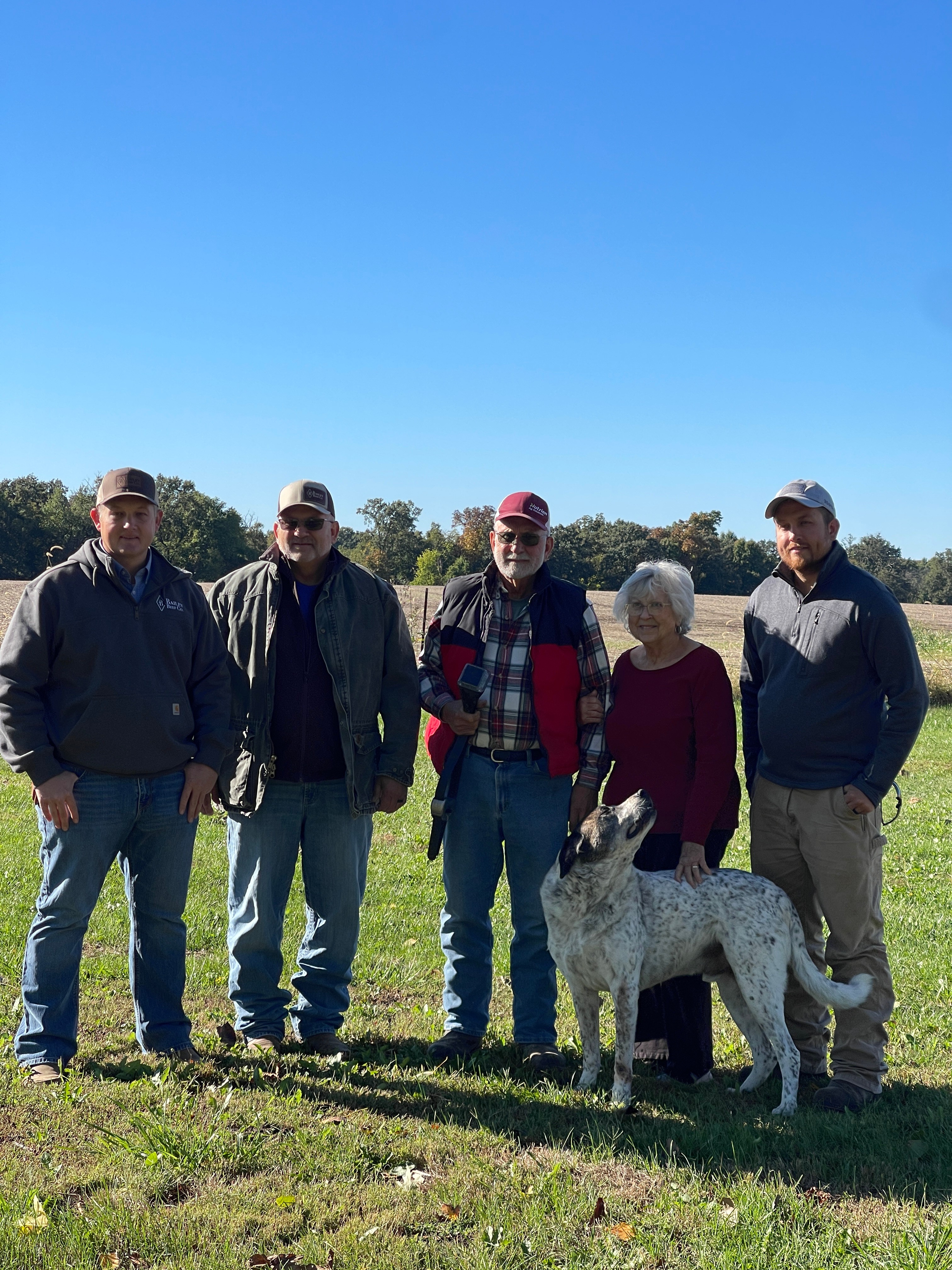
Thank you to Dennis, Becky, Bryan, and Julie for welcoming us, answering our questions, and making the day so enjoyable. Between the heifers, the grazing conversations, and the food, there was plenty to talk about.
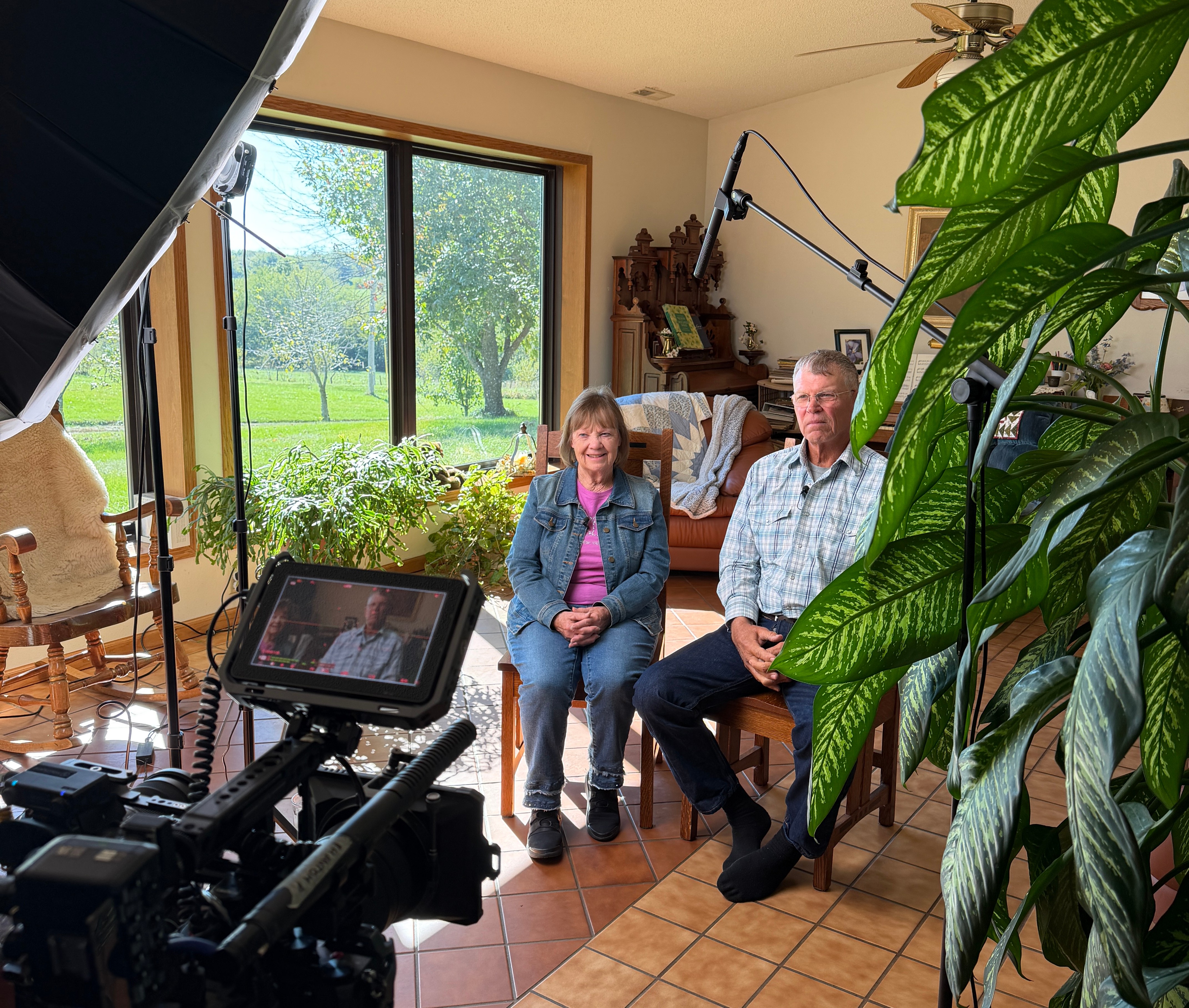
Stay tuned for their story!
Whether you're taking over the family farm, expanding the herd, or looking for ways to make daily cattle management easier for the next generation, Monil can help you build on what's already there.
Fill out the form below to get a quote and talk with a member of our U.S. team about about how Monil could fit into your operation.