
Brad Dunbar was thousands of miles from home, touring farms in Argentina, when the Cottonwood Fire swept through central Nebraska.
Back on the family farm near Eustis, the flames burned through roughly 750 acres of pasture, taking fences and a well with it. The fire threatened nearby homes and farmsteads, but thankfully, all remained standing.
The timing couldn’t have been much worse. The region was already struggling with severe drought, and the fire left Brad with even less pasture to work with.
The Dunbars carry the farm forward
Brad has taken on a bigger role in running the farm since his father passed away three and a half years ago. His mother still helps with the books, his sister handles some of the finances, and two full-time employees look after much of the day-to-day work.
Alongside cattle, the Dunbars grow corn, soybeans, popcorn, wheat, and other crops. Brad has been putting more emphasis on cover crops and pasture management, hoping to get better grass and support more cattle on the land they already have.
“Typically, we run about 10 to 11 acres per cow-calf pair,” he says. “I really want to get that down to eight, and I also want to improve our pasture quality.”
Virtual fencing was already on Brad’s radar when the fire hit. He lives in Omaha, about four hours from the family farm, so being able to manage grazing remotely had obvious appeal. But with the pasture he’d planned to start with now burned, he had to rethink his plans.
The drought changes the grazing season
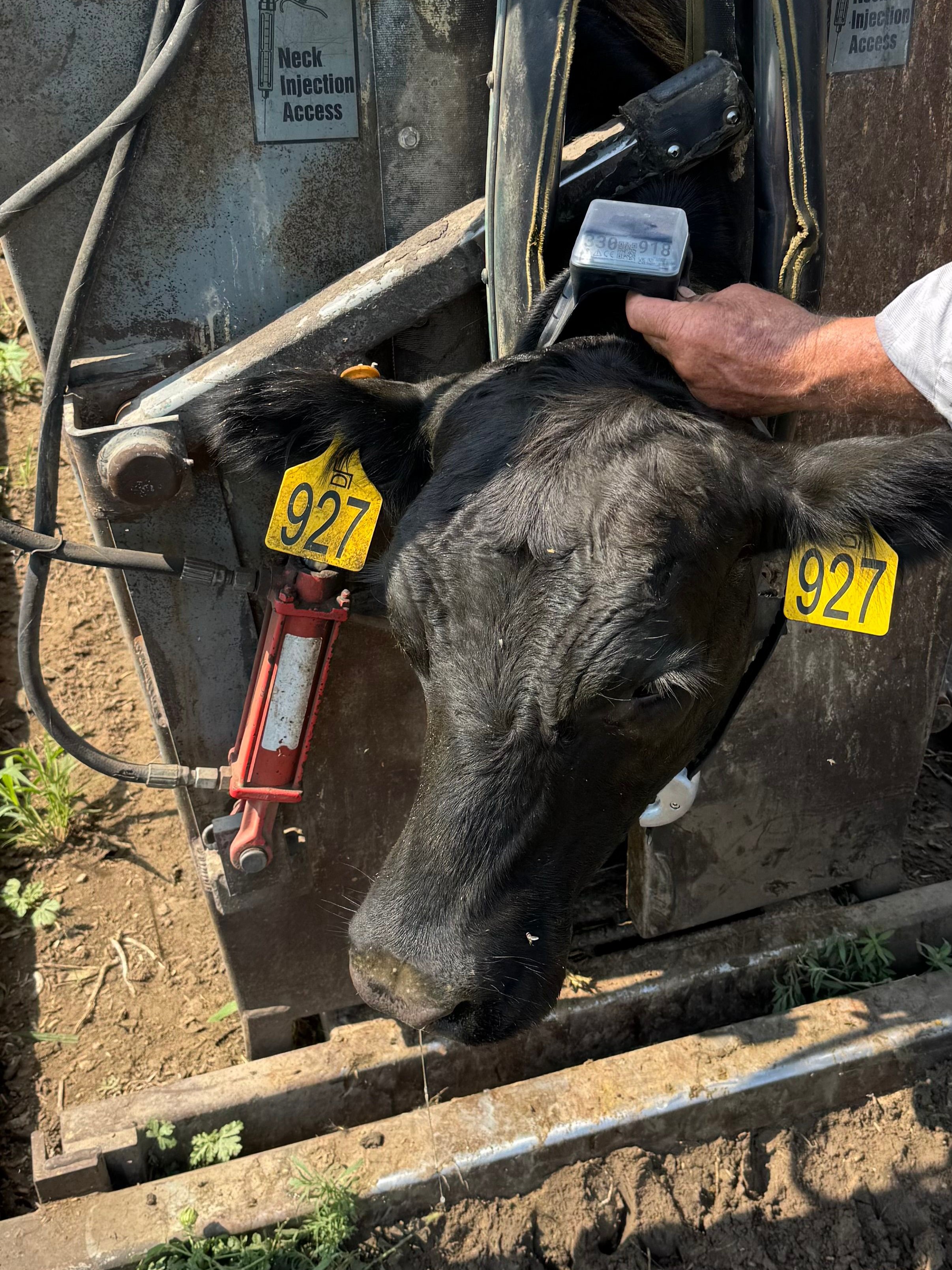
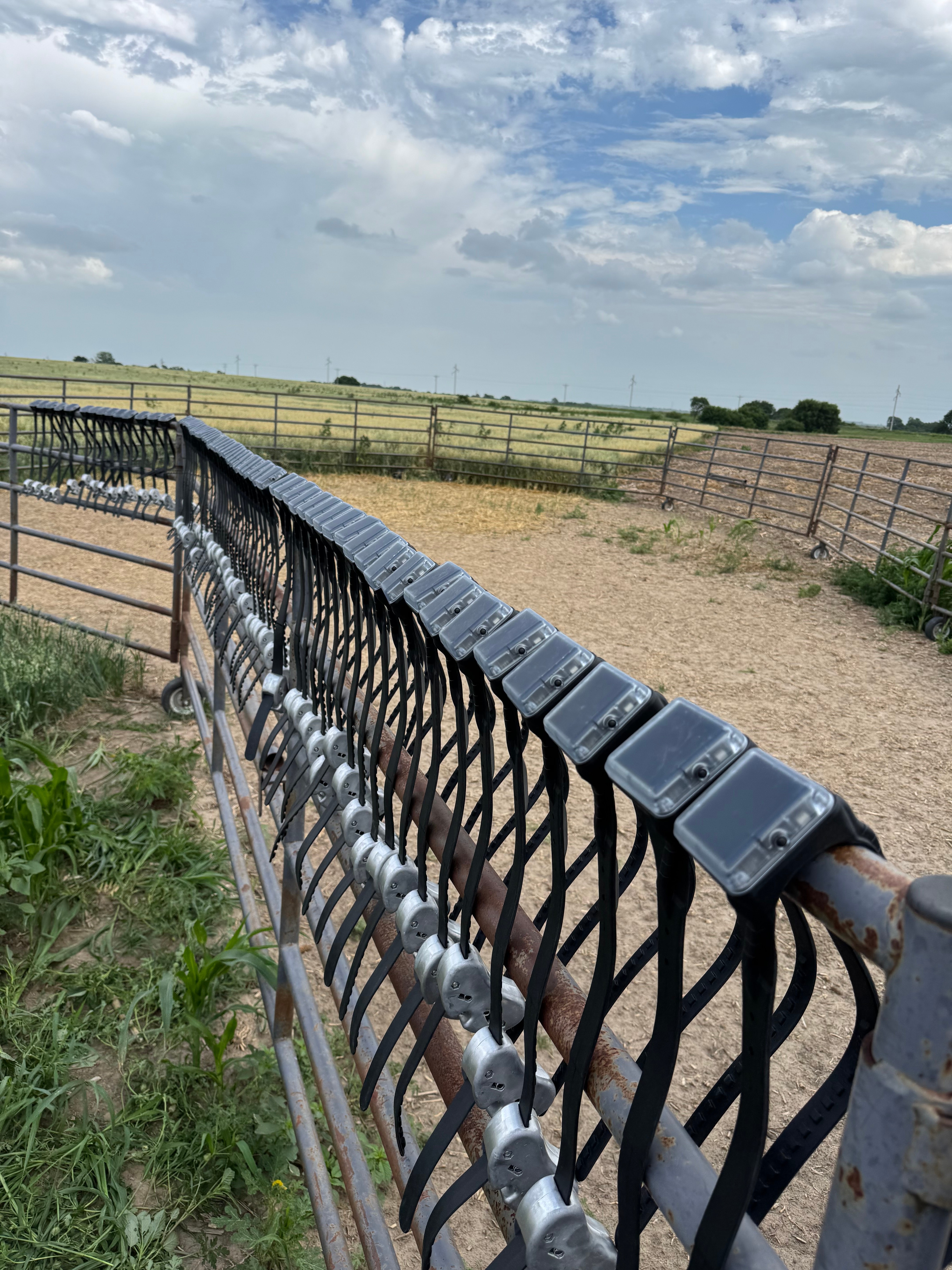
With little rain and hundreds of acres unavailable, the Dunbars skipped soybeans that year and instead decided to grow cattle forage on irrigated ground. That’s where Brad put his first 70 Monil collars to work, giving cattle access to fresh sections of forage and neighboring pasture without repeatedly moving temporary fence.
Eventually, some grass began returning to the burned ground. Brad moved the herd back and began opening up small sections of pasture, shifting the virtual boundary about once a week to give the cattle access to fresh grass.
“I’ve been moving that fence about every week, opening up a little bit more, he says. “I’m on my fifth area now after the fire.”
Being able to make those changes himself is important to Brad, especially when he’s four hours away. As he puts it, “I don’t need to be calling somebody to make a change to the boundary. I need to be able to do it now.”
The ability to monitor the herd remotely has also proved useful. One day, while at home in Omaha, Brad noticed through the Monil app that a cow hadn’t moved. Rather than waiting for someone to spot a potential problem in the pasture, he could immediately ask an employee to go out and check on her.
Brad also recalls one morning when he opened a corral gate and watched the cattle take off downhill toward a virtual boundary. Some hadn’t worn their collars for 50 days, but they remembered what the audio warning meant.
“They did an about-face pretty fast,” says Brad.
Cornfields could be next
Brad is no stranger to farming technology. He spent 19 years in the irrigation industry, working with systems that could be remotely controlled, and he put in the time to research several virtual fencing providers before landing on Monil. The lightweight collars, lack of base stations, and ability to change boundaries from his phone suited the farm’s uneven terrain and the way he wanted to work.
Now he’s thinking about what comes after harvest. With cover crops planted across nearly all the family’s cropland, he sees opportunities to give cattle access to green growth and corn stalks a little at a time, potentially stretching the grazing season and making better use of what’s already growing.
After a first season shaped by drought and wildfire, Brad has already put virtual fencing to work on irrigated forage ground and recovering pasture.
He’s been able to control where the cattle graze, adjust boundaries as conditions change, and keep an eye on the herd from Omaha.
There’s still plenty he wants to try, and he fully expects some trial and error along the way. But the experience has given him a practical starting point for his bigger ambition of getting more grazing out of the land his family already has.
Whether you're looking to make better use of your pasture, graze more cover crops or spend less time moving fence, Monil could help you get more out of the land you already have.
Fill out the form below to get a quote and talk with a member of our U.S. team about how virtual fencing could work on your operation.