To ensure a safe and positive experience for the animals, it’s important to follow a few key principles when setting up training fences, and when planning virtual fences in general.
The fence boundary should serve as a natural barrier for the animals. If there are areas the animals are used to accessing, and these are located near the physical fence line, you should try to maintain the animals’ access to them.
Specific recommendations:
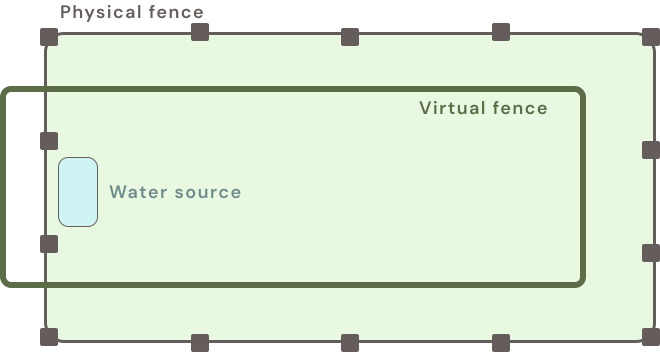
Water sources
If the water trough is placed next to the physical fence, we recommend drawing the virtual fence boundary outside both the water trough and the physical fence to ensure the animals still have access.
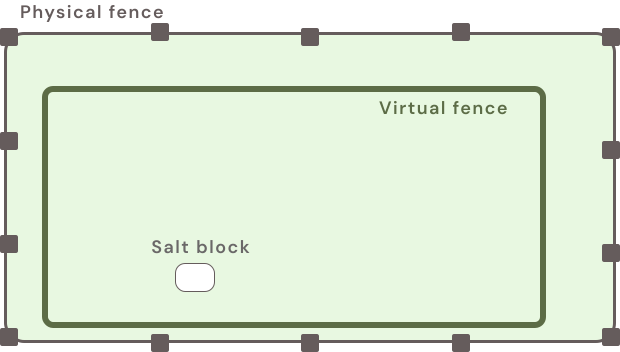
Salt blocks
If the salt block is placed inside the physical fence, the virtual fence boundary should also be placed outside of the salt block.
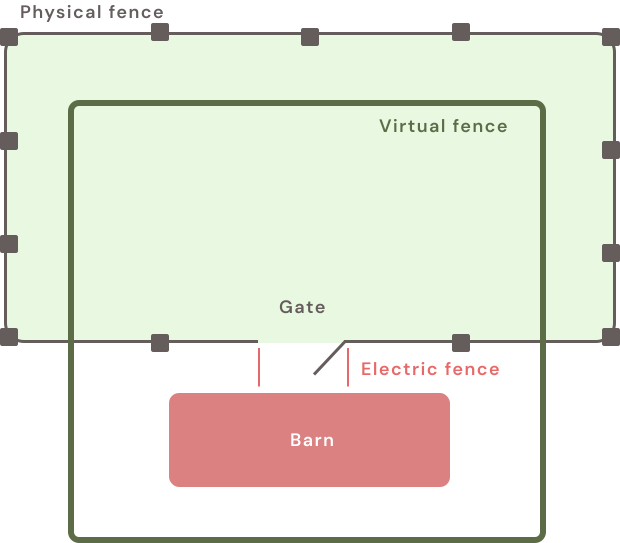
Gates
Place the virtual fence boundary outside the gate. This is important to ensure that the animals do not become uncertain or anxious when they need to leave the training area later on, for example during milking.
By taking these points into account, you help ensure safe and effective training with the virtual fence.