The signal sequence: the sound shows the way
When the animal crosses the virtual fence boundary, the collar starts a warning sequence that helps the animal find its way back:
Dynamic audio signal (0–7 seconds): The collar emits an audio signal that guides the animal. If the animal keeps going in the wrong direction (away from the fence), the volume increases. If the animal turns and starts moving back toward the permitted area, the sound gradually gets weaker, until it stops completely once the animal is back inside.
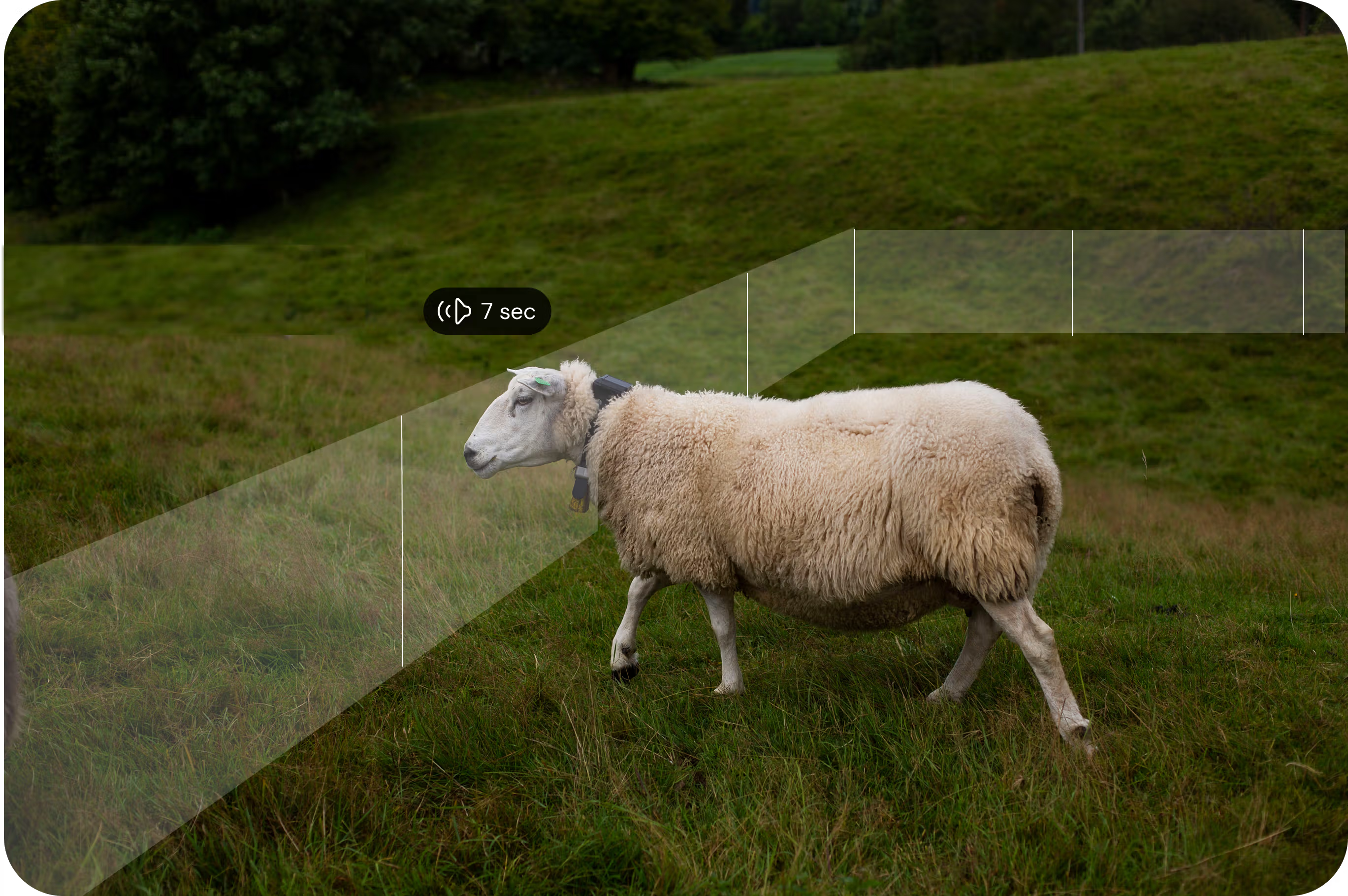
Electric pulse: If the animal keeps going in the wrong direction despite the increasing volume, the collar delivers a short electric pulse after 7 seconds.
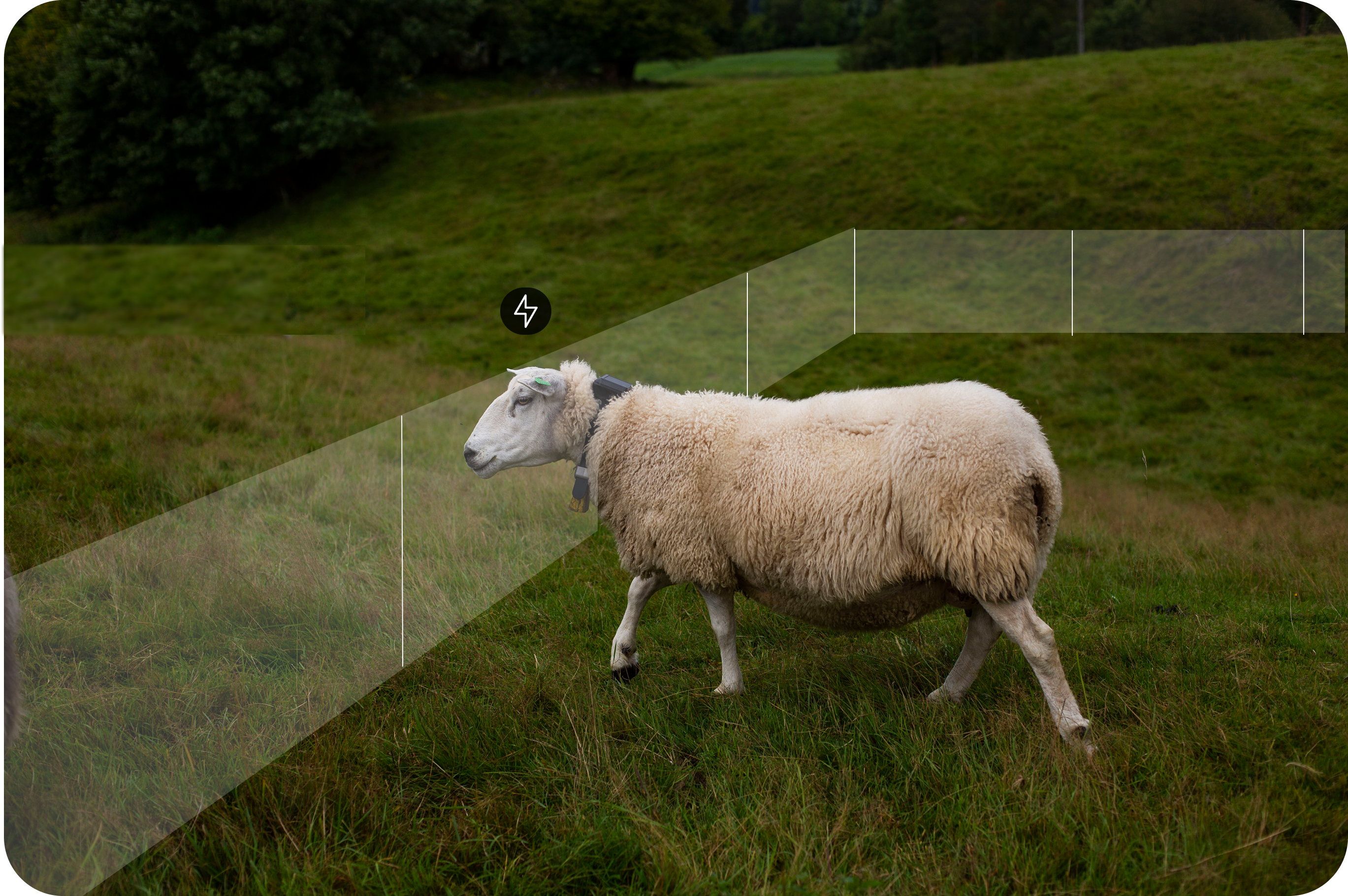
Repetition: The collar delivers up to three sequences of audio signals and electric pulses if the animal keeps moving away from the permitted area. There is a short pause between each sequence to give the animal time to react and turn back.

When an animal is registered as “escaped”
If the animal has not turned back after three complete warning sequences, it is registered as “escaped” in the system. This is done to protect animal welfare:
- All warning signals stop: The collar stops emitting both audio signals and electric pulses. This ensures that the animal is not driven farther away or exposed to unnecessary stress outside the fence boundary.
- Notification to the animal owner: You get a push notification in the app and can follow the animal's position on the map.
Automatic reactivation: The fence is automatically reactivated as soon as the animal has moved at least 3 meters inside the fence boundary. The collar never emits any signals while the animal is on its way back into the grazing area.
Remember that a virtual fence is not a physical barrier. The animals can still cross the fence boundary and push through the pulse if the temptation is strong enough, for example if there is lush grazing on the other side or they are influenced by other animals.
Using collars in the flock
In order for our fencing system to work, all the animals in the flock need to be collared. If you are using them for tracking purposes, use your judgement to decide how many collars you’ll need to get a good representation of your flock.
We do not recommend using collars on lambs.