Another grazing season is over, and now it's time to let the collars rest before the next season. Proper care and storage during the winter months is important to make sure the equipment works the way it should when spring arrives.
By following this simple checklist, you take care of the technology, preserve battery life, and make sure the warranty stays valid. It only takes a few minutes per collar and helps you keep the equipment in good shape, ready to use when the animals go back out to pasture.
1. Clean the collars💧
To clean the collars safely and effectively, use a cloth, lukewarm water, and a mild soap. Soft soap or mild dish soap works great.
Avoid strong chemicals and solvents, since these can cause permanent damage to the collars.
2. Check the collars for any damage
Go through the collars and check for any damage to the rubber straps or the solar panels. Damage to the solar cells can affect the collars' ability to charge outdoors.
3. Charge the collars⚡
It's important to charge the collars before winter storage in order to preserve the capacity and lifespan of the batteries. We recommend charging the collars to at least 70 %. Avoid storing collars with dead batteries, since that can shorten battery life.
Only use the recommended charging equipment to avoid overheating or damage to the batteries.
Use a USB-A adapter with a current of at least 1 A and no more than 2.4 A.
4. Turn off the collars
Press and hold the button on the back of the collar until the light turns red. The collar is now turned off.
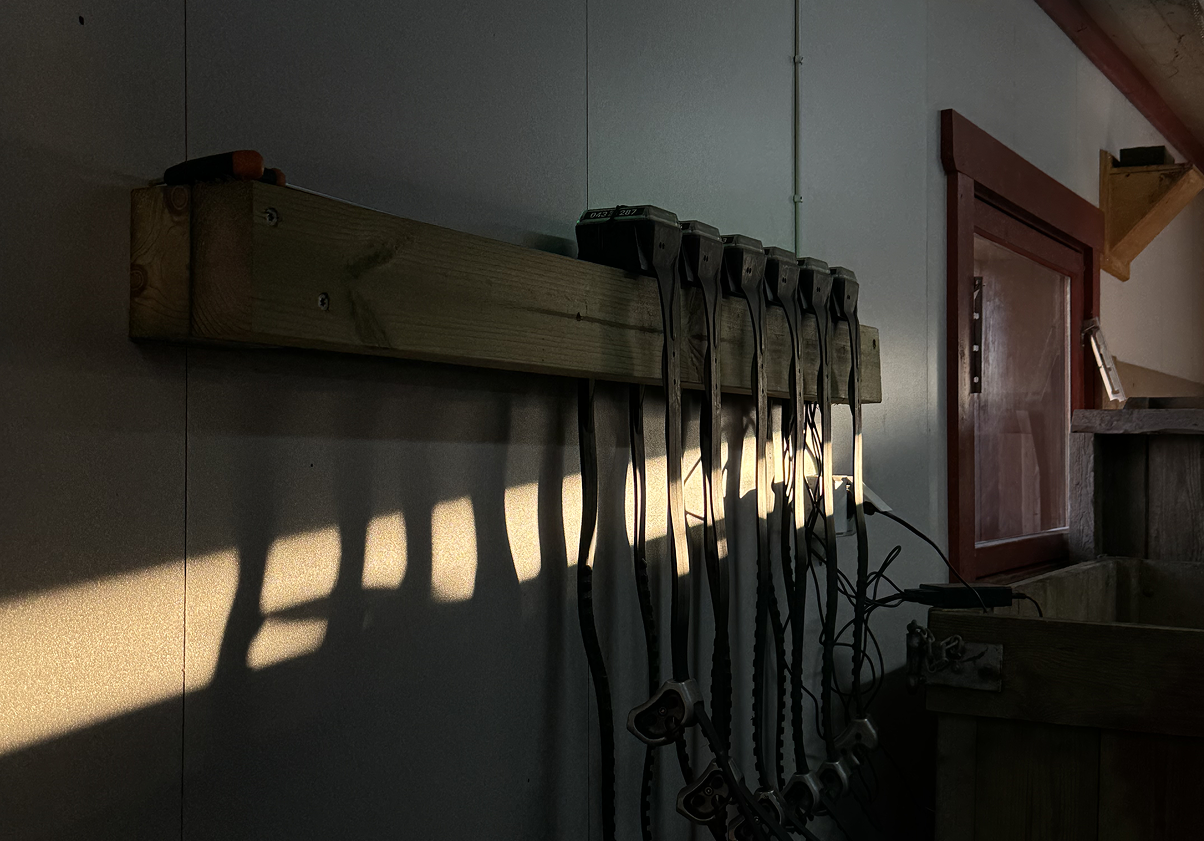
5. Store the collars somewhere dry
The collars should be stored in a dry place, at room temperature and with normal humidity. Avoid extreme temperatures and high humidity to prevent damage and corrosion.
To take the best possible care of the collars, we recommend that you don't store them in a stable or barn environment over the winter. Moisture and ammonia can damage the collars over time. If you have a workshop or another dry space with an even temperature, that's a good place to store the collars until the next grazing season.