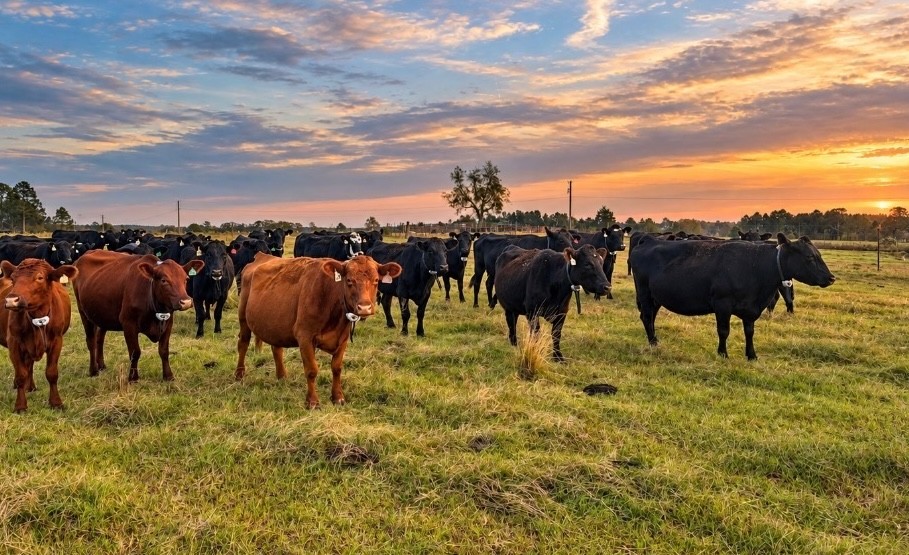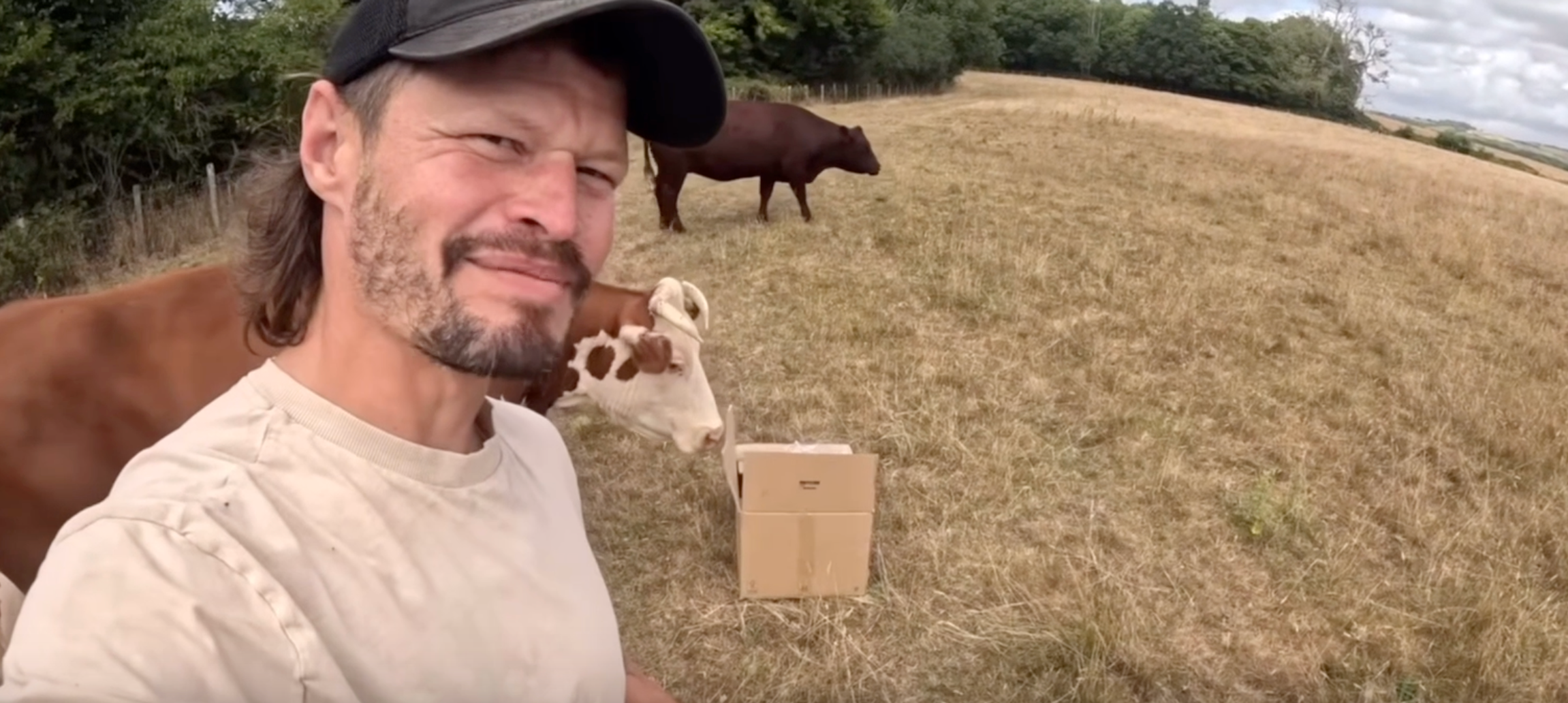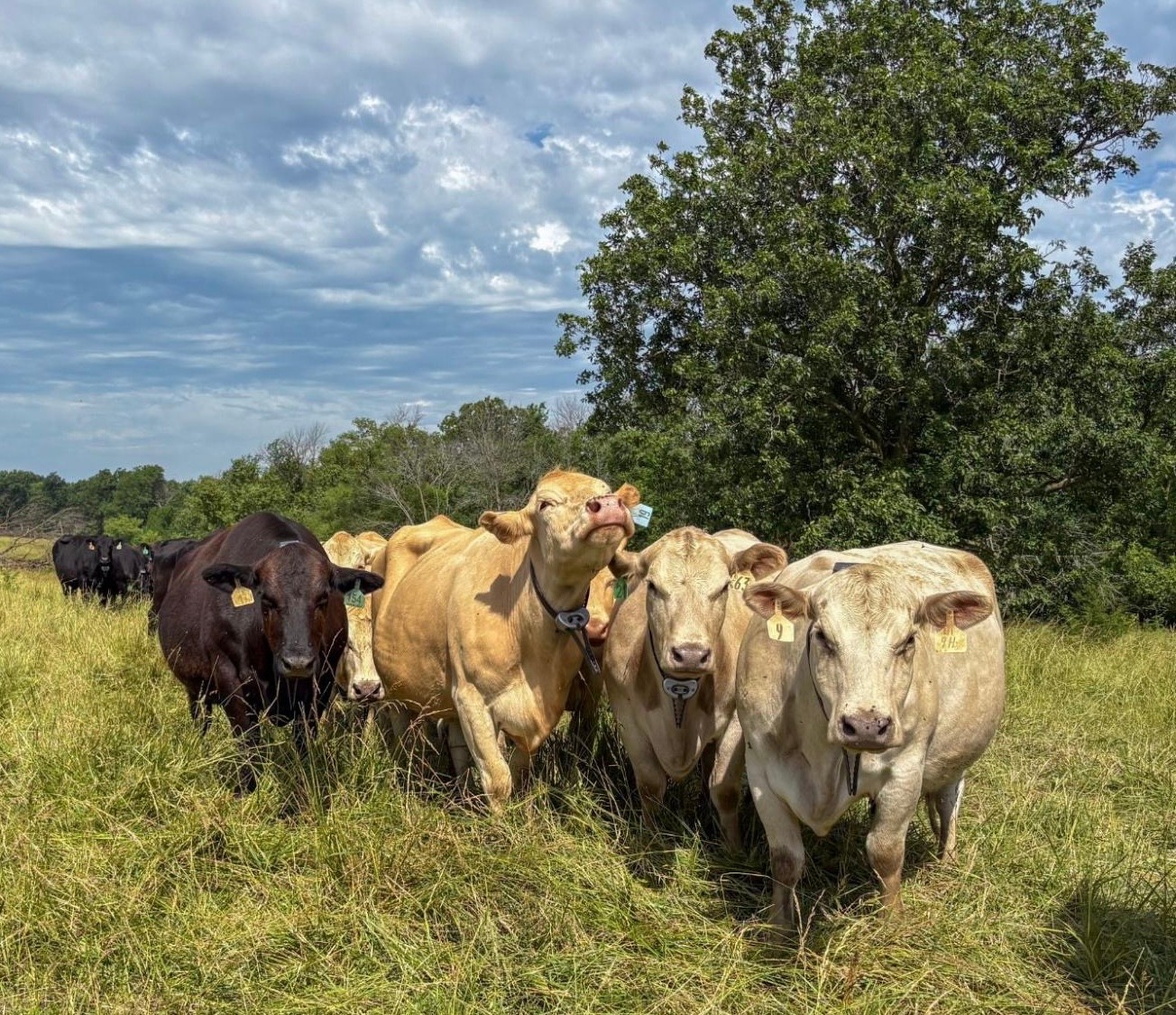

As winter approaches, cattle producers face a familiar challenge: how to keep their herds fed without spending more than necessary on hay and supplemental feed. For Austin Bailey, a Missouri cattle producer, the answer may lie in getting more grazing days out of the forage his farm already produces.
Near Perry, Missouri, Austin manages a cow-calf operation of approximately 150 head and a freezer beef business, building on generations of family experience in cattle and row-crop farming. Since introducing Monil Cattle Collars in May, he's been experimenting with more intensive grazing, moving cattle as frequently as every 12 hours without having to physically move fencing each time.
The results have been encouraging. On one summer pasture, Austin reported stocking cattle at 50% of the previous year's rate while maintaining excellent herd condition. Now, he's looking to apply that same approach to winter grazing, using standing milo, stockpiled fescue, corn stalks and bale grazing to stretch his available forage and reduce his reliance on hay.
Building on Generations of Grazing Experience
For Austin, managed grazing is nothing new. His grandfather began establishing rotational grazing systems around 2009 or 2010, investing in fencing, water tanks and paddocks that allowed cattle to move through pastures every three to five days.
That investment proved especially valuable during the drought of 2012. While grazing conditions were difficult across the region, Austin watched his grandfather use the rotational system to extend the time cattle could remain on pasture before running out of forage.
Austin and his wife began raising cow-calf pairs in 2016, eventually building Bailey Beef Company, their freezer beef business. In 2023, Austin had the opportunity to combine his herd with his grandfather's cattle, expanding the operation he now manages alongside his full-time job.
Like his grandfather, Austin invested in rotational grazing infrastructure. But as he gained experience, he began to see limitations in paddocks designed around three- to five-day rotations. He wanted the flexibility to move cattle daily, or even twice a day, without spending so much time installing and moving polywire.
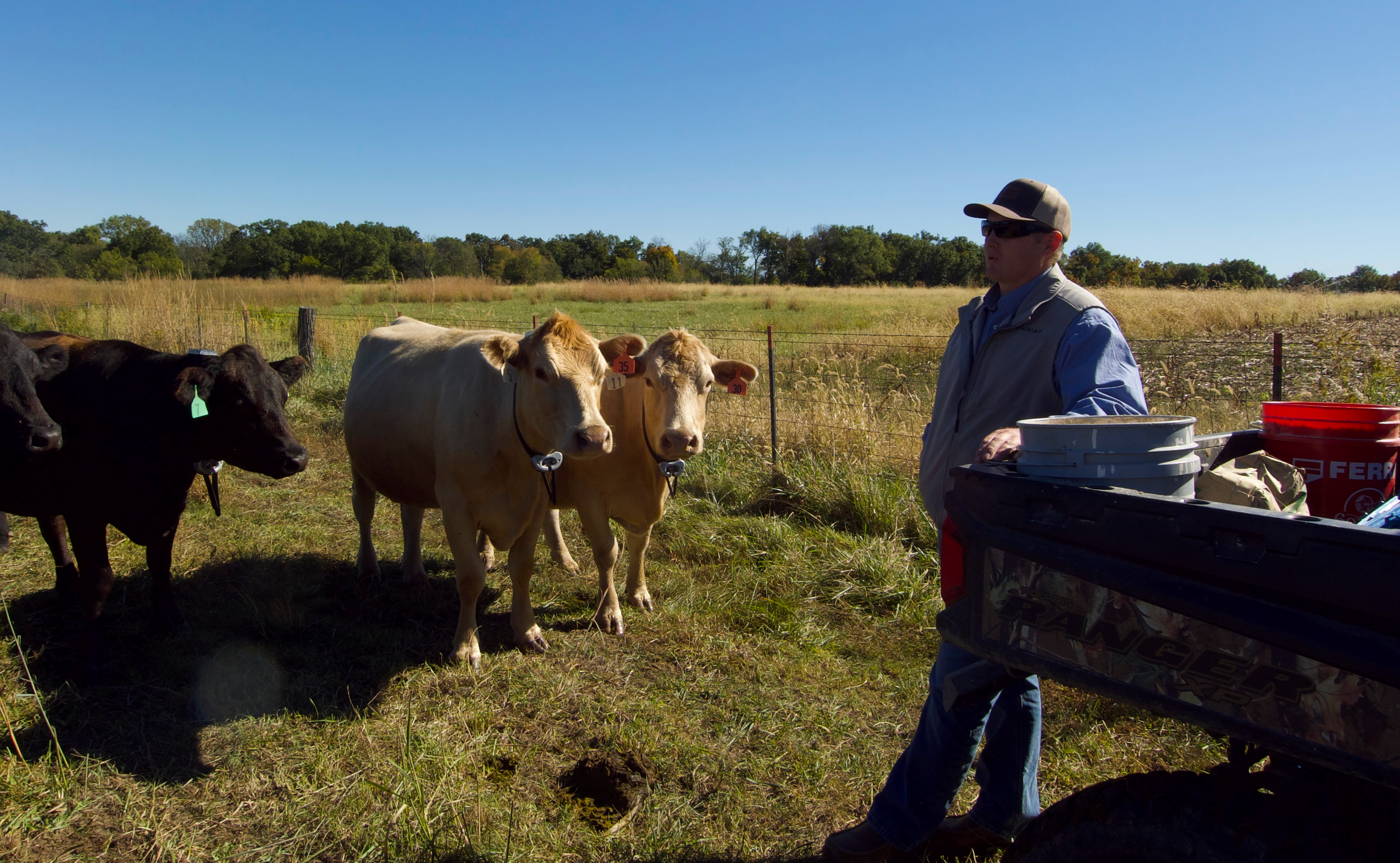
For Austin, the goal wasn't simply to rotate cattle more frequently, but to practice what he calls adaptive multi-paddock grazing: adjusting the size of grazing areas and the length of recovery periods based on what the pasture needs. Virtual fencing offered a way to make that level of management more practical without abandoning the infrastructure his family had already built.
More Cattle, More Grazing, Less Time Moving Fences
Austin first came across Monil at the National Cattlemen's Beef Association convention in Nashville. He had already been researching virtual fencing and comparing options with other producers, including friends who were using competing systems. What initially caught his attention was the physical design of Monil's Cattle Collar. He liked its simple, lightweight construction and how durable it appeared compared with other options he'd seen. After connecting with the Monil team, Austin received his first collars in May and began putting them to work.
One of his first applications was a remote summer pasture with a large creek running through it. The pasture provides excellent grazing, but heavy rainfall can wash out water gaps, leaving Austin with fencing repairs and the added challenge of keeping track of cattle in a location away from the main farm. Being able to monitor the herd's location remotely offered additional peace of mind.
Before Monil, the remote pasture was essentially divided into two large grazing areas, with little opportunity for intensive management. With virtual fencing, Austin began moving approximately 54 pregnant cows onto fresh grazing every 12 hours, allocating roughly four-tenths to half an acre per move. Rather than relying on the existing physical paddocks, he could create smaller virtual grazing areas and adjust them as needed. The herd responded well, with the cattle in such excellent condition that even Austin's father commented on how good they looked.
Austin turned cattle out later than usual, leaving him with a grazing period approximately three weeks shorter than the previous year. Even so, he reported a stocking rate equal to 50% of the previous year's level. Favorable rainfall also played a role, but Austin noted that there was still plenty of grass remaining when the herd moved off the pasture. For him, the experience demonstrated what could be possible when grazing decisions weren't limited by the time and labor required to move physical fences.
Extending Grazing Into Winter
The next challenge is taking that approach beyond the traditional grazing season. Like many Missouri cattle producers, Austin relies on hay during winter, but one of his biggest goals over the next three to five years is to reduce how much hay he needs to feed by making better use of standing forage and crop residues already available on the farm.
Austin is developing a winter grazing strategy that includes standing milo, stockpiled fescue, corn stalks and bale grazing, with Monil providing the flexibility to manage where cattle graze and how quickly they move through those resources.
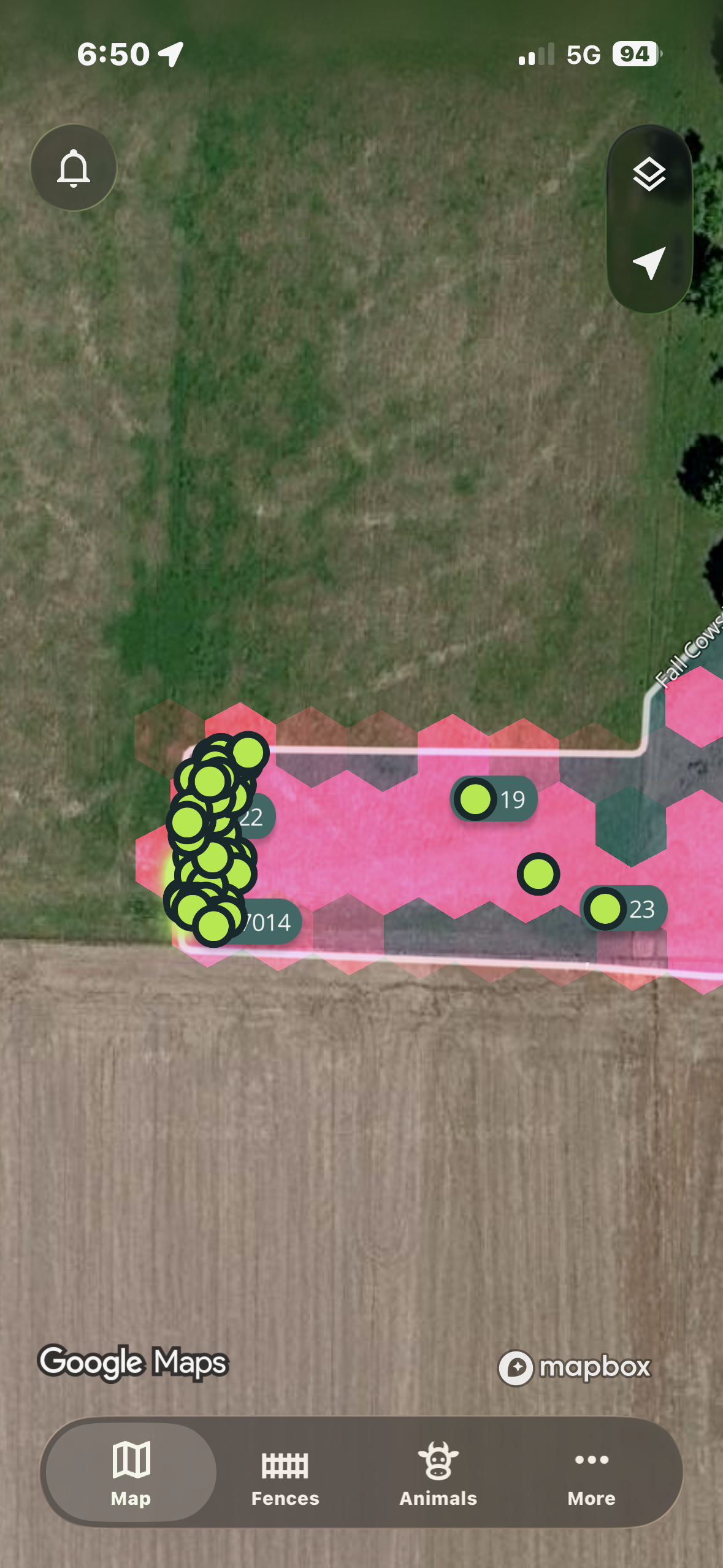
One opportunity is grazing corn stalks after harvest. Austin's family already turns cattle onto harvested fields, but those fields can range from 60 to 100 acres or more. Without additional fencing, cattle have access to the entire area at once. Dividing those fields into smaller grazing strips with polywire would require considerable labor, particularly when the fields are farther from Austin's home and other family members would need to manage the fencing. With virtual fencing, Austin plans to allocate smaller sections of those fields to his dry cows, potentially stretching the available grazing over a longer period.
He's also interested in stockpiling fescue by removing cattle from certain pastures in early fall, allowing the grass to recover before returning to graze it in January or February. Standing milo offers another opportunity. Austin planted milo with the intention of grazing it during winter, using virtual boundaries to control how cattle move through the standing forage.
He's also planning to incorporate bale grazing rather than relying on traditional hay rings or feed wagons. Together, these approaches could allow him to keep cattle grazing further into winter while reducing the amount of purchased or harvested feed needed to maintain the herd.
The winter strategy is still an evolving part of Austin's operation, but it builds directly on what he's already learned during the summer: more precise control over grazing can create opportunities to use forage that might otherwise be difficult or labor-intensive to manage.
The Next Generation of Grazing
Austin's grandfather was already experimenting with better ways to manage grazing more than 15 years ago. His investment in rotational grazing helped the family extend its grazing season during a difficult drought and established a foundation that Austin continues to build on today.
Now, Austin is using virtual fencing to take those same principles further, moving cattle more frequently, adjusting grazing areas with greater flexibility, and exploring ways to keep animals on forage later into the year. In fact, Austin says he's spending more time visiting his remote pasture than before, but he's using that time differently. Instead of checking fence lines for damage, he's observing the cattle, evaluating how much grass they're consuming and making decisions about when and where the herd should move next. For Austin, that's a much more valuable use of his time.
He's also interested in what virtual fencing could eventually mean for integrating livestock back into row-crop production. In an area dominated by corn and soybeans, Austin sees opportunities to use cattle to graze crop residues and potentially contribute to better soil health over time. He recognizes that practical challenges, including soil compaction and the need for perimeter fencing, still need to be addressed. For now, his focus is on continuing to improve the operation he already manages. That means making better use of existing pasture, reducing unnecessary labor, improving soil health and finding ways to feed less hay through the winter.
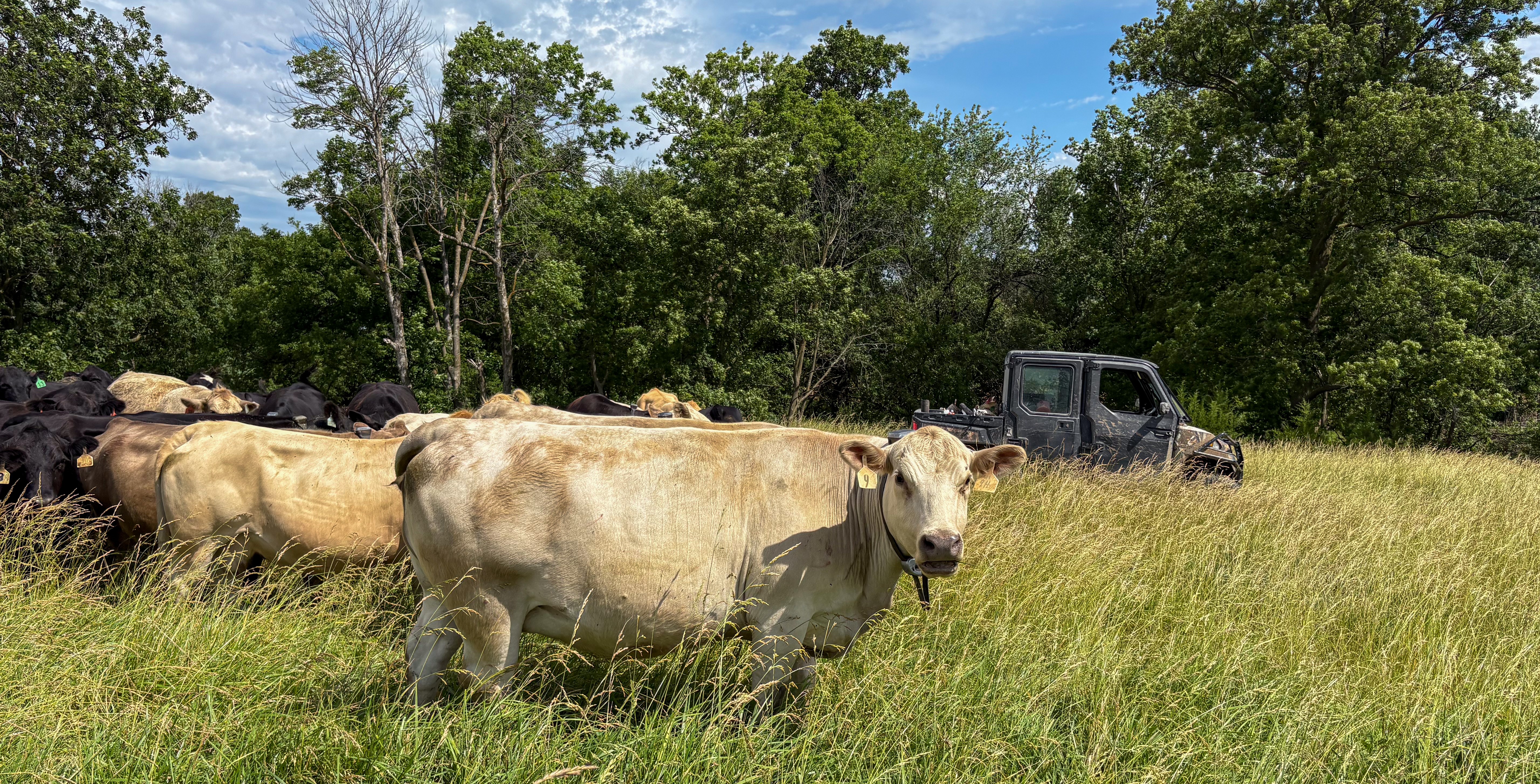
Monil’s virtual fencing hasn't changed Austin's underlying philosophy about grazing. Instead, it's giving him more flexibility to put that philosophy into practice, building on generations of experience while finding new ways to make the land and cattle more productive throughout the year.
See what virtual fencing could do for your livestock
Whether you're moving cattle and sheep every day or looking for more flexibility in how you manage grazing, Monil can help reduce the work of moving physical fences. Tell us a little about your operation, and our U.S. team will help you explore what's possible.
Get a quote & talk to our team by filling out the form below.