
Monil’s Virtual Fencing system relies on cellular coverage for producers to receive updates from the collars on their phones. For producers in areas with unstable or low connectivity, the system can still work, but it requires some additional planning, and there are a few things to be aware of.
Here is some more information about how Monil works with satellites (GPS/GNSS) and mobile networks.
Before investing in a virtual fencing system with Monil, it’s important to have an overview of the connectivity on your farm or ranch. For the system to work optimally, we advise ranchers to have a minimum level of cellular coverage across the areas they want to virtually fence. Currently, Monil collars run on 4G/5G communication via NB-IoT and LTE-M and support T-Mobile and AT&T networks in the US.
Why do the Monil collars need connectivity?
The Monil collar needs mobile connectivity to communicate with the app, not to keep the virtual fence working.
Connectivity is needed for:
- Setting up, changing or removing a virtual fence from the cattle
- Sending animal positions to the Monil app
- Receiving alerts and updated collar information
- Sending activity and monitoring data back to the system
What happens if my operation has an unreliable connection?
Without connectivity, the collars are unable to send information back to the Monil app or receive updated fences. This means that, as a producer, you will receive delayed position updates, activity data, and alerts and you will not be able to change the virtual fence until the animal is back into connectivity.
The GPS fence part of the Monil virtual fencing system still operates, even if connectivity drops. This means that once the collars are connected to a specific fence, you can be confident that the collars will still interact with the boundary as they should, even if there is no cellular connectivity.
It’s also important to note that the collars need mobile connectivity whenever a fence is updated, and all collars in the herd need to catch a signal in order to connect to a new or edited fence.
Recommendations for producers with patchy connectivity
If you’re in an area with absolutely no mobile connectivity, the Monil system is not the right fit for your operation. However, in areas where connectivity is unstable, we have some recommendations to help you plan your setup for success before getting started.
Practical Tips
- Plan your virtual setup to always include an area with connectivity you know that they will venture into. This could be around water-points, minerals, shade or shelter.
- Plan for longer periodic shifts (more than 1 day in between shifts) in areas of poor connectivity. When you update a fence in patchy connectivity, the updated configuration will be updated to the individual collars at a slower rate compared to an area of good connectivity (~1 minute)
- When searching for signals, the energy consumption in the collars will increase. If you are grazing pastures in the marginal parts of the season, late autumn and winter, choose the areas with stronger connectivity. If not, plan for a charge during those times. You can see the battery levels in the app, and plan accordingly.
Unassign collars from a fence via Bluetooth
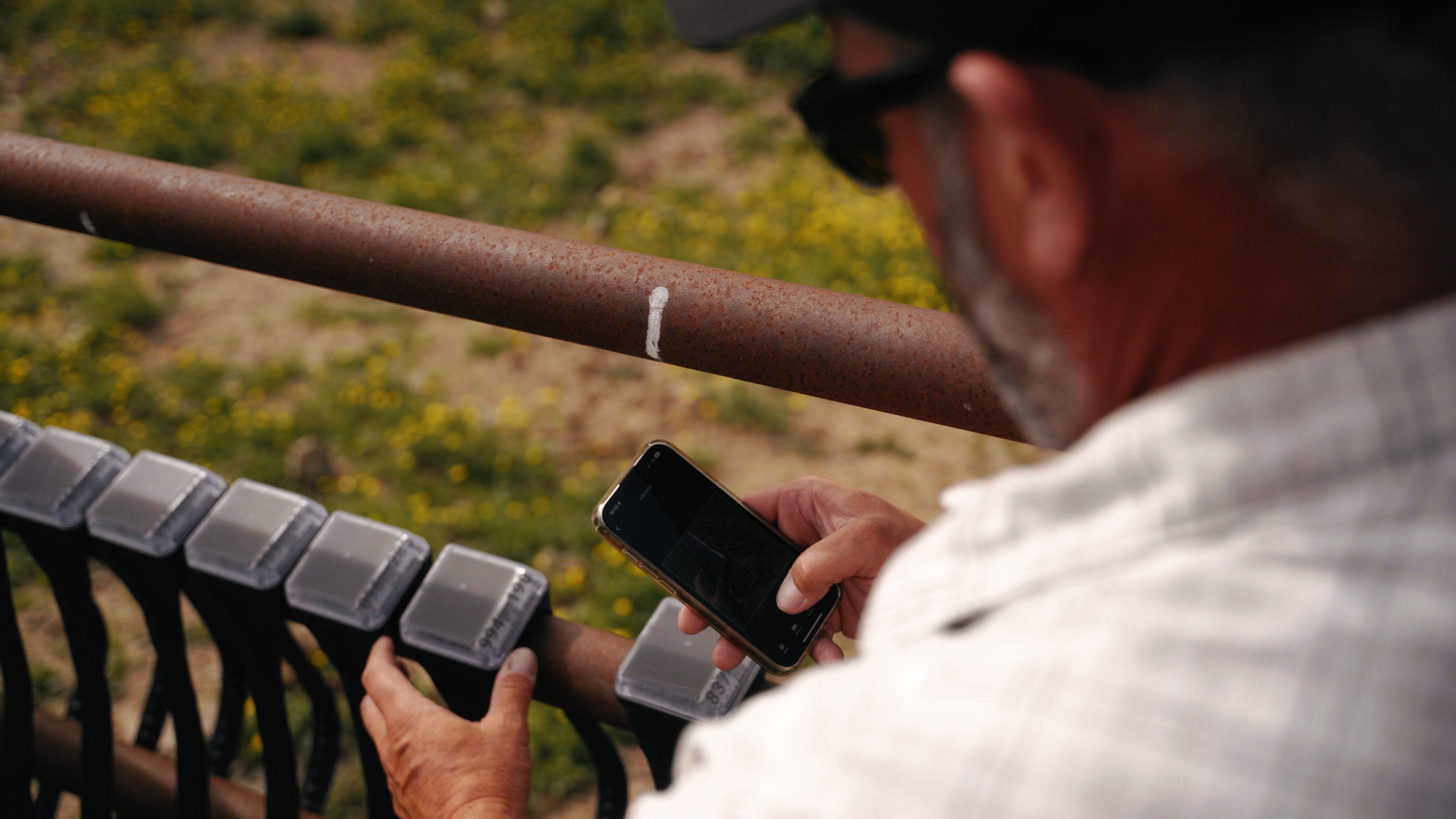
The Monil virtual fencing system has a Bluetooth function that allows producers to unassign collars from a fence if the collars have lost cellular connectivity. This feature is a fallback for producers who need to move cattle in bad cell reception or if the cell-tower in the area stops working.
In these cases, the producer can use the Monil app while standing within Bluetooth range of the collars. They can then unassign the animals from the fence and move them safely without triggering boundary signals.
Future development
We are currently working on several remedies to deal with bad connectivity. This will be future software-upgrades utilizing the existing hardware in the collars to the benefit of our current and future users.
Speak with our team
If you’re considering investing in the Monil Virtual Fencing system for your operation but are uncertain about coverage, please get in touch with us directly. Our team will talk you through it, have a look at your area, and advise you on whether Monil is a fit for your operation.